
Introduction: When Customer Data Becomes a Cybersecurity Risk
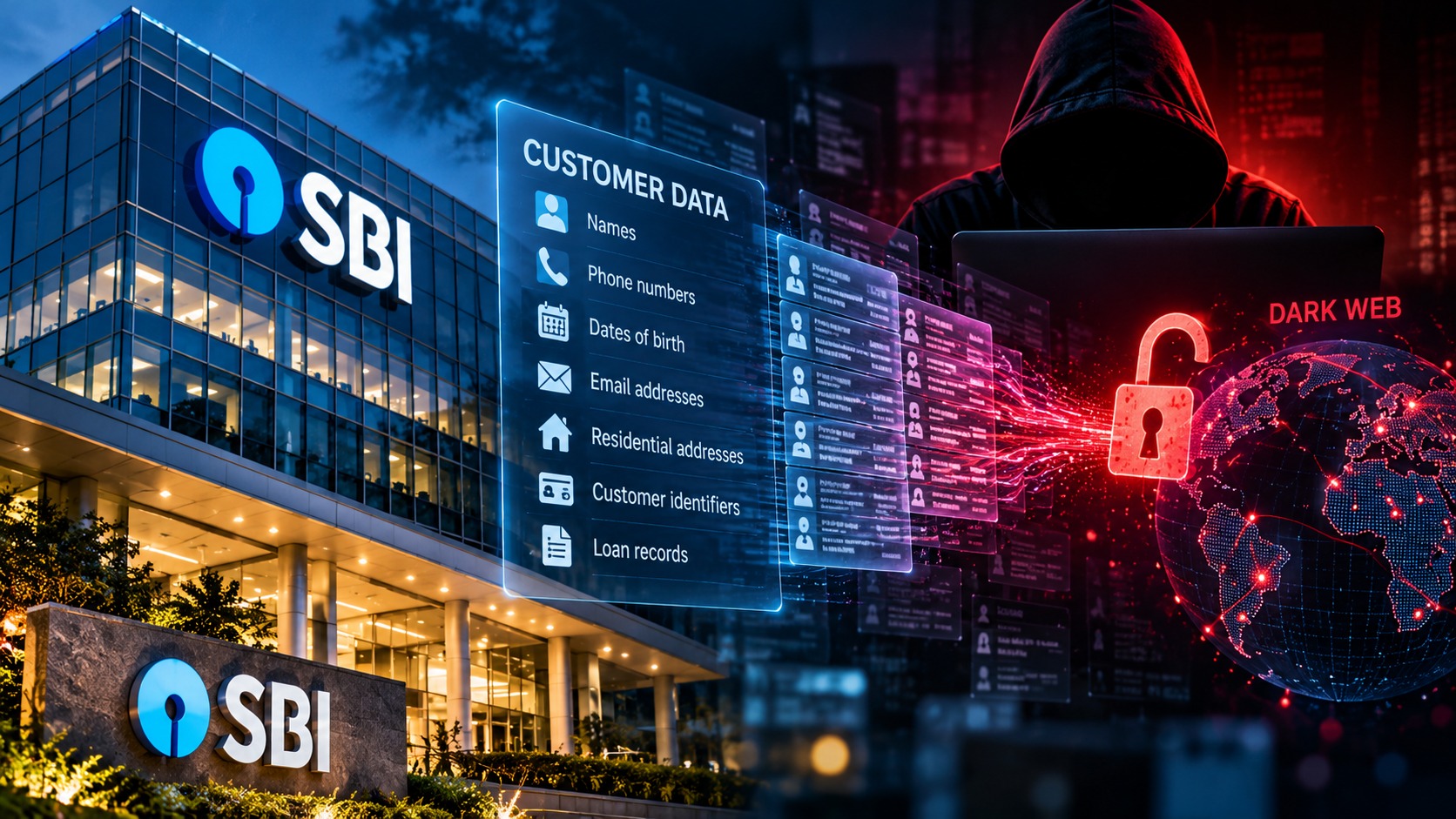
A new cybersecurity incident involving the State Bank of India (SBI) has raised concerns about the protection of sensitive financial information. According to a Reuters report published on October 21, 2026, SBI reported that 3,897 customer records containing personally identifiable information had been disclosed on the dark web.
The exposed information reportedly included names, mobile numbers, dates of birth, email addresses, residential addresses, customer identifiers and loan records.
SBI has engaged an independent cybersecurity agency to investigate the incident and determine the nature and extent of the exposure. The bank stated that the incident was not expected to have a material impact on its core business operations or financial performance.
While business continuity is important, the exposure of sensitive customer information presents a different challenge: how can organizations prevent leaked data from being weaponized against customers?
How Can Exposed Customer Data Be Exploited?
Personal information is valuable to cybercriminals because it can make fraudulent communications appear legitimate.
Attackers may use exposed information to:
- Launch targeted phishing attacks: Create convincing messages that reference a customer’s identity or banking relationship.
- Conduct social engineering: Impersonate bank employees or support representatives to manipulate victims into sharing credentials or one-time passwords (OTPs).
- Attempt identity fraud: Combine leaked information with data from other breaches to impersonate individuals.
- Enable account takeover attempts: Use personal details to support credential attacks or fraudulent account-recovery requests.
These are potential follow-on risks, not confirmed consequences of the SBI incident.
The Technical Perspective: How a Data Exposure Can Escalate
A data leak does not automatically mean that attackers accessed banking systems or transferred money. The initial entry point and the technical cause of the SBI incident have not been established in the reporting cited here.
However, a typical data-exposure incident can develop along the following path:
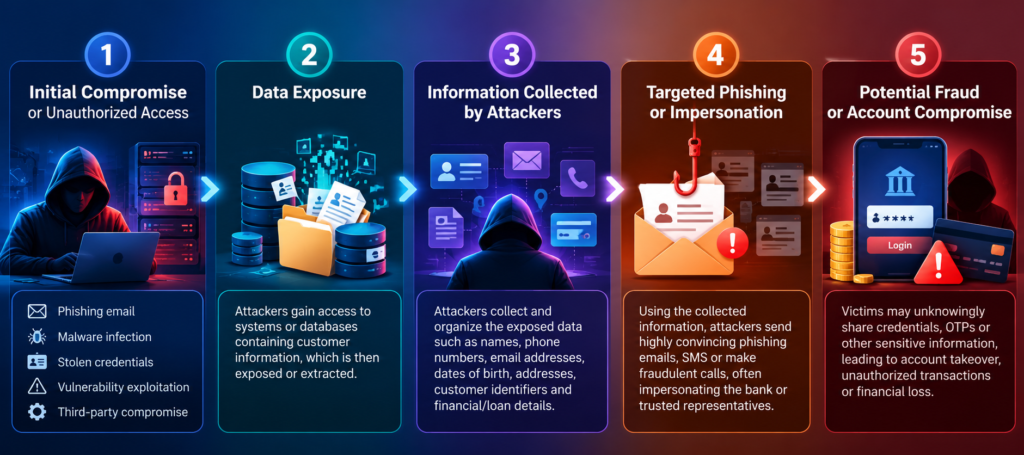
Organizations should investigate the original access path, review identity and access logs, identify affected data repositories, and determine whether the incident involved compromised credentials, misconfigured storage, a third-party system or another cause.
Technical note: This is a generalized incident-response model, not a reconstruction of the SBI attack.
Four Security Measures Organizations Should Prioritize
1. Strengthen identity and access management
Enforce multifactor authentication, least-privilege access, privileged-account monitoring and periodic access reviews.
2. Monitor sensitive data exposure
Use data-loss prevention (DLP), database activity monitoring and dark-web intelligence to identify potential exposure of customer information and credentials.
3. Improve detection and incident response
Correlate identity, endpoint, network and database logs through a SIEM platform. Establish incident-response procedures for containment, forensic investigation, notification and recovery.
4. Test security controls regularly
Conduct vulnerability assessments, penetration testing, access-control reviews and third-party security assessments. Validate that sensitive data is encrypted, access is restricted, and unnecessary data is not retained.
What Should Customers Do?
Customers should remain alert to unexpected calls, emails or messages that reference personal or financial details. Never share OTPs, passwords or PINs with callers, and avoid clicking links in unsolicited banking messages. Verify requests through official banking channels and report suspicious transactions immediately.
Conclusion: Data Protection Must Go Beyond Business Continuity
The SBI incident is a timely reminder that protecting financial services requires more than keeping systems online. Organizations must also safeguard customer information throughout its lifecycle, detect unauthorized exposure quickly and prepare for potential misuse of leaked data.
As investigations continue, the priority should be to establish the scope and root cause of the exposure and implement evidence-based corrective measures.
At CLEAR INFOSEC, we believe proactive security testing, continuous monitoring and effective incident response are essential to reducing cyber risk and strengthening organizational resilience.
Stay informed. Stay prepared. Stay secure.