Author: Clear Infosec

  • Understanding the Importance of a Penetration Testing Execution Standard

    Understanding the Importance of a Penetration Testing Execution Standard

    In today’s digital age, where cyber threats are a constant and evolving danger, ensuring the security of information systems is paramount. One of the most effective ways to protect these systems is through penetration testing. The effectiveness of pen testing hinges on a standardized approach, which is where the Penetration Testing Execution Standard (PTES) comes into play. Below are the reasons why having a PTES is crucial for organizations and the broader cybersecurity landscape:

    • Consistency and Reliability: A standardized framework ensures that penetration tests are conducted consistently and thoroughly. Without a standard, different testers might use different methods and tools, leading to inconsistent results. PTES provides a structured approach that guides testers through the entire process, from initial reconnaissance to final reporting. This consistency.
    • Comprehensive coverage: Cybersecurity threats vary from simple phishing attacks to complex multi-vector exploits. The PTES framework covers a wide range of testing activities, ensuring that all potential vulnerabilities are examined. By following PTES, testers can systematically explore different aspects of a system, including network security, application security, and physical security, thereby providing a more comprehensive security assessment.
    • Improved Communication: Standardization facilitates better communication between stakeholders. PTES Includes guidelines or report findings and recommendations, making it easier for testers to take their results to non-technical stakeholders, such as management and clients. These reports ensure that everyone understands the risks and the necessary steps to mitigate them, leading to informed decision making.
    • Legal and Regulatory Compliance: Many industries are subject to stringent legal and regulatory requirements concerning data protection and cybersecurity. PTES aligns with several compliance frameworks and standards, such as PCI DSS, ISO 27001, and NIST. By adhering to PTES, organizations can more easily demonstrate their compliance with these regulations, avoiding legal penalties and enhancing their reputation.

    PTES offers a detailed and structured approach to performing penetration tests, ensuring that all critical aspects of security assessments are covered systematically. Here’s a comprehensive breakdown of each phase within the PTES framework:

    1. Pre-engagement Interactions

    Before any testing begins, it is crucial to lay the groundwork through thorough planning and clear communication which includes:

    • Goals and Objectives: Establishes what the penetration test aims to achieve. Aligns the testing goals with the organization’s security objectives and clarifies whether the focus is on compliance, vulnerability identification, or overall security posture assessment.
    • Scoping: The objective of scoping is to define boundaries and limitations of the penetration test. It identifies the systems, network applications, and data that will be tested. Determines the testing depth e.g. internal vs external, black-box vs white-box.
    • Rules of Engagement (RoE): Set clear guidelines to govern the testing activities. Defines what actions are permitted during the test, such as the time of testing, methods to be used, and emergency contacts. Establish protocols for handling discovered critical vulnerabilities in real-time.
    • Legal and Compliance Considerations: Ensures all testing activities comply with legal and regulatory requirements. Obtains necessary permissions and legal agreements. Understands relevant laws, regulations and industry standards that apply to the penetration test.

    1. Intelligence Gathering (Reconnaissance)

    This phase focuses on collecting information about the target to identify potential vulnerabilities. It has three levels, level 1 which is mainly a click-button information gathering process. This level of information can be obtained almost entirely by automated tools. Level 2 can be created using automated tools from level 1 and some manual analysis. Level 3 is a more advanced pentest, Redteam, fullscope. All the info from level 1 and level 2 along with a lot of manual analysis.

    • Open-Source Intelligence (OSINT): Gathers information from publicly accessible sources. Collects data from websites, social media profiles, public records, and other online resources to build a profile of the target organization.
    • Active and Passive Reconnaissance: Gathers detailed information about the target’s infrastructure. Passive Reconnaissance involves techniques that do not interact with the target systems, such as monitoring network traffic or gathering information from public sources. Active reconnaissance involves direct interaction with the target systems, such as pinging servers, port scanning, and banner grabbing.

    1. Threat Modeling

    This phase involves analyzing the collected information to identify potential threats and vulnerabilities. It includes:

    • Asset Identification: Identifies the critical assets that need protection. Lists all hardware, software, data, and network components critical to the organization’s operations.
    • Threat Analysis: Identifies potential threat actors and their attack vectors. Assesses who might want to attack the organization, why, and how they might do it considering internal and external threats.
    • Vulnerability Analysis: Maps threats to specific vulnerabilities. Analyzes the data gathered to identify weaknesses in the systems, such as unpatched software, misconfigured servers, or weak passwords.

    1. Vulnerability Analysis

    This section focuses on identifying and analyzing security weaknesses in the target environment which includes:

    • Automated Scanning: Quickly identifies known vulnerabilities. Uses automated tools to scan for common vulnerabilities, such as those listed in the OWASP Top Ten or identified by CVE.
    • Manual Testing: Identifies complex or less obvious vulnerabilities. Conducts manual tests to find vulnerabilities that automated tools might miss, such as logic flaws, race conditions, and insecure direct object references.
    • Verification and Validation: Confirms the existence and exploitability of identified vulnerabilities. Validates the findings from automated and manual testing to ensure they are not false positives. Attempt to exploit the vulnerabilities in a controlled manner.

    1. Exploitation

    In this phase, testers attempt to exploit identified vulnerabilities to assess the potential impact which includes:

    • Developing Exploits: Creates or adapts exploit code to take advantage of vulnerabilities which includes writing or modifying exploit scripts to target specific vulnerabilities identified during the analysis phase.
    • Controlled Attacks: Simulates real-world to understand potential damage which includes performing controlled exploits on vulnerabilities to gain unauthorized access, escalate privileges, or extract data without causing harm to the target environment.
    • Gaining Access: Demonstrates the ability to breach security controls using exploits to gain access to systems, applications, and data, documenting the methods and outcomes.

    1. Post-Exploitation

    Once access is gained, this phase focusses on understanding the extent of the breach and its potential impact which includes:

    • Privilege Escalation: Gaining higher levels of access within the compromised systems which includes attempting to escalate privileges to obtain administrative or root access, allowing for deeper penetration into the network.
    • Lateral Movement: Moves across the network to identify additional vulnerabilities which includes using compromised credentials and exploits to access other systems within the network, expanding the scope of the breach.
    • Persistence: Installation of backdoor that requires authentication which includes the use of certificates or cryptographic keys, creation of alternate accounts with complex passwords and when possible, backdoors must survive reboots.
    • Data Exfiltration: Demonstrates the potential for data theft or manipulation including extracting sensitive data from the compromised systems to highlight the impact of a successful attack.

    1. Reporting

    The final phase involves documenting findings and providing actionable recommendations. This section includes:

    • Technical Report: Provides a detailed account of the penetration test which includes documenting all vulnerabilities discovered, exploitation methods used, and the impact of successful exploits. Include technical details for remediation.
    • Executive Summary: Summarizing findings for non-technical stakeholders which includes creating a high-level overview of the test results, including key findings, overall risk assessment, and strategic recommendations.
    • Remediation Guidance: Offers actionable steps to fix identified vulnerabilities. Provides detailed recommendations for addressing vulnerabilities, improving security controls, and preventing future incidents

    Now, we take a deep dive into different exploitation techniques used in pen testing. Exploitation is a crucial phase in penetration testing, where testers leverage identified vulnerabilities to gain unauthorized access, elevate privileges, and demonstrate the potential impact of security weaknesses. Here are some commonly used techniques outlined within the Penetration Testing Execution Standard (PTES):

    • Buffer Overflow Attacks: Exploits poorly managed memory allocations to execute arbitrary code. By sending more data to a buffer than it can handle, the excess data overwrites adjacent memory, potentially leading to execution of malicious code. Testers craft payloads that exploit this overflow to gain control over the target system.
    • SQL Injection: Manipulates database queries to access or modify unauthorized data. Attackers inject malicious SQL code into input fields, which the application then inadvertently executes. This can lead to data leakage, database manipulation, or even gaining administrative access.
    • Cross-Site Scripting (XSS): Injects malicious scripts into web pages viewed by other users. Testers exploit input validation weaknesses to inject scripts that run in the of another user’s session. These scripts can steal cookies, session tokens, or perform actions on behalf of the user.
    • Social Engineering: Exploits human psychology to gain sensitive information or access. Testers use techniques like phishing emails, pretexting, or baiting to deceive users into divulging credentials or installing malicious software which involves convincing scenarios to manipulate the target.
    • Man-in-the-middle (MitM) Attacks: Intercepts and alters communication between two parties. Testers place themselves between the victim and the service they are accessing. They use ARP spoofing, DNS poisoning, or SSL stripping to capture and manipulate data in transit, such as login credentials and sensitive information.
    • Lateral Movement: Objective is to spread through the network to access additional systems and data. Once inside the network, testers use compromised credentials, shared resources, and network scanning tools to move laterally. They may exploit trust relationships between systems or use tools like Pass-the-Hash and Remote Desktop Protocol (RDP) to access other machines.

    Conclusion

    The Penetration Testing Execution Standard (PTES) ensures a thorough, consistent, and effective approach to penetration testing. By following its detailed phases, organizations can systematically identify, exploit, and mitigate vulnerabilities, ultimately enhancing their overall security posture. Each phase, from pre-engagement interactions to detailed reporting, contributes to a comprehensive understanding of potential security risks and the development of robust defense strategies. Adopting PTES not only helps in achieving reliable and repeatable results but also aligns penetration testing activities with best practices and compliance requirements, paving the way for a more secure and resilient digital environment.

  • 2025 Comprehensive Guide to SaaS Security Posture Management

    2025 Comprehensive Guide to SaaS Security Posture Management

    Introduction

    With the rise of Software as a Service (SaaS) applications, ensuring their security has become crucial for organizations of all sizes. Gartner introduced the SaaS Security Posture Management (SSPM) category to provide solutions that continuously assess and manage the security risks associated with SaaS applications. This comprehensive blog outlines the essential elements of a robust SSPM strategy, offering detailed insights and a checklist to help you safeguard your SaaS ecosystem effectively.

    As SaaS applications proliferate, so do the associated security risks. To address these challenges, organizations need a robust SaaS Security Posture Management (SSPM) solution. Gartner’s introduction of SSPM underscores the importance of continuously evaluating and managing SaaS security risks. This guide provides a detailed checklist to help organizations implement effective SSPM strategies.

    Misconfiguration Management

    Misconfiguration management is at the heart of SSPM, providing visibility and control over security settings across all SaaS applications. This involves continuous monitoring, posture scoring, automated security checks, and compliance assessments. Effective misconfiguration management includes alerting mechanisms and integration with SOAR/SIEM and ticketing systems to fix issues using existing security tools. Detailed remediation plans and strong collaboration between app owners and security teams are essential to close the remediation loop.

    Key Features:

    • Deep visibility and control of security settings
    • Automated security checks and posture scoring
    • Integration with SOAR/SIEM and ticketing systems
    • Detailed remediation plans

    Identity Security

    Strong Identity Security Posture Management (ISPM) is crucial for securing the SaaS stack. This includes managing overprivileged, dormant, and external users, and enforcing identity-centric configurations like Multi-Factor Authentication (MFA) and Single Sign-On (SSO). Monitoring non-human identities associated with third-party apps and enabling automated app discovery and management are also critical to mitigating risks.

    Key Features:

    • Governance of overprivileged and dormant users
    • Enforcement of MFA and SSO
    • Monitoring non-human identities
    • Automated app discovery and management

    Permissions Management

    Centralizing SaaS entitlements enhances identity security posture management, reducing the attack surface and improving compliance. Sophisticated applications like Salesforce, Microsoft 365, and Google Workspace have complex permission structures. Unified visibility into these permissions helps security teams understand and manage risks effectively.

    Key Features:

    • Centralized management of SaaS entitlements
    • Unified visibility of complex permissions
    • Improved compliance and reduced attack surface

    Device-to-SaaS Relationship

    Integrating SSPM with Unified Endpoint Management (UEM) systems is essential to manage risks from SaaS user devices. This integration provides insights into unmanaged, low-hygiene, and vulnerable devices that could be susceptible to data theft.

    Key Features:

    • Integration with UEM systems
    • Insights into vulnerable and unmanaged devices
    • Risk management for SaaS user devices

    Generative AI Security Posture

    The integration of generative AI (GenAI) capabilities into SaaS applications introduces new security challenges. SSPM solutions must include GenAI monitoring to identify AI-driven applications with heightened risk levels, check GenAI configurations, and control data accessible by GenAI tools.

    Key Features:

    • Monitoring AI-driven applications for security risks
    • Remediation of GenAI configuration drifts
    • Data management governance for GenAI tools

    Data Exposure Prevention

    SaaS applications often contain sensitive information that can be damaging if leaked. Security teams need visibility into shared settings of documents to prevent data leaks. SSPM solutions should identify publicly or externally shared documents and provide detailed information on access levels and expiration dates.

    Key Features:

    • Visibility into shared document settings
    • Identification of publicly or externally shared documents
    • Detailed access level and expiration date information

    Threat Detection and Response

    Identity Threat Detection and Response (ITDR) provides an additional layer of protection by detecting and responding to identity-related threats. ITDR capabilities should be based on logs from the entire SaaS stack to detect anomalies and indicators of compromise (IOCs) accurately.

    Key Features:

    • Continuous monitoring for identity-related threats
    • Detection of anomalies and IOCs
    • Alerts and incident response mechanisms

    Choosing the Right SSPM

    Developing best practices for SaaS security allows organizations to safely grow their use of SaaS applications. A comprehensive SSPM solution should offer continuous monitoring, automated remediation, and detailed insights into security configurations. For organizations with diverse applications and a large user base, choosing the right SSPM is critical to maintaining a strong security posture.

    Key Considerations:

    • Comprehensive visibility and monitoring
    • Automated remediation capabilities
    • Detailed insights into security configurations
    • Scalability to meet organizational growth

    Conclusion

    Implementing a robust SSPM solution is vital for protecting your organization’s SaaS environment. By following this detailed checklist, you can ensure continuous monitoring, comprehensive visibility, and automated remediation, thereby safeguarding your critical data and applications effectively. Stay ahead of evolving threats by adopting these best practices and maintaining a strong security posture.

    Reference:

    The ultimate saas security posture management checklist, 2025 edition. The Hacker News. (2024, May 22). https://thehackernews.com/2024/05/the-ultimate-saas-security-posture.html

  • Black Basta Ransomware Targets Over 500 Entities Globally

    Black Basta Ransomware Targets Over 500 Entities Globally

    Since its emergence in April 2022, the Black Basta ransomware-as-a-service (RaaS) operation has wreaked havoc across North America, Europe, and Australia, compromising over 500 private and critical infrastructure entities. This significant threat has rapidly gained notoriety, emphasizing the urgent need for robust cybersecurity measures.

    A joint advisory by the Cybersecurity and Infrastructure Security Agency (CISA), the Federal Bureau of Investigation (FBI), the Department of Health and Human Services (HHS), and the Multi-State Information Sharing and Analysis Center (MS-ISAC) highlighted the extensive reach of Black Basta. The advisory noted that the ransomware affected at least 12 of the 16 critical infrastructure sectors, encrypting and stealing sensitive data.

    Black Basta affiliates commonly gain initial access through phishing and exploiting known vulnerabilities. They utilize a double-extortion model, encrypting systems and exfiltrating data. Within two months of its appearance, Black Basta had already victimized nearly 50 organizations in the U.S., Canada, the U.K., Australia, and New Zealand, underscoring its rapid escalation.

    Targeted Industries and Unique Tactics

    Industries targeted by Black Basta range widely, encompassing manufacturing, construction, transportation, telecommunications, pharmaceuticals, cosmetics, plumbing and heating, automobile dealerships, and undergarment manufacturing. Unlike other ransomware groups, Black Basta does not include a ransom demand or payment instructions in its notes. Instead, victims are provided with a unique code and directed to contact the attackers via a .onion URL.

    The advisory detailed the tools and tactics used by Black Basta, including SoftPerfect network scanner for network scanning, BITSAdmin, Cobalt Strike beacons, ConnectWise ScreenConnect, and PsExec for lateral movement, RClone for data exfiltration prior to encryption and Mimikatz for privilege escalation. They also exploit vulnerabilities like ZeroLogon (CVE-2020-1472), NoPac (CVE-2021-42278 and CVE-2021-42287), and PrintNightmare (CVE-2021-34527).

    In some cases, Black Basta has deployed a tool called Backstab to disable endpoint detection and response (EDR) software. Notably, this tool has also been used by LockBit affiliates. It is believed that Black Basta includes former members of the Conti group, which disbanded due to increased law enforcement pressure and a major leak of its tools and tactics.

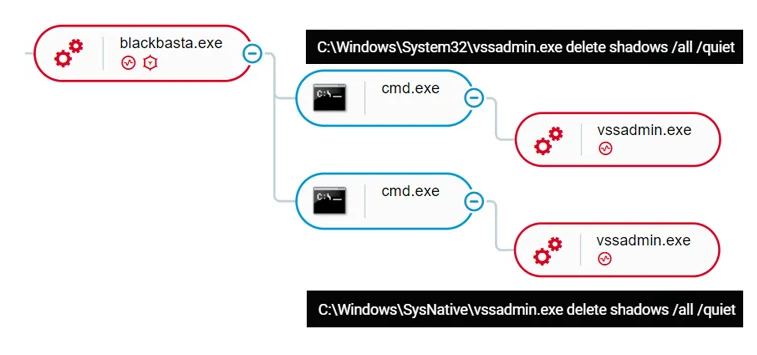
    The encryption process employed by Black Basta involves the ChaCha20 algorithm with an RSA-4096 public key. Before encryption, volume shadow copies are deleted using the vssadmin.exe program to prevent system recovery. 

    Healthcare organizations are particularly vulnerable due to their size, technological reliance, access to personal health information, and the critical impact of patient care disruptions. This vulnerability is reflected in the ransomware’s focus on these institutions.

    Meanwhile, the CACTUS ransomware campaign continues to exploit flaws in the Qlik Sense cloud analytics and business intelligence platform, with 3,143 servers remaining vulnerable to CVE-2023-48365 as of April 2024. This vulnerability predominantly affects servers in the U.S., Italy, Brazil, the Netherlands, and Germany.

    The Dynamic Ransomware Landscape

    The ransomware landscape is constantly evolving. Despite an 18% decline in activity in Q1 2024, driven by law enforcement actions against ALPHV (BlackCat) and LockBit, the ecosystem remains dynamic. LockBit, facing significant reputational damage among affiliates, may rebrand, with the DarkVault ransomware group identified as a potential successor.

    New ransomware groups, including APT73, DoNex, DragonForce, Hunt (a Dharma/Crysis variant), KageNoHitobito, Megazord, Qiulong, Rincrypt, and Shinra, have emerged recently. This diversification and adaptability highlight the resilience and fluid nature of ransomware actors.

    Despite a 46% decrease in ransom payments in 2023, as reported by Chainalysis, and a record low ransom payment rate of 28% in Q1 2024, the average ransom payment has surged. According to a Sophos report, the average payment increased fivefold from $400,000 to $2 million. However, only 24% of payments matched the original demand, with many victims negotiating lower amounts.

    Clear Infosec: Your Shield Against Cyber Threats

    At Clear Infosec, we understand the critical importance of protecting your organization from sophisticated cyber threats like Black Basta. Our comprehensive cybersecurity services are designed to safeguard your data, ensure compliance, and provide peace of mind in an increasingly complex threat landscape. Let us help you stay secure and resilient against evolving cyber threats.

    Reference :

    Black Basta ransomware strikes 500+ entities across North America, Europe, and Australia. The Hacker News. (2024, May 13). https://thehackernews.com/2024/05/black-basta-ransomware-strikes-500.html

  • ISO 27001:2013 vs. ISO 27001:2022

    ISO 27001:2013 vs. ISO 27001:2022

    ISO 27001 stands as a globally recognized standard for Information Security Management Systems (ISMS), systematically safeguarding vital company data. It furnishes a thorough blueprint for establishing, executing, sustaining, and refining an ISMS, centering on the assessment and control of information security risks customized to the organization’s unique requirements. Over time, the ISO 27001 standard undergoes periodic updates to adapt to evolving information security risks, technological progressions, and shifts in regulatory landscapes.

    ISO 27001 2022

    The transition from ISO 27001:2013 to ISO 27001:2022 signifies a significant advancement in the standard’s approach to addressing the intricacies of information security in today’s digital milieu. While the 2013 iteration laid the groundwork for best practices in information security management, the latest 2022 revision builds upon these foundations with updated directives that confront current and emerging threats in the field.

    Difference between ISO 27001:2022 and ISO 27001:2013:

    Let’s compare ISO 27001:2013 with ISO 27001:2022 to see what’s changed in the standard, based on the clauses.

    Clause (4-10)

    ISO 27001:2013

    ISO 27001:2022

    4.2 Understanding the Needs and Expectations of Interested Parties

    Not explicitly requiring an analysis of interested parties’ requirements to be addressed through the ISMS.

    Introduced a new item (c) mandating an analysis to determine which requirements from interested parties needs and expectations to be managed through the ISMS.

    4.4 Information Security Management System

    Less specific language around the identification of necessary processes within the ISMS.

    A new phrase was added that requires organizations to identify relevant processes and their interactions within the ISMS, emphasizing a more comprehensive approach.

    5.3 Organizational Roles, Responsibilities, and Authorities

    Contained general instructions on communicating roles related to information security.

    A minor phrase was updated to clarify the communication of roles relevant to information security within the organization.

    6.2 Information Security Objectives and Planning to Achieve Them

    Provided general guidance on setting information security objectives.

    Additional guidance (d and e) on the information security objectives was introduced, including the need for regular monitoring and formal documentation.

    6.3 Planning of Changes

    N/A

    A new sub-clause was added, which sets a standard for planning changes to the ISMS, ensuring changes are controlled.

    7.4 Communication

    Included detailed instructions for communication (items a-c), with separate points (d and e) for who should communicate and how.

    Items a-c remain the same; simplified and combined items related to communication (previously d and e) into a new item (d), streamlined focusing on how to communicate.

    8.1 Operational Planning and Control

    Offers basic guidance on operational planning and control.

    New guidance was added to establish criteria for operational actions identified in Clause 6 and control those actions according to the criteria.

    9.2 Internal Audit

    Separate sections for Clause 9.2.1 and 9.2.2.

    A clause was revised to consolidate previous subclauses (9.2.1 and 9.2.2) into a single section without materially changing its content.

    9.3 Management Review

    No explicit mention of considering changes to the needs and expectations of interested parties.

    A new item (9.3.2 c) was added, which included a requirement for the management review to consider changes to interested parties’ needs and expectations.

    10 Improvement

    Structure did not prioritize Continual Improvement.

    Reorganized subclauses to prioritize Continual Improvement (10.1) before Nonconformity and Corrective Action (10.2), emphasizing the importance of ongoing improvement in the ISMS.


    Updated Controls in Annex A Structure

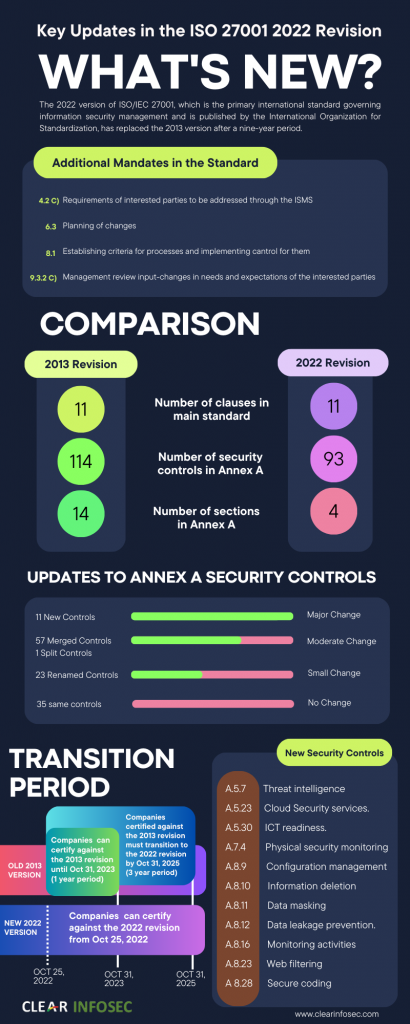
    The transition from ISO 27001:2013 to ISO 27001:2022 brings about a modernization and simplification of the framework, adapting it to present information security risks and technologies by reorganizing the controls. The annex’s title has been changed to “Information security controls reference” from its previous name, “Reference control objectives and controls.


    Aspect

    ISO 27001:2013

    ISO 27001:2022

    Control Domains/Themes

    14 domains

    4 categories

    Total Number of Controls

    114 controls (across 14 domains)

    Decreased overall 114 controls into 93 controls (across 4 categories)

    New Controls Introduced

    N/A

    Introduction of 11 new controls

    Controls Merged

    N/A

    Consolidation of 57 controls into fewer overarching controls

    Controls Renamed

    N/A

    Renaming of 23 controls for clarity or relevance

    Controls Removed

    N/A

    Elimination of 3 controls  deemed no longer necessary

    Reorganization of Controls

    1. Information security policies
    2. Organization of information security
    3. Human resource security
    4. Asset management
    5. Access control
    6. Cryptography
    7. Physical and environmental security
    8. Operations security
    9. Communications security
    10. System acquisition, development, and maintenance
    11. Supplier relationships
    12. Information security incident management
    13. Information security aspects of business continuity management
    14. Compliance

    1. A.5 Organizational controls (37 controls)
    2. A.6 People controls (8 controls)
    3. A.7 Physical controls (14 controls)
    4. A.8 Technological controls (34 controls)


    Updated Controls in ISO 27001:2022 Annex A

    The ISO 27001:2022 version introduces 11 new controls within Annex A.

    1. 5.7 Threat Intelligence:This control requires organizations to collect and analyze threat-related information to manage and reduce risks proactively.
    2. 5.23 Information Security for Use of Cloud Services:This control highlights the importance of securing cloud-based environments, mandating organizations to define security standards for cloud services, including specific processes and procedures tailored for cloud usage.
    3. 5.30 ICT Readiness for Business Continuity:This control requires organizations to guarantee the resilience and recoverability of information and communication technologies when disruptions occur.
    4. 7.4 Physical Security Monitoring:This control mandates the surveillance of critical physical locations like data centers and production sites to ensure access is restricted to authorized personnel, enhancing breach awareness.
    5. 8.9 Configuration Management:This control obliges organizations to oversee the configuration of their technological assets to safeguard against unauthorized modifications and maintain security.
    6. 8.10 Information Deletion:This control involves systematically deleting obsolete data to prevent unauthorized disclosure and comply with data privacy regulations.
    7. 8.11 Data Masking:This control directs organizations to obscure sensitive data, aligning with access control policies to shield confidential information from unauthorized viewers.
    8. 8.12 Data Leakage Prevention:This control requires implementing security measures to avert unauthorized exposure and leakage of sensitive data across systems, networks, and devices.
    9. 8.16 Monitoring Activities:This control requires the continuous surveillance of systems for anomalous behavior, coupled with the execution of effective incident response strategies.
    10. 8.23 Web Filtering:This control mandates the regulation of internet access within an organization to protect against digital threats and ensure the security of IT infrastructures.
    11. 8.28 Secure Coding:This control mandates the incorporation of secure coding practices throughout the software development lifecycle to reduce vulnerabilities and improve the security of applications.


    ISO 27001:2022 Transition Guidelines

    • Organizations currently holding an ISO 27001:2013 certification are required to undergo transition within a 36-month period. Throughout this transition period, their existing ISO 27001:2013 certificates will remain valid. Subsequently, ISO 27001:2022 certificates will be issued in accordance with the standard 3-year re-certification cycle.
    • Transition audits to ISO 27001:2022 can be conducted through various means, including surveillance audits, recertification audits, or special audits. Notably, initial certification does not necessitate a transition audit.
    • Transition audits must comprehensively address several factors, such as conducting a gap analysis against ISO 27001:2013, implementing any required changes to the auditee’s Information Security Management System (ISMS), updating the Statement of Applicability (SoA), and revising the risk treatment plan as needed. For a detailed breakdown of the transition requirements, please refer to the provided

    How Ana-Data Can Assist You

    Whether you’re currently certified to ISO/IEC 27001 or new to the standard, Ana-Data offers a comprehensive range of services to guide you towards successful certification.

    Our services encompass:

    Conducting ISO 27001 gap assessments and providing remediation support to prepare you for the certification audit. We cover all facets of remediation activities needed, from designing processes and architecture to implementing solutions, developing documentation, and offering project and program management. Additionally, we provide subject matter expert support in specific areas.

    Performing ISO 27001 internal audits as mandated by clause 9.2 of the standard.

    Equipping your team with the necessary knowledge and providing support throughout the certification process.

    Let Ana-Data be your partner in achieving ISO 27001 certification excellence.

  • Maximizing Data Governance and Privacy: A Holistic Approach with GRC Tools

    Maximizing Data Governance and Privacy: A Holistic Approach with GRC Tools

    In today’s interconnected digital landscape, data governance and privacy have become paramount concerns for organizations worldwide. With the exponential growth of data and the increasing complexity of regulatory environments, navigating the intricacies of data protection and regulatory compliance poses significant challenges. In response, organizations are turning to Governance, Risk Management, and Compliance (GRC) tools as essential instruments to fortify cybersecurity, safeguard data privacy, and ensure adherence to regulatory requirements.

    This comprehensive analysis delves into the transformative impact of GRC tools within the regulatory frameworks of the United States, India, the United Arab Emirates (UAE). By examining key data privacy regulations in these jurisdictions, we aim to elucidate the critical role of GRC tools in facilitating compliance, enhancing data governance practices, and mitigating privacy risks.

    Navigating Data Privacy Regulations:

    Data privacy regulations serve as foundational pillars for protecting individuals’ rights, fostering trust, and promoting responsible data handling practices. Here are nine key data privacy regulations, each with a brief description:

    1. General Data Protection Regulation (GDPR)  for European Union: GDPR imposes strict requirements on data processing, consent, transparency, and individual rights protection for EU residents’ data, with significant penalties for non-compliance.
    2. California Consumer Privacy Act (CCPA) for United States: CCPA grants consumers greater control over their personal information by requiring businesses to disclose data collection practices, offer opt-out mechanisms, and refrain from selling personal data without explicit consent.
    3. Personal Data Protection Bill (PDPB) for India: The PDPB aims to establish a comprehensive data protection framework aligned with global best practices, outlining principles for data processing, individual rights, data localization, and enforcement mechanisms.
    4. UAE Personal Data Protection Law: The law mandates companies to protect personal data, requiring consent for processing except in specific cases. Individuals have rights to request corrections and restrict data processing.
    5. Qatar Personal Data Protection Law: Individual shall have the right to privacy of their personal data. Such data may only be processed within a framework of transparency, honesty, respect for human dignity and in accordance with the provisions of the Data Protection Law.
    6. Saudi Arabia Personal Data Protection Law: Fair data processing, grants data subject rights like access and erasure, and imposes obligations on data controllers and processors regarding security measures, breach notification, and cross-border data transfers.
    7. California Privacy Rights Act (CPRA) -for United States:CPRA enhances consumer privacy protections in California by introducing additional rights, such as the right to correct inaccurate information and restrict the use of sensitive data, along with establishing the California Privacy Protection Agency (CPPA) for enforcement.
    8. Health Insurance Portability and Accountability Act (HIPAA) for United States: HIPAA sets standards for the protection of health information by healthcare providers, insurers, and business associates, ensuring the security and confidentiality of protected health information (PHI) and imposing penalties for non-compliance.
    9. Payment Card Industry Data Security Standard (PCI DSS): PCI DSS establishes security standards for organizations that process, store, or transmit payment card data, aiming to prevent payment card fraud and ensure secure payment transactions. Compliance is mandatory for entities handling payment card information.

    Challenges Before GRC Implementation:

    Before the widespread adoption of GRC tools, organizations encountered significant challenges in managing data governance and privacy:

    1. Fragmented Regulatory Landscape: Before implementing GRC frameworks, countries faced challenges due to fragmented or inconsistent data privacy regulations across different sectors and jurisdictions. This fragmentation leads to ambiguity, overlaps, and gaps in regulatory coverage, making it difficult for organizations to navigate and comply with disparate regulations.
    2. Lack of Regulatory Enforcement: Inadequate regulatory enforcement mechanisms pose challenges for ensuring compliance with data privacy regulations. Without effective enforcement, organizations may disregard data privacy requirements, leading to data breaches, misuse of personal information, and erosion of consumer trust.
    3. Limited Awareness and Capacity: Countries encountered challenges related to the lack of awareness and capacity among government agencies, businesses, and individuals regarding data privacy principles, regulatory requirements, and best practices. Building awareness, providing training, and enhancing institutional capacity are essential for promoting responsible data handling practices.
    4. Insufficient Data Protection Measures: Prior to GRC implementation, organizations lacked adequate data protection measures, including data encryption, access controls, and data breach response plans. This leaves sensitive information vulnerable to unauthorized access, cyberattacks, and data breaches, resulting in financial losses and reputational damage.
    5. Cross-Border Data Transfers: Managing cross-border data transfers presents challenges for ensuring data privacy and compliance with international data protection laws and regulations. Without clear guidelines and mechanisms for cross-border data flows, countries may struggle to protect individuals’ privacy rights and regulate the global movement of personal data effectively.

    Transformation Enabled by GRC Tools:

    The adoption of GRC tools has catalyzed transformative changes in data governance and privacy practices:

    1. Streamlined Regulatory Compliance: GRC tools automate compliance management processes, allowing regulatory agencies to efficiently track, monitor, and enforce compliance with laws, regulations, and standards. This streamlines regulatory oversight, reduces administrative burden, and enhances the effectiveness of enforcement actions.
    2. Enhanced Risk Identification and Mitigation: GRC tools enable regulatory agencies to identify, assess, and mitigate risks more effectively by providing comprehensive risk assessment methodologies, risk registers, and risk treatment workflows. Real-time risk monitoring and analytics enhance risk visibility and enable proactive risk management strategies.
    3. Improved Regulatory Reporting and Transparency: GRC tools facilitate the generation of standardized reports, dashboards, and analytics that provide regulatory agencies with real-time insights into governance, risk, and compliance activities. This improves transparency, accountability, and decision-making processes within regulatory frameworks.
    4. Strengthened Collaboration and Information Sharing: GRC tools facilitate collaboration and information sharing among regulatory agencies, government departments, and industry stakeholders. Centralized repositories, secure data exchange platforms, and standardized communication protocols enable effective collaboration on regulatory initiatives and enforcement efforts.
    5. Harmonized Regulatory Standards and Practices: GRC tools support the development and implementation of harmonized regulatory standards, policies, and practices across different sectors and jurisdictions. This fosters consistency, interoperability, and alignment of regulatory frameworks, promoting regulatory convergence and reducing regulatory arbitrage.
    6. Proactive Regulatory Change Management: GRC tools assist regulatory agencies in managing regulatory changes by tracking updates to laws, regulations, and standards, assessing the impact on stakeholders, and facilitating timely communication and implementation of regulatory changes. This enables regulatory frameworks to adapt quickly to evolving regulatory landscapes and emerging risks.

    Future Implications and Opportunities:

     Looking ahead, the continued evolution of GRC tools presents significant opportunities to further enhance data governance and privacy practices:

    Increased Regulatory Scrutiny and Compliance Requirements: With the growing importance of data privacy, regulatory scrutiny and compliance requirements are expected to intensify globally. This presents an opportunity for organizations to invest in robust GRC frameworks and technologies to ensure compliance with evolving regulatory landscapes and demonstrate accountability in data handling practices.

    Emergence of Privacy-Enhancing Technologies (PETs): The emergence of Privacy-Enhancing Technologies (PETs), such as homomorphic encryption, differential privacy, and blockchain-based solutions, presents opportunities for organizations to enhance data privacy while maintaining data utility and usability. Integrating PETs into GRC frameworks can enable organizations to adopt privacy-preserving practices and comply with regulatory requirements effectively.

    Integration of Artificial Intelligence (AI) and Machine Learning (ML) in GRC: The integration of Artificial Intelligence (AI) and Machine Learning (ML) capabilities into GRC platforms presents opportunities for organizations to automate compliance monitoring, risk assessment, and incident response processes. AI-powered GRC solutions can analyze large volumes of data, detect anomalies, and identify emerging risks, enabling proactive risk management and compliance enforcement.

    Focus on Ethical Data Use and Responsible AI: As concerns around ethical data use and responsible AI practices continue to rise, organizations are expected to prioritize ethical considerations in their data handling practices and AI deployments. GRC frameworks can play a crucial role in promoting ethical data governance, ensuring transparency in AI algorithms, and mitigating ethical risks associated with data processing and AI applications.


    Conclusion:

    In conclusion, GRC tools have emerged as linchpins in fortifying cybersecurity, safeguarding data privacy, and ensuring regulatory compliance across diverse regulatory landscapes. By addressing longstanding challenges, streamlining compliance processes, and enhancing transparency and accountability, GRC tools have ushered in a new era of data governance and privacy protection. As organizations and countries embrace technological innovations and regulatory advancements, the ongoing evolution of GRC tools will be essential to sustain resilience, foster trust, and promote responsible data governance in an increasingly interconnected and data-driven world.

  • StrelaStealer: The Growing Threat Landscape

    StrelaStealer: The Growing Threat Landscape

    In today’s interconnected world, the threat of cyber attacks looms larger than ever before. Cybersecurity breaches have become increasingly common, with attackers continuously devising new and sophisticated methods to infiltrate systems, steal sensitive data, and disrupt operations. As organizations embrace digital transformation and rely more heavily on technology, the importance of robust cybersecurity measures cannot be overstated.


    A New Wave of Phishing Attacks

    In recent months, cybersecurity researchers have raised the alarm over a surge in phishing attacks orchestrated with the aim of deploying a particularly insidious threat: StrelaStealer. These attacks have targeted over 100 organizations across the European Union and the United States, leaving a trail of compromised systems and data breaches in their wake.

    • Rise of the Phishing Campaigns: The proliferation of phishing campaigns highlights the ingenuity of cyber attackers in exploiting human vulnerabilities to gain unauthorized access to systems and networks.
    • Targets and Impact: The widespread impact of these attacks underscores the urgent need for organizations to bolster their defenses and enhance their cybersecurity posture.
    • Modus Operandi: Palo Alto Networks Unit 42 researchers have shed light on the tactics employed by these campaigns, which involve spam emails and dynamic attachment formats designed to evade detection by traditional security measures.

    The Anatomy of StrelaStealer:

    At the heart of these phishing campaigns lies StrelaStealer, a sophisticated malware strain designed to infiltrate email clients, exfiltrate sensitive data, and evade detection by security software. Understanding the inner workings of StrelaStealer is essential for organizations seeking to defend against this pervasive threat.

    • Genesis and Evolution: First detected in November 2022, StrelaStealer has undergone significant evolution, morphing into a formidable adversary capable of bypassing traditional security measures.
    • Adaptive Capabilities: StrelaStealer possesses the ability to continuously adapt, employing advanced obfuscation techniques to cloak its presence and evade detection by security analysts.
    • Shift in Attack Vectors: Recent iterations of StrelaStealer have seen attackers leveraging ZIP attachments disguised as invoices to deliver their payload, presenting new challenges for defenders seeking to mitigate the threat.
     

    The Evolution of StrelaStealer with Propagation Tactics      

    StrelaStealer

    1. Introduction to the New Variant: These attacks introduce a new variant of the StrelaStealer malware, which boasts improved obfuscation and anti-analysis techniques. This evolution marks a significant shift in the tactics employed by cyber attackers, presenting new challenges for cybersecurity professionals.
    2. Propagation via Phishing Emails: The new variant of StrelaStealer is propagated through phishing emails disguised as invoice-themed messages. These emails contain ZIP attachments, a departure from previous methods that utilized ISO files. This change in file format is intended to evade detection by security software and increase the likelihood of successful infection.
    3. Payload Delivery Mechanism: Upon opening the ZIP archive, recipients encounter a JavaScript file nested within. This JavaScript file is designed to drop a batch file onto the victim’s system. The batch file, in turn, executes the StrelaStealer DLL payload using rundll32.exe, a legitimate Windows component commonly used for running 32-bit dynamic-link libraries.
    4. Obfuscation Techniques: To further thwart analysis and detection, the StrelaStealer malware employs a variety of obfuscation tricks. These techniques make it challenging for cybersecurity professionals to identify and analyze the malicious code, particularly in sandboxed environments designed for security testing.
    5. Continuous Adaptation: With each successive wave of email campaigns, threat actors behind StrelaStealer evolve their tactics. This includes updating both the email attachment, which serves as the initial point of infection, and the DLL payload itself. By constantly refining their approach, attackers aim to stay ahead of security measures and maximize the effectiveness of their attacks.
     

    A Landscape Rife with Threats

    While StrelaStealer commands attention with its sophisticated capabilities, it is but one piece of a larger puzzle. The cybersecurity landscape is replete with a diverse array of threats, each presenting its own unique challenges to organizations seeking to protect their digital assets.

    • Ecosystem of Malware: Symantec’s findings reveal a broader ecosystem of malware strains, including Stealc, Revenge RAT, and Remcos RAT, proliferating through various distribution channels.
    • Exploiting Vulnerabilities: Malicious actors exploit a variety of tactics, from leveraging GitHub repositories to masquerading as fake obituaries in social engineering scams, to infiltrate systems and steal data.
    • Diverse Threat Landscape: The evolving threat landscape underscores the need for organizations to adopt a proactive stance towards cybersecurity, implementing robust security measures and staying informed about emerging threats.


    Strategies for Resilience

    In the face of these ever-evolving cyber threats, organizations must adopt a proactive approach to cybersecurity to protect their digital assets and mitigate the risks posed by malicious actors.

    1. Proactive Defense Measures: Organizations should implement robust security measures, such as intrusion detection systems and endpoint protection, to detect and mitigate cyber threats in real-time.
    2. Education and Awareness: Cultivating a culture of cybersecurity awareness among employees is essential, as they are often the first line of defense against phishing attacks and malware infections.
    3. Collaboration and Information Sharing: Collaboration between organizations and information sharing within the cybersecurity community are crucial for staying ahead of emerging threats and developing effective mitigation strategies.
    4. Investment in Technology: Investing in advanced security technologies, such as threat intelligence platforms and malware analysis tools, can enhance an organization’s ability to detect and respond to cyber threats effectively.
     

    Conclusion: 

    As the digital landscape continues to evolve, organizations must remain vigilant in the face of emerging cyber threats. By understanding the tactics employed by malicious actors, implementing robust security measures, and fostering a culture of cybersecurity awareness, organizations can navigate the perilous seas of cyberspace with confidence. Together, we can build a more resilient digital ecosystem, safeguarding our data and preserving the integrity of our interconnected world.

    Reference :

    New Strelastealer phishing attacks hit over 100 organizations in E.U. and U.S. The Hacker News. (2024b, March 23). https://thehackernews.com/2024/03/new-strelastealer-phishing-attacks-hit.html

  • Unveiling the Menace: Loop Denial-of-Service (DoS) Attacks

    Unveiling the Menace: Loop Denial-of-Service (DoS) Attacks

    In the vast and intricate world of cybersecurity, the discovery of novel threats often sends ripples of concern throughout the industry. One such discovery, the emergence of Loop Denial-of-Service (DoS) attacks, represents a significant milestone in the ongoing battle against cyber adversaries. These attacks, as elucidated by researchers from the esteemed CISPA Helmholtz-Center for Information Security, target application-layer protocols reliant on the User Datagram Protocol (UDP). Their findings shed light on a potentially devastating vulnerability that threatens the integrity and availability of countless hosts across the digital landscape.

    Understanding the Loop: Unraveling the Attack Vector

    At the core of this newfound threat lies a complex and sophisticated attack vector, aptly named the Loop DoS attack. Unlike conventional DoS attacks that rely on flooding targets with excessive traffic, Loop DoS attacks employ a cunning strategy that involves the perpetual exchange of messages between servers of UDP-based protocols. This insidious pairing of servers initiates an endless loop of communication, culminating in a deluge of network traffic that overwhelms the targeted systems, rendering them unresponsive and inaccessible to legitimate users.

    UDP’s Vulnerability

    To comprehend the vulnerability exploited by Loop DoS attacks, one must delve into the fundamental workings of the User Datagram Protocol (UDP). Unlike its counterpart, the Transmission Control Protocol (TCP), UDP lacks the mechanism for verifying the authenticity of source IP addresses. This inherent flaw makes UDP susceptible to a technique known as IP spoofing, wherein attackers manipulate packet headers to falsify the source IP address. By leveraging this vulnerability, adversaries can craft UDP packets containing forged victim IP addresses, thereby initiating a reflected denial-of-service onslaught with devastating consequences.

    Weaponizing UDP Implementations

    Building upon the foundation of UDP’s vulnerability, cybercriminals have devised a cunning ploy to exploit specific implementations of UDP-based protocols. These protocols, ranging from Domain Name System (DNS) to Network Time Protocol (NTP) and Trivial File Transfer Protocol (TFTP), unwittingly serve as conduits for orchestrating Loop DoS attacks. Through meticulous manipulation of these protocols, attackers can orchestrate a self-perpetuating loop of communication between vulnerable servers, amplifying the impact of the assault and exacerbating the challenge faced by defenders.

    Unveiling the Attack Process

    By dissecting the sequence of events that unfold during the execution of this attack, organizations can gain invaluable insights into its intricacies and implement targeted mitigation measures to mitigate the risk effectively. Let’s delve into the meticulous breakdown of the attack process to shed light on its modus operandi and the vulnerabilities it exploits.

    1. Setting the Stage: Imagine a scenario where two application servers, let’s call them Server A and Server B, are operational and running vulnerable versions of UDP protocols. These servers are designed to handle legitimate requests from clients or other servers.
    1. Unsuspecting Servers Await Requests: Server A and Server B are functioning normally, waiting for incoming requests as per their intended purpose. They are unaware of any impending threat or malicious activity.
    2. Entry of the Threat Actor: Suddenly, a threat actor enters the scene. Armed with knowledge of the vulnerabilities inherent in UDP protocols, the attacker seeks to exploit these weaknesses for nefarious purposes.
    3. Exploiting UDP Weaknesses: UDP, being a connectionless protocol, lacks mechanisms to verify the authenticity of source IP addresses. This makes it vulnerable to IP spoofing, a technique where attackers forge the source IP address in packets to deceive servers.
    4. Initiating Communication: The threat actor initiates communication with Server A by spoofing the IP address of Server B. From Server A’s perspective, the incoming request appears legitimate and originates from Server B.
    5. Seemingly Innocuous Exchange: Server A, unaware of the deception, responds to the apparent request from Server B with a genuine response. This exchange appears innocuous at first glance, as Server A is simply responding to what it believes to be a legitimate request from Server B.
    6. Triggering the Chain Reaction: However, this interaction sets in motion a chain reaction. Upon receiving the response from Server A, Server B reciprocates with its own response, believing it to be communicating with Server A.
    7. Ricocheting Error Messages: Here comes the crux of the attack. As Server A and Server B continue to exchange messages, each server mistakenly believes it is communicating with the other. This leads to a cascade of error messages bouncing back and forth between the two servers.
    8. Endless Loop of Communication: The cycle perpetuates itself, with error messages ricocheting endlessly between Server A and Server B. This results in a significant increase in network traffic, consuming resources and bandwidth on both servers.
    9. Resource Depletion and Unresponsiveness: As the exchange of error messages continues unabated, Server A and Server B gradually deplete their resources. Bandwidth, processing power, and memory are exhausted, leading to a state of unresponsiveness.
    10. Denial-of-Service Condition: Eventually, the relentless barrage of error messages renders both servers incapacitated. They become unable to fulfill legitimate requests from clients or other servers, effectively resulting in a denial-of-service condition.


    The Domino Effect: The Consequences

    As the error messages propagate back and forth incessantly between the two servers, a cascade of consequences ensues. With each exchange, the servers unwittingly deplete their finite resources, including bandwidth, processing power, and memory. This symbiotic exchange of errors culminates in a catastrophic denial-of-service scenario, leaving the targeted services paralyzed and inaccessible to legitimate users, thus achieving the malicious objectives of the attackers.

    The Magnitude of the Threat:

    Amidst the complexity and sophistication of Loop DoS attacks, it is essential to quantify the magnitude of the threat they pose to the digital ecosystem. According to estimates provided by CISPA, approximately 300,000 hosts and their associated networks are susceptible to exploitation through Loop DoS attacks. While empirical evidence of active exploitation may be lacking, the potential impact of this threat cannot be understated, underscoring the urgent need for proactive mitigation measures.

    Mitigation Measures

    In the face of this looming threat, the importance of proactive mitigation measures cannot be overstated. Initiatives such as Best Current Practice 38 (BCP38), aimed at filtering spoofed traffic, assume critical significance in fortifying the resilience of network infrastructures against Loop DoS attacks and similar threats. By implementing robust defensive strategies and staying abreast of emerging vulnerabilities, organizations can bolster their defenses and mitigate the risk posed by this insidious exploit.

    Raising the Red Flag: Impacted Products and Manufacturers

    As the ripple effects of Loop DoS attacks reverberate across the cybersecurity landscape, it is imperative to identify and address the vulnerabilities present in affected products and manufacturers. The researchers at CISPA have identified numerous products from industry giants such as Broadcom, Cisco, Honeywell, Microsoft, MikroTik, and Zyxel that are susceptible to exploitation. This revelation underscores the urgency for stakeholders to collaborate closely with manufacturers and security experts to remediate vulnerabilities promptly and safeguard against potential exploitation.

    Conclusion:

    In conclusion, the emergence of Loop DoS attacks serves as a sobering reminder of the ever-evolving nature of cyber threats and the imperative for constant vigilance. By understanding the intricacies of this threat and adopting proactive mitigation strategies, organizations can fortify their defenses and mitigate the risk posed by this insidious exploit. Let this revelation serve as a clarion call for collaboration, resilience, and unwavering commitment to cybersecurity in the face of adversity.


    Reference:

    New “loop dos” attack impacts hundreds of thousands of systems. The Hacker News. (2024, March 20). https://thehackernews.com/2024/03/new-loop-dos-attack-impacts-hundreds-of.html

  • Advanced Threat Modeling with NIST CSF: Technical Strategies for Effective Risk Management

    Advanced Threat Modeling with NIST CSF: Technical Strategies for Effective Risk Management

    Introduction to Advanced Threat Modeling

    In today’s ever-evolving threat landscape, cybersecurity remains a paramount concern for organizations worldwide. As adversaries continuously refine their tactics and exploit new vulnerabilities, the need for proactive defense measures has never been more critical. Advanced Threat Modeling emerges as a pivotal strategy in this dynamic environment, offering organizations a systematic approach to identify, assess, and mitigate potential risks before they can be exploited.

    At its core, advanced threat modeling embodies a proactive mindset, shifting the focus from reactive incident response to preemptive risk management. By meticulously dissecting the intricate architecture of systems, applications, and networks, organizations can uncover hidden vulnerabilities and anticipate potential attack vectors. This proactive stance enables technical teams to fortify defenses, prioritize resource allocation, and stay one step ahead of cyber threats.

    Central to the efficacy of advanced threat modeling is its integration with established cybersecurity frameworks, such as the National Institute of Standards and Technology Cybersecurity Framework (NIST CSF). NIST CSF provides a structured blueprint for managing cybersecurity risks, encompassing five core functions: Identify, Protect, Detect, Respond, and Recover. Through a symbiotic relationship with NIST CSF, advanced threat modeling enriches each of these functions, enhancing their effectiveness and resilience.

    In this blog series, we embark on a comprehensive exploration of advanced threat modeling within the framework of NIST CSF. We delve deep into technical strategies, methodologies, and best practices, equipping readers with the knowledge and tools necessary to navigate the intricacies of modern cybersecurity. From understanding the foundational concepts of threat modeling to implementing advanced techniques and leveraging cutting-edge technologies, this series aims to empower technical professionals in their quest for robust risk management and effective threat mitigation.


    Deep Dive into Threat Modeling Techniques

    Threat modeling represents a systematic approach to identifying, analyzing, and mitigating vulnerabilities within systems and networks, serving as a cornerstone of modern cybersecurity practices. By peering beneath the surface and dissecting the intricate interplay of assets, threats, and vulnerabilities, organizations can gain invaluable insights into their security posture and bolster their defenses against evolving cyber threats.

    In this exploration, we delve beyond the surface level of threat modeling, venturing into the depths of advanced techniques and methodologies. From scenario-based modeling to attack surface analysis and beyond, we illuminate the path to proactive risk management and resilience. Join us as we unravel the intricacies of threat modeling, empowering organizations to anticipate, mitigate, and thwart cyber threats with precision and confidence.

    Threat Intelligence Integration: By leveraging threat intelligence feeds, organizations can gain valuable insights into emerging threats and adversary tactics, allowing for more informed risk assessments and mitigation strategies.
    Scenario-based Modeling: Developing hypothetical attack scenarios based on threat actor behaviors helps organizations simulate real-world cyber-attacks and identify potential vulnerabilities in their systems and processes.
    • Attack Surface Analysis: Conducting a comprehensive analysis of the organization’s attack surface – including networks, applications, and endpoints – enables organizations to identify potential entry points for attackers and prioritize mitigation efforts accordingly.
    Automated Threat Modeling Tools: Utilizing automated threat modeling tools streamlines the threat modeling process by automating vulnerability identification and risk assessment, allowing organizations to focus their resources on the most critical areas of concern.

    Integration with NIST CSF Core Functions:

    The National Institute of Standards and Technology Cybersecurity Framework (NIST CSF) serves as a comprehensive blueprint for managing cybersecurity risks, encompassing five core functions: Identify, Protect, Detect, Respond, and Recover. Each of these functions plays a vital role in fortifying an organization’s cyber defenses and enhancing its resilience against threats. When integrating advanced threat modeling techniques with NIST CSF, organizations can amplify the effectiveness of each core function, thereby establishing a robust framework for proactive risk management.
    1. Governance in cybersecurity is paramount, serving as the cornerstone of setting up and overseeing an organization’s risk management approach, expectations, and policies. It encompasses several key elements: firstly, understanding the organization’s risk context, including its mission, priorities, stakeholders, objectives, and direction, is essential for informed decision-making. Secondly, a robust risk management strategy is crucial, involving the establishment of priorities, constraints, and risk tolerance to guide operational risk decisions effectively. Through effective governance, organizations can navigate the complex landscape of cybersecurity risks with confidence and resilience.
    2. Identify: At the heart of NIST CSF lies the Identify function, which involves understanding and managing cybersecurity risks to systems, assets, data, and capabilities. Advanced threat modeling provides a systematic approach to identifying potential threats and vulnerabilities within the organization’s infrastructure. By conducting comprehensive risk assessments and threat modeling exercises, organizations can gain insights into their attack surface, prioritize critical assets, and understand the potential impact of cyber threats.
    3. Protect: Building upon the insights gained from threat modeling, organizations can implement appropriate safeguards to protect their systems and data from potential threats. Integration with NIST CSF enables organizations to align their protective measures with identified risks and vulnerabilities. By mapping threat modeling findings to NIST CSF controls and best practices, organizations can ensure that protective measures are deployed effectively, mitigating potential risks and enhancing their overall security posture.
    4. Detect: The Detect function of NIST CSF focuses on establishing mechanisms to identify cybersecurity events promptly. Threat modeling techniques play a crucial role in enhancing detection capabilities by anticipating potential attack vectors and anomalous behaviors. By incorporating threat modeling insights into security monitoring and incident detection processes, organizations can enhance their ability to detect and respond to cyber threats in a timely manner, minimizing the impact of security incidents.
    5. Respond: In the event of a cybersecurity incident, organizations must have predefined response procedures to contain the impact and restore normal operations. Advanced threat modeling enables organizations to anticipate potential threat scenarios and develop proactive response strategies. By integrating threat modeling with NIST CSF, organizations can align their incident response plans with identified risks and vulnerabilities, ensuring a coordinated and effective response to cybersecurity incidents.
    6. Recover: After an incident, organizations need to recover swiftly, restoring affected systems and data while implementing measures to prevent future occurrences. Threat modeling can inform post-incident recovery efforts by identifying weaknesses in existing controls and providing insights into lessons learned. By integrating threat modeling with the Recover function of NIST CSF, organizations can streamline the recovery process, minimize downtime, and enhance their resilience against similar threats in the future.

    Conclusion and Future Considerations:

    In conclusion, the integration of advanced threat modeling techniques with the core functions of the National Institute of Standards and Technology Cybersecurity Framework (NIST CSF) represents a proactive approach to cybersecurity risk management. By systematically identifying, analyzing, and mitigating potential threats, organizations can enhance their resilience against cyber attacks and safeguard their digital assets effectively.

    Looking ahead, it is essential for organizations to continue evolving their threat modeling practices to adapt to the ever-changing threat landscape. This includes embracing emerging technologies such as artificial intelligence and machine learning to enhance threat detection capabilities and automate aspects of the threat modeling process. Additionally, collaboration and information sharing within the cybersecurity community will be crucial for staying abreast of new threats and vulnerabilities.

    Furthermore, organizations should prioritize ongoing training and education for their technical teams to ensure they remain equipped with the skills and knowledge necessary to effectively implement advanced threat modeling techniques. By fostering a culture of cybersecurity awareness and continuous improvement, organizations can strengthen their cyber defenses and mitigate risks proactively. Together, these efforts will contribute to a more secure digital ecosystem for organizations and individuals alike.

  • NIST Cybersecurity Framework 2.0: A Comprehensive Guide to Enhanced Digital Defense

    NIST Cybersecurity Framework 2.0: A Comprehensive Guide to Enhanced Digital Defense

    In a groundbreaking development, the National Institute of Standards and Technology (NIST) recently unveiled version 2.0 of its renowned Cybersecurity Framework (CSF). This release, the first major update in a decade, reflects the dynamism of the digital landscape and the evolving threat landscape. Initially tailored for critical infrastructure organizations, the CSF 2.0 is now poised to become a versatile and indispensable tool for organizations of all sizes and security maturity levels.

    The Evolution of CSF: A Decade of Progress

    The original cybersecurity framework gained prominence by addressing the unique challenges faced by critical infrastructure entities. However, NIST recognized the broader applicability of its framework and responded by incorporating valuable feedback received during the draft phase. The result is the CSF 2.0, equipped with expanded core guidance and additional resources to empower organizations in their quest for robust cybersecurity practices.

    Core Components of CSF 2.0

    CSF 2.0 is built on six crucial pillars, each vital for strengthening how an organization protects itself online. This update introduces the ‘Govern’ function, a critical addition that specifically addresses risk management. Experts, such as Robert Booker, Chief Strategy Officer at HITRUST, highlight the importance of adding the “Govern” function, emphasizing its key role in enhancing the overall effectiveness of the framework.

    Let’s take a closer look at the new elements introduced in NIST CSF version 2.0.

    GOVERNANCE (GV): In charge of setting up and overseeing the organization’s approach to managing risks, expectations, and policies.

    • Organizational Context (GV.OC): Understanding the organization’s risk context, including mission, priorities, stakeholders, objectives, and direction.
    • Risk Management Strategy (GV.RM): Establishing priorities, constraints, risk tolerance, and using them to support operational risk decisions.
    • Roles and Responsibilities (GV.RR): Coordinating cybersecurity roles and responsibilities with all stakeholders for accountability, performance evaluation, and continuous improvement.
    • Policies and Procedures (GV.PO): Creating and communicating organizational cybersecurity policies, processes, and procedures.

    IDENTIFY (ID): Determining the current cybersecurity risk to the organization.

    • Asset Management (ID.AM): Identifying and managing assets crucial for organizational objectives based on their importance and risk strategy.
    • Risk Assessment (ID.RA): Understanding cybersecurity risk to organizational operations, assets, and individuals.
    • Supply Chain Risk Management (ID.SC): Identifying, assessing, and managing supply chain risks in line with priorities, constraints, risk tolerances, and assumptions.
    • Improvement (ID.IM): Identifying improvements to organizational cybersecurity risk management processes.

    PROTECT (PR): Using protective measures to mitigate and reduce cybersecurity risks.

    • Identity Management, Authentication, and Access Control (PR.AA): Limiting access to authorized users, processes, and devices based on the assessed risk of unauthorized access.
    • Awareness and Training (PR.AT): Providing cybersecurity awareness and training to personnel and third parties in accordance with policies and procedures.
    • Data Security (PR.DS): Managing information and records in line with the organization’s risk policy to protect confidentiality, integrity, and availability.
    • Platform Security (PR.PS): Managing hardware and software of physical and virtual platforms to protect confidentiality, integrity, availability, and aligning with the organization’s risk policy.
    • Technology Infrastructure Resilience (PR.IR): Managing security architectures to protect assets’ confidentiality, integrity, availability, and the organization’s resilience.

     DETECT (DE): Finding and analyzing potential cybersecurity attacks and compromises.

    • Adverse Event Analysis (DE.AE): Analyzing adverse cybersecurity events to identify and characterize possible attacks, compromises, unauthorized activities, and protection gaps.
    • Continuous Monitoring (DE.CM): Monitoring assets for potential adverse cybersecurity events, including indicators of attacks, compromises, and other activities with a potentially negative impact on cybersecurity.

    RESPOND (RS): Taking action on a detected cybersecurity incident.

    • Incident Management (RS.MA): Managing responses to detected cybersecurity incidents.
    • Incident Analysis (RS.AN): Conducting investigations to ensure an effective response and support recovery activities.
    • Incident Response Reporting and Communication (RS.CO): Coordinating remediation activities with internal and external parties for effective incident response and recovery.

    Implementation Support and Resources

    One distinguishing feature of CSF 2.0 is its commitment to providing practical assistance to organizations. Users are not left to navigate the framework alone; instead, they are equipped with implementation examples and quick-start guides tailored to their specific needs. The framework also offers a searchable catalog of references, allowing organizations to align their guidance with over 50 relevant cybersecurity documents. With availability in over a dozen languages, CSF 2.0 is set to become a global standard, thanks to volunteers translating it worldwide.

    NIST Director Laurie E. Locascio emphasizes that CSF 2.0 is not a one-size-fits-all solution. Rather, it is a suite of resources that organizations can customize and use individually or in combination. This flexibility ensures that the framework can adapt to evolving cybersecurity needs and capabilities over time, providing enduring value to organizations.


    Industry Insights and Implications

    To gauge the real-world implications of CSF 2.0, we turn to Katherine Ledesma, Head of Public Policy & Government Affairs at industrial cybersecurity firm Dragos. Her insights shed light on the specific benefits and challenges that organizations with industrial control systems (ICS) and operational technology (OT) systems may encounter. CSF 2.0 aligns with the industry-wide shift in perception. It moves the conversation from viewing cybersecurity as a mere cost center to recognizing it as an investment that not only protects but also supports business operations. This paradigm shift holds particular significance for entities relying on ICS and OT cybersecurity, such as manufacturing facilities and utility providers.

    While CSF 2.0 acknowledges the broad applicability of its functions, categories, and subcategories to both IT and OT environments, Ledesma anticipates a focused effort on developing distinct approaches for ICS/OT protection. This involves continuous updates to documents like the Guide to OT Security and incorporation of specific concepts into broader planning and guidance documents.

    Conclusion

    In concluding our exploration of NIST Cybersecurity Framework 2.0, we recognize it as a pivotal milestone in the ongoing efforts to fortify digital defenses. Its versatility, practical resources, and adaptability to diverse organizational needs position it as a crucial tool in the dynamic landscape of cybersecurity. As organizations embrace this framework, the dialogue around its implementation and its impact on various sectors will undoubtedly shape the future of cybersecurity practices. NIST’s commitment to continuous improvement ensures that CSF 2.0 remains at the forefront of cybersecurity, empowering organizations to navigate the evolving digital threatscape with resilience and confidence.


    Reference:

    Kovacs, B. (2024, February 27). NIST Cybersecurity Framework 2.0 officially released. SecurityWeek. https://www.securityweek.com/nist-cybersecurity-framework-2-0-officially-released/

    NIST releases version 2.0 of Landmark Cybersecurity Framework. NIST. (2024, February 26). https://www.nist.gov/news-events/news/2024/02/nist-releases-version-20-landmark-cybersecurity-framework

  • Microsoft Azure’s Biggest Security Crisis: : Massive Data Breach Puts Executive Accounts at Risk

    Microsoft Azure’s Biggest Security Crisis: : Massive Data Breach Puts Executive Accounts at Risk

    In the ever-evolving landscape of cybersecurity threats, even tech giants like Microsoft are not impervious to the sophisticated tactics employed by threat actors. The recent cybersecurity incident that befell Microsoft marked not just a breach but a watershed moment in the company’s history. This extensive blog aims to unravel the intricacies of this incident, from its initial discovery to the far-reaching consequences, the lessons it imparts to the tech industry, a closer examination of the operational infrastructure utilized by the threat actors, and crucial recommendations to fortify organizations against such attacks.

    The Genesis of the Incident:

    In the latter part of November 2023, cybersecurity researchers at Proofpoint unearthed a campaign of unparalleled sophistication. This malicious endeavor seamlessly blended credential phishing with the ominous cloud account takeover (ATO) technique, creating a potent threat that was not only persistent but highly adaptive. What set this campaign apart was its ability to entice users with personalized phishing lures cunningly embedded within shared documents.

    These seemingly innocuous documents harbored a dangerous secret – links adorned with seemingly benign texts like “View Document.” Once users interacted with these links, they found themselves redirected to malicious phishing webpages, ensnared in a trap set by meticulous threat actors.

    Targets Across Roles and Organizations

    The fallout from this cyber onslaught was far-reaching, impacting organizations on a global scale. Unlike many cyber incidents that target a specific sector or demographic, this campaign displayed a lack of discrimination in its selection of targets. From Sales Directors to executive positions such as “Vice President, Operations,” the threat actors cast a wide net, aiming to compromise accounts with varying levels of access.

    This diverse impact raised questions about the strategic intent behind the attack. The choice of targets suggested a meticulous approach, aiming to infiltrate organizations at various levels and potentially gain access to a treasure trove of sensitive information and resources.

    The Anatomy of the Attack: Techniques and Objectives

    Understanding the anatomy of this cyber attack is essential to comprehend its severity. Threat analysts, in their pursuit of unraveling the incident, identified specific Indicators of Compromise (IOCs). A distinctive Linux user-agent emerged as a key element, providing insight into unauthorized access to various Microsoft365 apps.

    The aftermath of successful initial access unveiled a sequence of unauthorized post-compromise activities, each more insidious than the last. From manipulations of Multi-Factor Authentication (MFA) methods to data exfiltration, internal and external phishing, financial fraud attempts, and the creation of mailbox rules, the attackers left no stone unturned.

    figure 1: Post-account takeover example, attackers creating obfuscation mailbox rules.

    Their techniques revealed a profound understanding of both technological vulnerabilities and human psychology. The use of deceptive links embedded in documents showcased a keen awareness of human behavior. Links with seemingly innocuous texts like “View Document” played on users’ natural inclination to trust familiar prompts, ultimately leading them into the clutches of the threat actors.

    figure 2: Compromised cloud tenant Example: attackers manipulating MFA.

    The primary objectives of the cyber onslaught were financial fraud and data theft. The potential manipulation of the Multi-Factor Authentication (MFA) system heightened the severity, granting threat actors the power to alter recovery phone numbers or install app authenticators, thereby extending their control over compromised accounts.

    Microsoft’s Security Under Scrutiny

    The incident not only shed light on the vulnerabilities within Microsoft’s security infrastructure but also brought forth industry-wide concerns. Amit Yoran, CEO of Tenable, had previously voiced his concerns about Microsoft’s poor cybersecurity measures, describing their track record as “even worse than you think.” Yoran highlighted a recurring pattern of negligence, leading to multiple data breaches, extending to espionage by the Chinese government on the US government and its citizens.

    This critique from a cybersecurity industry leader underscored the need for a robust and proactive approach to cybersecurity within tech companies. Microsoft, being a behemoth in the industry, faced not just scrutiny but also the responsibility to set a high standard for security practices.

    Reflections on Industry-Wide Security Challenges

    The incident involving Microsoft served as a microcosm of broader security challenges within the tech industry. Security breaches, once considered anomalies, now cast a long shadow over the digital landscape. The response from the U.S. government indicated not only the severity of the incident but also the collective urgency to address the escalating menace of cyber threats.

    The incident prompted a broader reflection on the need for transparency and the disclosure of significant data breaches within the tech industry. The prevalence of security breaches, not just in Microsoft but across various tech companies, underscored the imperative for accountability and proactive measures to safeguard sensitive information.

    Decoding Attacker’s Tactics

    In the intricate web of a cybersecurity incident, the operational infrastructure employed by threat actors often serves as a critical piece of the puzzle. Forensic analysis of the recent attack on Microsoft has unraveled a nuanced understanding of the attackers’ operational tactics, shedding light on the sophisticated maneuvers executed to conceal their tracks and maximize the impact of their malicious activities.

    Proxies, Data Hosting, and Hijacked Domains:

    The forensic scrutiny of the attack revealed a multifaceted operational infrastructure utilized by the threat actors. Proxies, data hosting services, and hijacked domains emerged as the key components constituting the attackers’ toolkit. These elements played a pivotal role in orchestrating the attack while simultaneously presenting challenges for defenders seeking to thwart malicious activities.

    A Tactical Geographical Deception

    One notable aspect of the attackers’ strategy was the shrewd use of proxy services. These services served a dual purpose – not only did they facilitate unauthorized activities, but they also played a crucial role in aligning the apparent geographical origin of these activities with that of the targeted victims. This tactical maneuver served as a means to evade geo-fencing policies, confounding defenders attempting to trace the source of the attack.

    Furthermore, the threat actors demonstrated a high level of sophistication by frequently alternating proxy services. This dynamic approach not only masked their true location but also posed an additional challenge for defenders attempting to block malicious activity. The strategic use of proxy services showcased the threat actors’ commitment to operational secrecy and adaptability in the face of potential countermeasures.

    Local Fixed-Line ISPs

    Beyond the realm of proxy services, the analysis unearthed the utilization of certain local fixed-line ISPs by the threat actors. This choice potentially exposed their geographical locations, providing a glimpse into the origins of the attack. Notable among these non-proxy sources were the Russia-based ‘Selena Telecom LLC’ and Nigerian providers ‘Airtel Networks Limited’ and ‘MTN Nigeria Communication Limited.’

    This revelation adds an intriguing layer to the investigation, raising questions about the geographical distribution of the threat actors and potential insights into their affiliations. The choice of specific ISPs indicates a deliberate strategy, offering a glimpse into the geographical landscape that these threat actors may inhabit.

    Russian and Nigerian Parallels

    While the forensic analysis has provided valuable insights into the attackers’ operational infrastructure, the attribution of this campaign remains elusive. At present, Proofpoint has refrained from attributing the campaign to any known threat actor. However, a noteworthy observation emerges – the possibility of Russian and Nigerian involvement, drawing parallels to previous cloud attacks.

    This conjecture adds complexity to the incident, hinting at potential similarities in tactics, techniques, and procedures employed by threat actors from these regions. The historical context of cloud attacks involving Russian and Nigerian actors becomes a relevant point of consideration, urging a nuanced exploration into the motivations and affiliations of the threat actors involved.

    Recommendations: Strengthening Your Cyber Defense

    In the wake of this sophisticated cyber attack, organizations must proactively strengthen their cyber defense mechanisms. The following recommendations provide a roadmap for fortifying your organization against similar threats:

    1. Monitor User Agent Strings and Source Domains: Vigilantly monitor your organization’s logs for the specific user agent string and source domains associated with the attack. This proactive measure aids in the early detection and mitigation of potential threats.
    2. Credential Management: Enforce an immediate change of credentials for compromised and targeted users. Additionally, institute periodic password changes for all users to enhance overall security.
    3. Cloud Environment Security: Identify account takeover (ATO) and potential unauthorized access to sensitive resources in your cloud environment. Security solutions should offer accurate and timely detection for both initial account compromise and post-compromise activities.
    4. Threat Vector Identification: Scrutinize and identify the initial threat vectors, including email threats such as phishing, malware, impersonation, brute-force attacks, and password spraying attempts.
    5. Auto-Remediation Policies: Implement auto-remediation policies to reduce attackers’ dwell time and minimize potential damages. Swift response mechanisms are crucial in mitigating the impact of cyber threats.

    Conclusion:

    In the intricate landscape of a cybersecurity incident, the operational infrastructure employed by threat actors serves as a critical thread in unraveling the entire tapestry. The use of proxies, data hosting services, and local fixed-line ISPs unveils a strategic dance between concealment and exposure, where threat actors deploy sophisticated tactics to navigate the digital realm.

    As the investigation continues, the revelation of the attackers’ operational infrastructure offers a deeper understanding of their modus operandi. The geographical deceptions through proxies, exposure through local ISPs, and the potential Russian and Nigerian parallels underscore the need for a comprehensive approach to cybersecurity.

    In the ever-evolving landscape of cyber threats, this analysis not only aids in understanding the specifics of the Microsoft attack but also contributes to the broader discourse on cybersecurity strategies. The challenges posed by operational infrastructure demand continual vigilance, adaptability, and collaboration within the cybersecurity community to fortify defenses against the relentless ingenuity of threat actors.

    Reference:

    12, F., & The Proofpoint Cloud Security Response Team. (2024, February 12). Community alert: Ongoing malicious campaign impacting Azure Cloud Environments: Proofpoint us. Proofpoint. https://www.proofpoint.com/us/blog/cloud-security/community-alert-ongoing-malicious-campaign-impacting-azure-cloud-environments

    Chowdhary, K. (2024, February 21). Microsoft Azure hit with the largest data breach in its history; hundreds of executive accounts compromised. The Tech Report. https://techreport.com/news/microsoft-azure-hit-with-the-largest-data-breach-in-its-history-hundreds-of-executive-accounts-compromised/