Author: Clear Infosec

  • OpenAI Data Breach Exposes 20 Million User Credentials: What You Need to Know

    OpenAI Data Breach Exposes 20 Million User Credentials: What You Need to Know

    In recent years, artificial intelligence (AI) has taken center stage in technological advancements, with companies like OpenAI leading the charge. However, with great innovation comes great responsibility—especially in cybersecurity. Recent reports suggest that threat actors on dark web forums allege they have stolen and leaked 20 million OpenAI user login credentials. This claim, if verified, would mark one of the most substantial data breaches in the tech industry to date. 

    According to Bleeping Computer, sources indicate that OpenAI may have suffered an internal security incident that led to unauthorized access to proprietary research and discussions. SecurityWeek further reported that the breach could involve leaked employee credentials, raising concerns about insider threats or phishing attacks targeting OpenAI personnel.

    Understanding the Alleged Breach

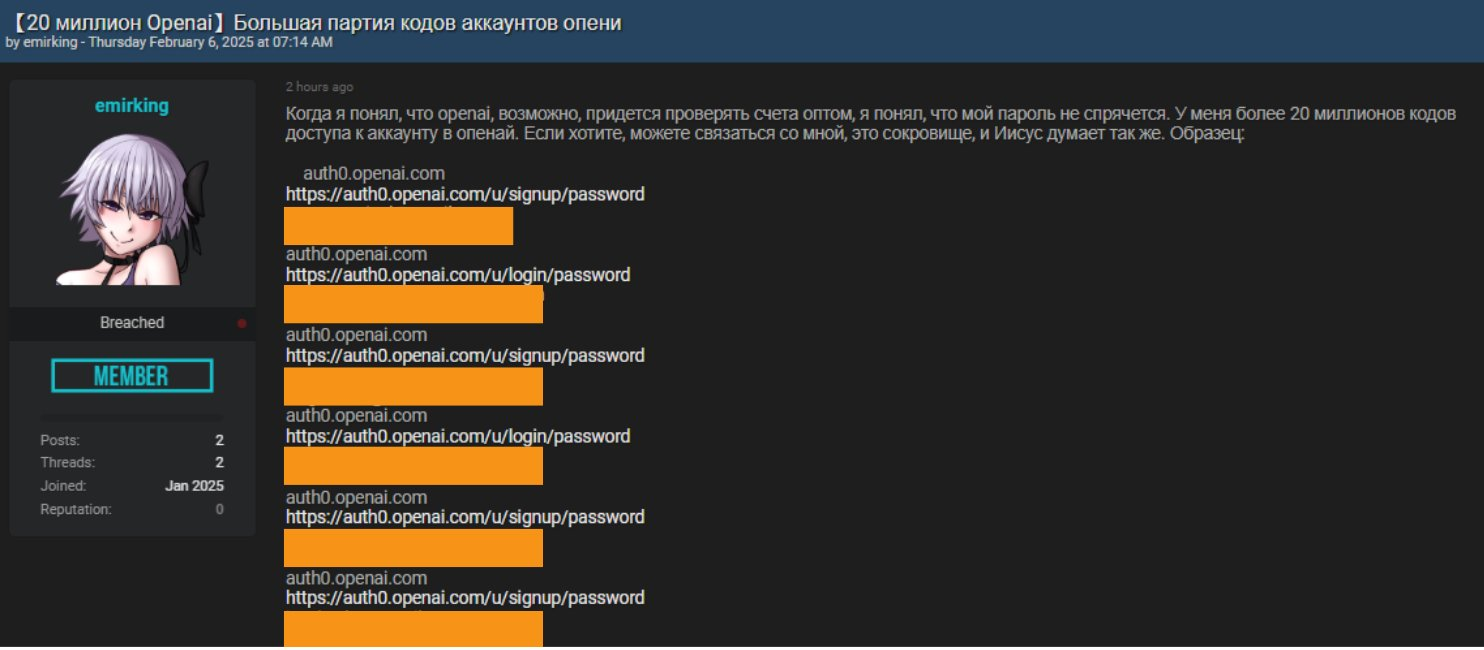
    According to a report by CyberDaily, an anonymous source has claimed to have accessed OpenAI’s internal discussions and proprietary information. The details of the breach remain unclear, but there are indications that certain confidential messages and internal documents may have surfaced on underground hacking forums. The anonymous threat actor advertised their haul on a dark web forum, stating, “I have more than 20 million access codes to OpenAI accounts. If you want, you can contact me – this is a treasure, and Jesus thinks so too.” They also expressed concerns about OpenAI potentially auditing accounts in bulk, implying that their password might be exposed during such checks.

    Threat actor’s claims on an underground forum (Source : HackManac)

    The credentials, comprising email addresses and passwords, are reportedly being offered for sale at minimal prices. While the authenticity of these claims remains unverified, the sheer volume of purportedly compromised accounts has raised alarms among cybersecurity experts and users alike.

    As of now, OpenAI has not issued an official statement confirming or denying the alleged breach. In similar situations, organizations typically initiate thorough investigations and collaborate with cybersecurity experts to assess the validity of such claims and mitigate potential damages.

    Potential Risks and Consequences

    If the alleged breach is genuine, it could have far-reaching implications for OpenAI and the wider AI industry. Some of the key risks include:

    1. Intellectual Property Theft

    One of the biggest concerns in this scenario is the potential exposure of OpenAI’s proprietary algorithms, research, and AI training data. AI companies invest years into developing innovative models, and if their intellectual property is leaked, it could lead to unauthorized replication or misuse.

    2. Data Privacy Concerns

    If customer or user data was accessed, OpenAI could face severe regulatory scrutiny. With strict data protection laws such as GDPR in Europe and CCPA in California, any mishandling of personal data could result in significant legal and financial consequences. Reports indicate that up to 100,000 user accounts may have been affected, raising serious privacy concerns.

    3. Trust and Reputation Damage

    A cybersecurity incident of this scale could erode trust among OpenAI’s customers, partners, and investors. AI companies, particularly those working with enterprises and governments, must maintain high security standards. Any sign of vulnerability could make potential clients hesitant to adopt AI-driven solutions.

    4. Potential National Security Implications

    Given that OpenAI collaborates with governments and large enterprises on AI research, a data leak could have national security implications. Sensitive AI advancements in areas like cybersecurity, automation, and defense could fall into the wrong hands, leading to geopolitical concerns.

    5. Risk of Model Manipulation and AI Misuse

    If adversaries gain access to OpenAI’s proprietary AI models, they could manipulate the datasets or tweak the training processes to introduce bias, misinformation, or security vulnerabilities. Malicious actors could repurpose AI tools for nefarious purposes, such as generating deepfake content or automating cyberattacks.

    Lessons for the AI Industry

    Whether or not the OpenAI data breach is confirmed, this incident serves as an essential reminder for AI companies worldwide to reinforce their cybersecurity frameworks. Here are some crucial steps that organizations developing AI should take:

    1. Implement Zero Trust Security

    A Zero Trust architecture ensures that no system, user, or device is automatically trusted. Every access request must be verified through authentication and monitoring, reducing the risk of unauthorized intrusions.

    2. Conduct Regular Cybersecurity Audits

    Routine security assessments help identify and address vulnerabilities before threat actors can exploit them. Companies should also conduct penetration testing to evaluate how well their defenses hold up against real-world attack scenarios.

    3. Deploy AI-Driven Threat Detection

    Ironically, AI itself can be a powerful tool in cybersecurity. AI-driven security analytics can detect anomalies and potential threats in real time, allowing organizations to respond proactively to cyber risks.

    4. Strengthen Employee Awareness & Access Controls

    Human error is often a leading cause of data breaches. Organizations must invest in cybersecurity awareness programs to train employees on secure communication practices and access control measures.

    5. Adopt Secure Development Practices

    AI developers should integrate security into the software development lifecycle (SDLC) by using secure coding practices, regular code reviews, and encrypted storage for sensitive data.

    6. Monitor Dark Web for Leaked Credentials

    Organizations should proactively monitor dark web forums and underground marketplaces for leaked employee credentials and sensitive corporate data to prevent exploitation. Reports suggest that cybercriminals attempted to sell OpenAI’s stolen data on underground marketplaces, increasing concerns about cyber espionage.

    7. Strengthen API and Cloud Security

    Given the heavy reliance on cloud infrastructure, AI companies must secure APIs, enforce strict access policies, and use multi-layer encryption for data storage and transmission.

    Conclusion

    The OpenAI alleged data breach, whether real or speculative, underscores the urgent need for robust cybersecurity in the AI industry. As AI technologies become more sophisticated, they also become more attractive targets for cybercriminals and nation-state actors. Organizations developing AI-driven solutions must prioritize security as a fundamental pillar of their operations.

    For enterprises relying on AI, the takeaway is clear: Investing in cybersecurity is not just about protecting intellectual property—it’s about ensuring trust, compliance, and the long-term viability of AI advancements. As the AI industry continues to evolve, so must its approach to safeguarding its most valuable asset—data.

    Reference: 

    Baran, G. (2025, February 6). OpenAI Data Breach: Threat actor allegedly claims 20 million logins for sale. Cyber Security News. https://cybersecuritynews.com/openai-alleged-data-breach/

  • Connecting Kali Linux to Active Directory Made Easy

    Connecting Kali Linux to Active Directory Made Easy

    TL;DR

    Joining Kali Machine to AD:

    1. Change DNS Server: Edit `/etc/resolv.conf` to set the AD server as DNS.
    2. Install Tools: Run `sudo apt update` and install required packages.
    3. Join Domain: Discover the domain with `sudo realm discover THEHIVE.LOCAL` and join with `sudo realm join –user=<username> <DOMAIN NAME>

    Common Errors:

    No Installation Candidate: Add the correct repository to `/etc/apt/sources.list` and update.

    Insufficient Privileges:

    • Ensure the AD account used has admin rights or use an admin account.
    • Ensure that `/etc/krb5.conf` If not create one with the content given in this article.

    Introduction

    This short blog will focus mainly on how to join a Kali Linux machine to AD. During the process we encountered a few issues for which we couldn’t find many good articles that discuss the same. Instead of just giving instructions, this article aims to quickly resolve two common issues you might run into, saving you the trouble of searching through multiple articles for solutions.

    Joining a Kali VM to AD

    This is the same process that is followed in general for Debian distributions.

    Step 1 – Changing the DNS server

    1.    Open the “/etc/resolv.conf “ using any text editor. It should be opened using sudo so that it can be edited.

    sudo nano /etc/resolv.conf


    2.   Comment out the initial nameserver entry and add a new entry to configure the AD windows server as the DNS server. You can find the IP in the “DNS” section in the “Server Manager”.

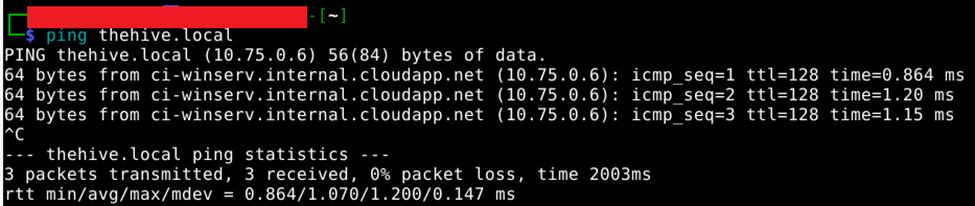
    3.      Confirm that the domain is accessible by pinging the domain.

    ping thehive.local

    Note:
    The nameserver settings in /etc/resolv.conf aren’t persistent across reboots, but using any tool like “resolvconf” to manage the file can resolve this issue. An article on configuring DNS in Linux will be posted in the future for more detailed guidance.

    Step 2 – Install
    required tools

    1.      Do a sudo update

    sudo apt update

    2.      Install all the required tools

    sudo apt -y install realmd libnss-sss libpam-sss sssd sssd-tools adcli samba-common-bin oddjob oddjob-mkhomedir packagekit

    Step 3 – Joining AD

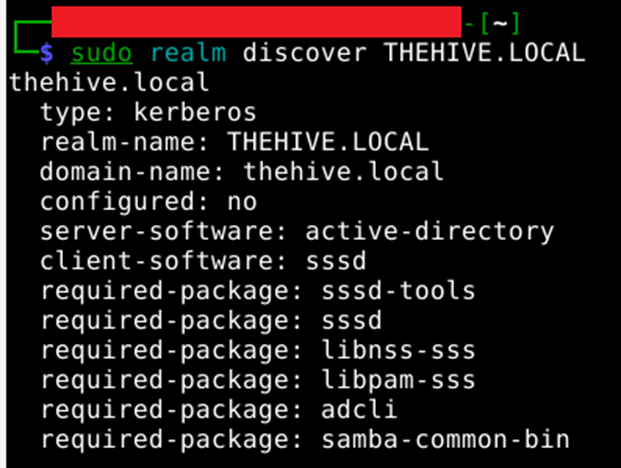
    1.       This command lists the basic configuration of the AD along with the tools that must be installed in the machine to join the domain. A domain must be discoverable first to join it.


    sudo realm discover THEHIVE.LOCAL


    2.       We don’t have to worry about the tools as we have already installed all the tools.

    3.       Once we see that the domain is discoverable, we can join this machine to the domain. For this, we need the credentials of an account that belongs to the domain.

    4.       We can now join this machine to AD using the below command.

    sudo realm join –user=ad-admin THEHIVE.LOCAL

    Note that the account mentioned in the user account must be an AD user account, not this machine’s local one. Make sure this account is part of the Administrator group, or it’ll cause an error detailed in the coming section.

    Common Errors Encountered

    Error – Package has no installation candidate

    You might see an error saying “Package ‘<package name>’ has no installation candidate” when trying to install some tools. This happens because your package manager, like “apt,” is trying to get the package from a repository that doesn’t have it. To fix this, you need to add the right repository to your “sources.list” file. This file lists the URLs of repositories that apt uses, and it’s located at “/etc/apt/sources.list.”

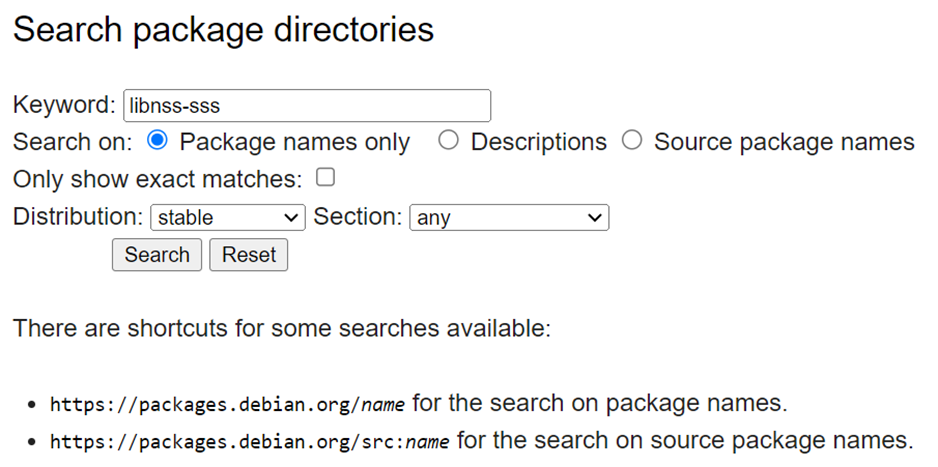
    1.      Visit         this site and scroll down to the package search section. 


    2.      Search for the package you need.

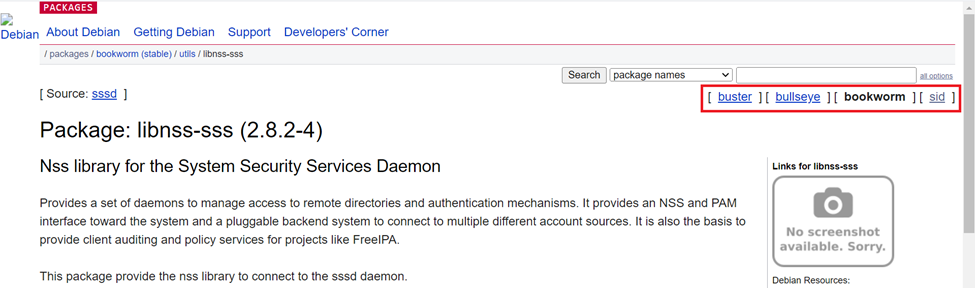
    3.   Click on the package name under “Exact hits” to see more details. You can also select a specific release if needed by clicking on their respective names at the top right corner.

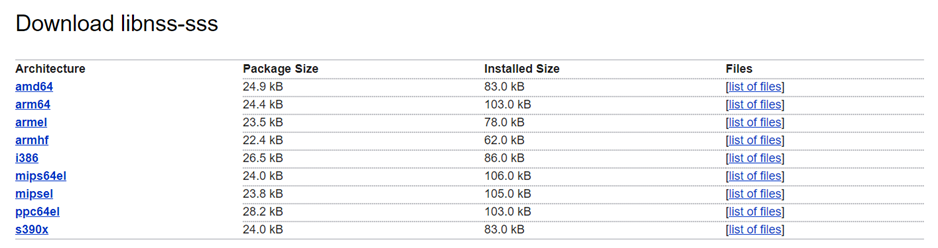
    4.   Scroll down to the download section, find your system architecture (like amd64 or i386), and open the link.

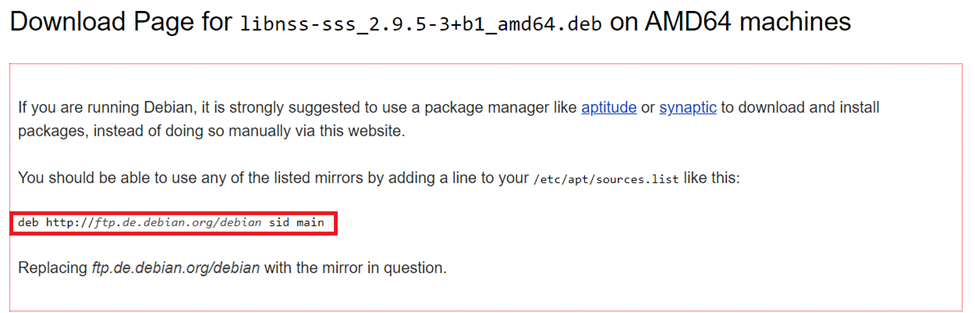
    5.      Note the repository URL listed on that page.

    6.    Open the “/etc/apt/sources.list” file in a text editor with sudo, so you have permission to edit it.


    sudo nano /etc/apt/sources.list

    7.      Add the copied repository URL to this file and save your changes.

    8.      Run apt update to refresh the package list.

    sudo apt update


    9.   Try installing the tools again. They should install without any issues now.

     Insufficient Privileges

    If you’re encountering this error, it might be due to a few different issues. To identify the problem, follow these steps:

    1.      Copy and run the command provided with the error message

    journalctl REALMD_OPERATION=r417249.186880

    2.  Press Enter repeatedly to scroll through the log until you find the relevant error details.

    Two common issues are as below:

    Couldn’t get Kerberos ticket


    If the error indicates that the machine failed to join AD due to an inability to obtain a Kerberos ticket, it might be because the `/etc/krb5.conf` file is missing. This file is usually created automatically, but if it isn’t present, you can create it manually.

    1.       Use the following command to create and edit
    the file:

    sudo nano /etc/krb5.conf

     Add the following
    configuration:

    [libdefaults]

    udp_preference_limit = 0

    default_realm = THEHIVE.LOCAL

    2.      Try joining the machines to AD again. It
    should be able to join without any issues.

     Insufficient permissions to modify computer account

     In this case, from the log, you can see that the computer account for this machine is missing in AD, and a new account can’t be created due to insufficient permissions. The problem typically arises when the account used to join the machine to AD does not have the required administrative rights.

    To fix this, either use an administrator account or add the current account to the administrator group.

    Conclusion

    In summary, these steps should work for most Debian-based systems, not just Kali Linux. We hope this guide helps you avoid common problems and saves you time. Keep an eye out for our next posts, where we’ll cover important Active Directory attacks to help you better protect your systems.


  • 2024’s Leading Malware Techniques You Should Know

    2024’s Leading Malware Techniques You Should Know

    Modern defense strategies heavily rely on tactics, techniques, and procedures (TTPs) as a stable framework for identifying cyber threats. Unlike indicators of compromise (IOCs), TTPs are more enduring, providing a consistent foundation to detect specific threats. Based on ANY.RUN’s Q3 2024 malware trends report, here are some of the most frequently utilized techniques, illustrated through real-world cases.

    1. Disabling of Windows Event Logging (T1562.002)

    By disrupting Windows Event Logging, attackers prevent the recording of key details about their activities, such as login attempts and system changes. Without these logs, security teams face gaps in data, making it harder to trace malicious behavior. Common manipulation tactics include altering registry keys, stopping services with commands like “net stop eventlog,” and modifying group policies. Since many detection tools depend on log analysis to identify unusual actions, malware can evade detection for extended periods.

    XWorm Disables Remote Access Service Logs– 

    To detect malware in real-time and understand its behavior, it’s essential to execute it in a controlled environment while monitoring system and network activity. By tracking malicious actions, such as altering system logs or disabling security features like Windows Event Logging, security professionals can identify indicators of compromise. This approach helps in pinpointing the malware’s operational patterns and objectives, allowing for effective response and mitigation of potential threats within the network or system environment.

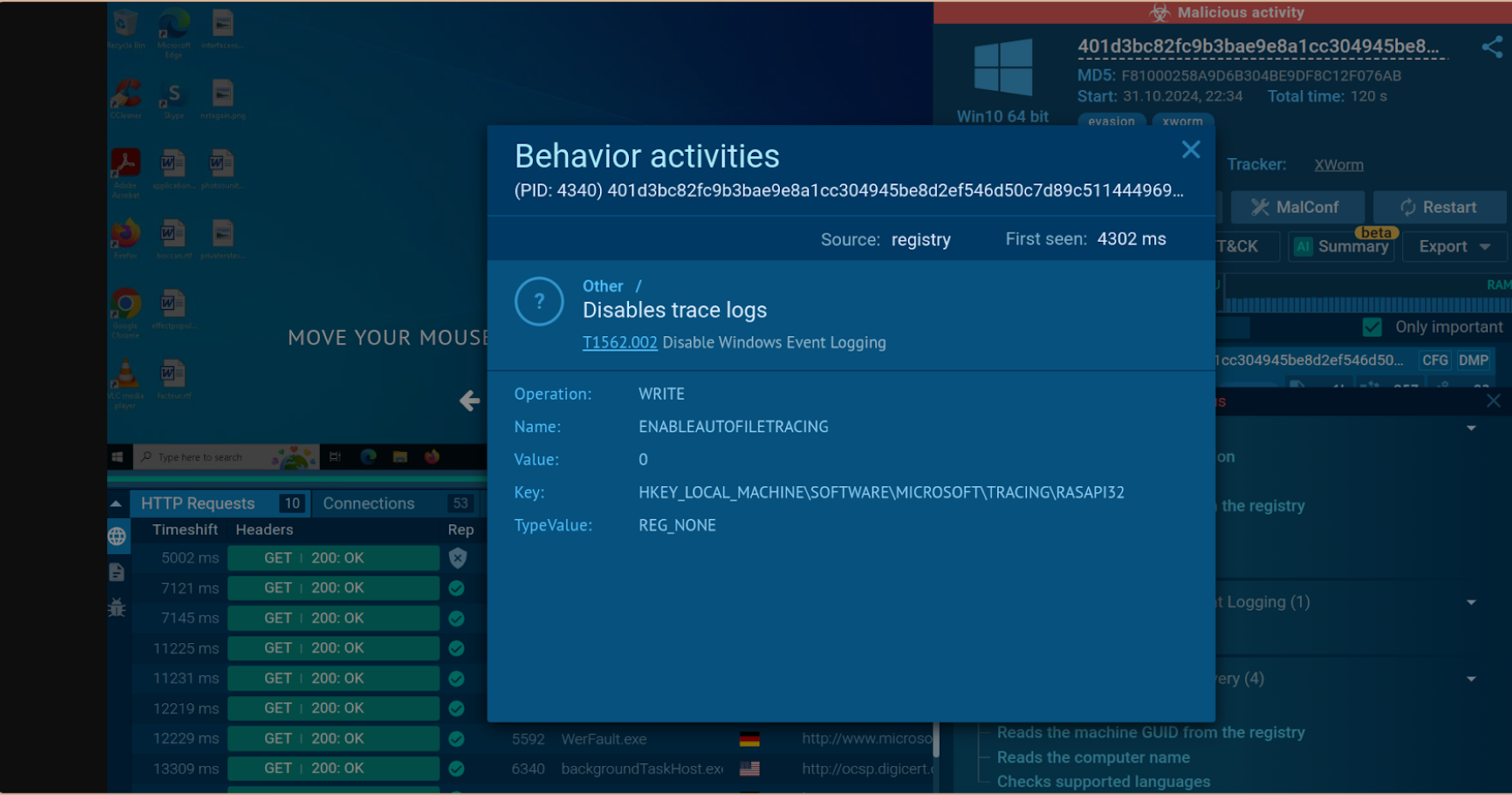
    Check out this session showing how XWorm, a prevalent remote access trojan (RAT), utilizes tactic T1562.002.

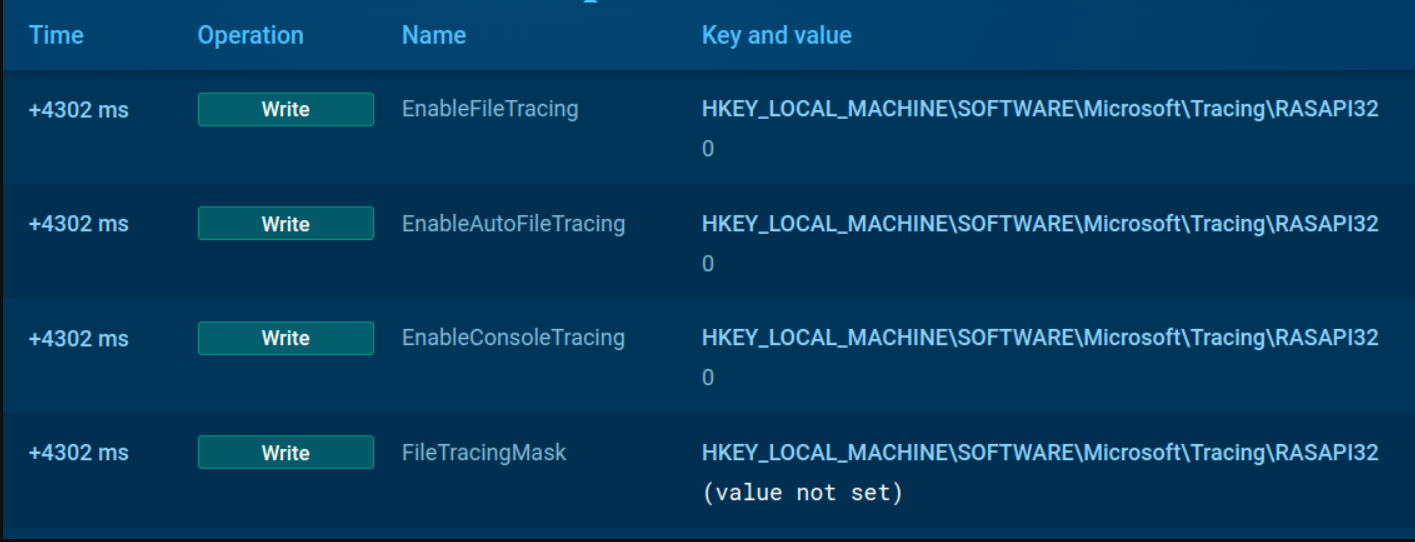
    It alters the registry to disable trace logs for RASAPI32, the component managing remote access connections on the system.

    By adjusting registry settings like ENABLEAUTOFILETRACING for RASAPI32 to 0, attackers effectively block log generation, which hinders security tools from detecting suspicious activity.

    2. PowerShell Exploitation (T1059.001)

    PowerShell, a built-in Windows scripting language and command-line tool, is frequently exploited by attackers for tasks like changing system settings, data exfiltration, and maintaining access. Its powerful capabilities allow threat actors to use obfuscation techniques, such as command encoding and complex scripting, to evade detection.
    BlanGrabber uses PowerShell to bypass security detection

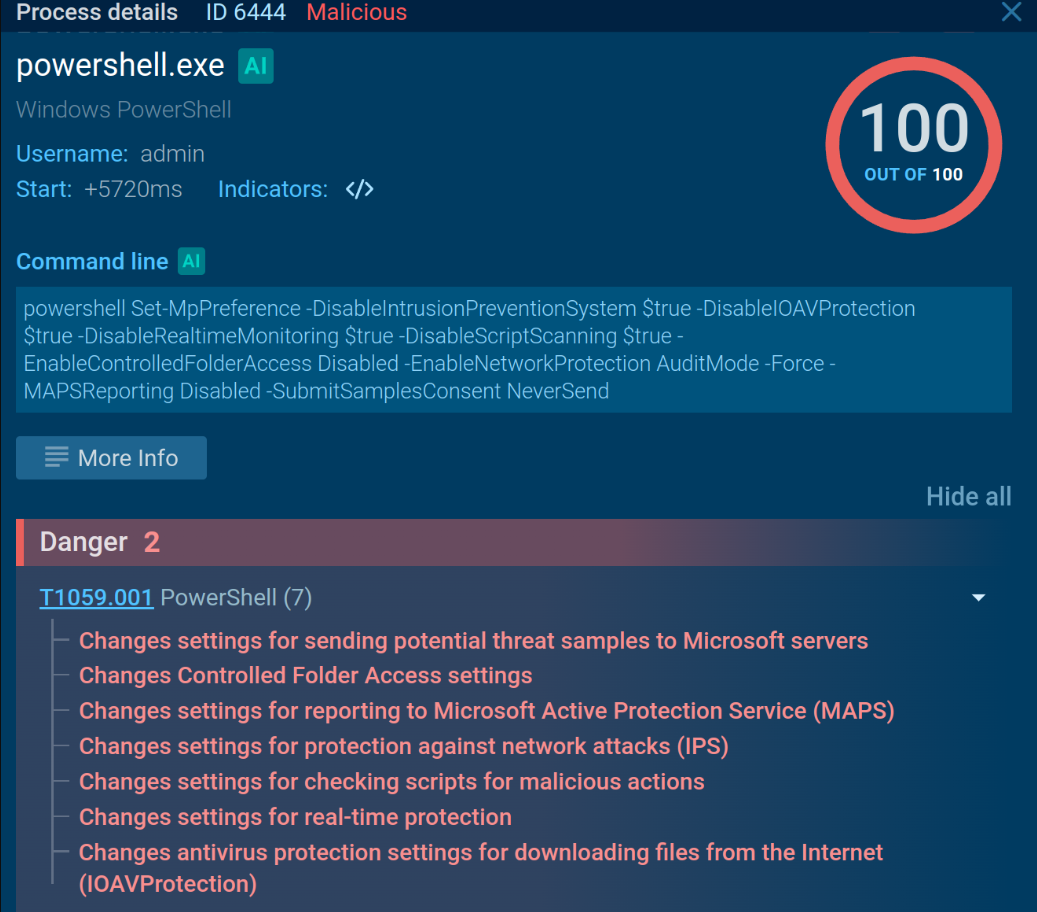
    This analysis focuses on a BlankGrabber sample, a type of malware designed to steal sensitive information from compromised systems. Upon execution, the malware launches multiple processes, including PowerShell, to alter system settings and avoid detection by security tools. It specifically targets vulnerabilities to disable protective measures and ensure it remains undetected. By modifying key configurations, the malware can bypass security monitoring and maintain control over the infected system, allowing it to exfiltrate sensitive data without triggering alarms.

    For example, BlankGrabber uses PowerShell to disable key security features of Windows, such as the Intrusion Prevention System (IPS), OAV Protection, and Real-time Monitoring services. 

    3. Windows Command Shell (T1059.003) Exploitation

    Attackers often misuse the Windows Command Shell (cmd.exe), a tool intended for legitimate administrative tasks, to execute malicious commands. Its common use allows harmful actions to blend in with regular system activity, making detection harder. By running scripts or downloading malware, attackers can exploit cmd.exe, and even use obfuscation techniques to evade security measures. Since it’s a trusted utility, malicious commands often go unnoticed by real-time monitoring systems.

    Lumma Utilizes CMD for Payload Delivery

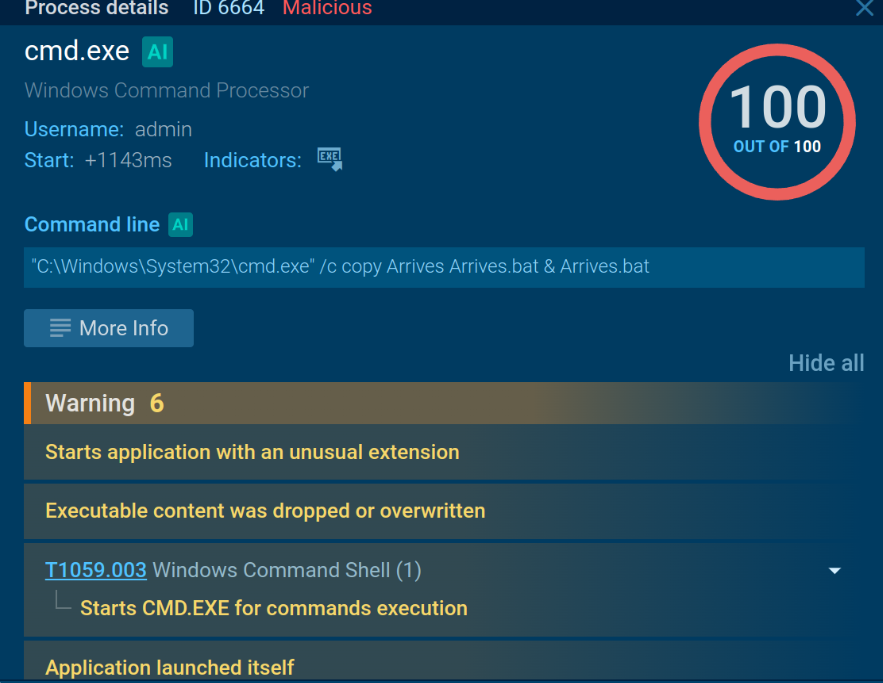
    Here’s an analysis of Lumma, a widely used information stealer active since 2022, highlighting its key features and methods of operation.


    Lumma uses the Windows Command Shell (cmd) to execute malicious commands, delivering its payload while evading detection. It launches applications with unusual extensions and modifies executable content, masking its true intentions. This method helps Lumma avoid security measures and ensures it remains undetected on the system, allowing it to steal sensitive data without triggering alarms.

    4. Exploiting Registry Run Keys (T1547.001) 

    Attackers ensure malware runs at startup by adding entries to registry keys that trigger program launches or by placing files in the Startup Folder, which Windows automatically executes during login. This method grants persistent access, allowing attackers to continue malicious activities such as data theft, lateral movement, or further system exploitation.

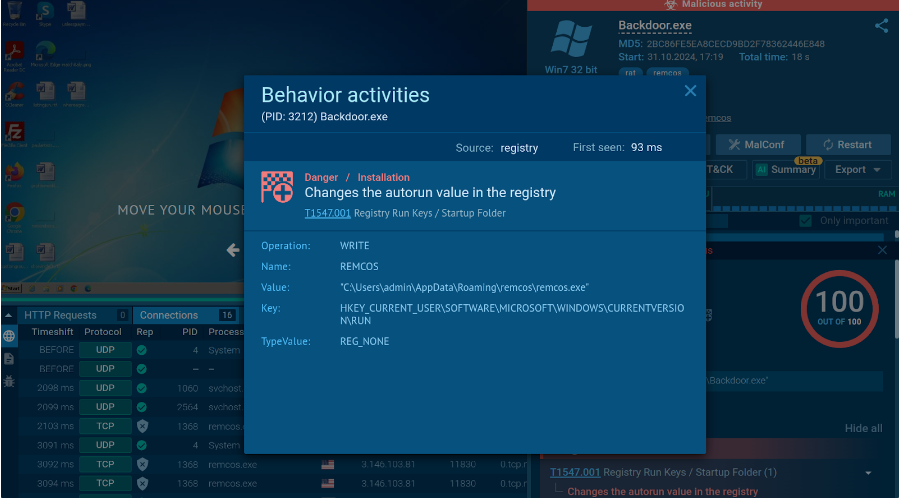
    Remcos Maintains Access via RUN Key

    Here’s an example of how Remcos uses this technique. The malware modifies the registry key at HKEY_CURRENT_USER\SOFTWARE\MICROSOFT\WINDOWS\CURRENTVERSION\RUN 
    to ensure its persistence. This key is specifically used to launch programs automatically upon system startup.

    5. Evasion Through Timing Manipulation (T1497.003)

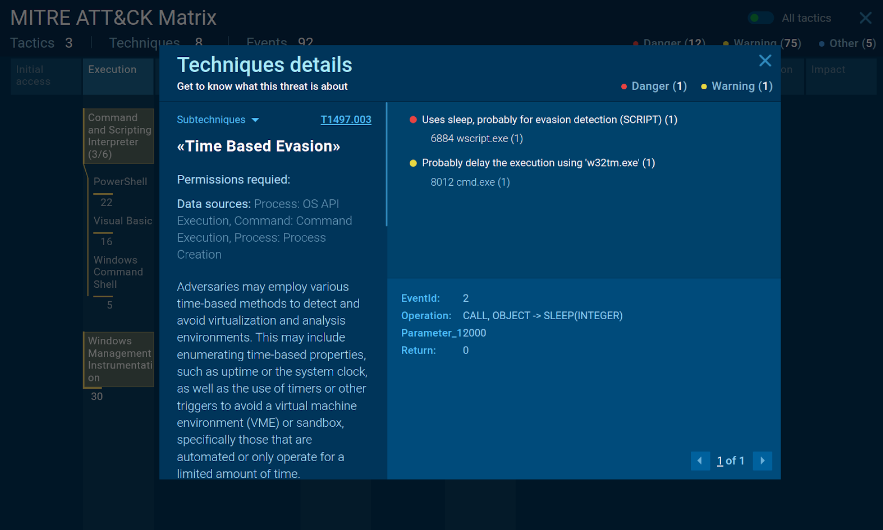
    Time-based evasion is a tactic malware uses to avoid detection by security systems, particularly sandboxes with short monitoring windows. By delaying malicious actions, the malware can evade detection before the sandboxing period ends.

    This technique also helps malware appear harmless initially, reducing the chance of being flagged during behavioral analysis. Additionally, delays can synchronize various components of the malware or manage dependencies in its infection process, ensuring each step happens in the correct order before the full attack is launched.

    DCRAT Evades Detection with Delayed Execution

    Dark Crystal RAT is a malware family that uses time-based evasion techniques to remain undetected on compromised systems. By delaying the execution of malicious actions, it can avoid detection by security tools, allowing the malware to operate quietly without triggering alarms. This method helps it bypass sandboxes and behavioral analysis systems that monitor for suspicious activity during a limited observation window.

    In this sandbox session, DCRAT remains idle for 2 seconds (2000 milliseconds) before proceeding with its execution. This brief delay likely ensures that all necessary files for the next phase of the infection are fully prepared and ready to run. This tactic helps synchronize the malware’s components, ensuring a smoother execution process without triggering detection mechanisms.

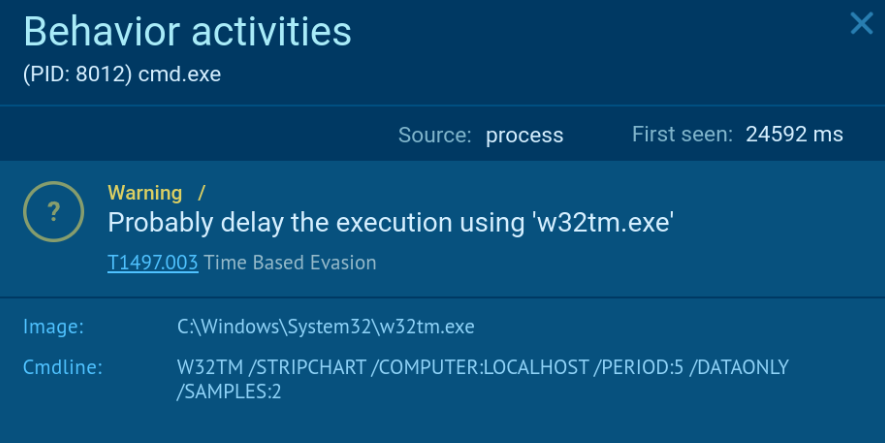
    DCRAT also uses the legitimate tool w32tm.exe as part of its time-based evasion strategy. This tool is typically used for time synchronization, but in this case, it serves to introduce a delay in the malware’s execution process, helping it avoid detection and making it harder for security systems to identify malicious behavior. This tactic is another example of how DCRAT manipulates system tools to evade security monitoring.


    Reference –  The Hacker News. (2024, November 7). 5 most common malware techniques in 2024. https://thehackernews.com/2024/11/5-most-common-malware-techniques-in-2024.html


  • GITEX Global 2024

    GITEX Global 2024

    Your Essential Guide to GITEX Technology Week 2024

    The Gulf Information Technology Exhibition (GITEX), founded in 1981, has grown into one of the world’s premier technology events. Every year, GITEX serves as a stage for cutting-edge innovations, fostering global collaborations, and transforming Dubai into a global hub for tech advancement. The event has spotlighted groundbreaking developments in AI, robotics, 5G, and cloud computing, making it a must-attend for industry leaders, tech enthusiasts, and innovators alike.

    What to Expect at GITEX 2024

    GITEX 2024 promises to be a dynamic week of technology showcases, thought leadership, and networking. Industry pioneers, experts, and entrepreneurs will gather to present and explore emerging technologies, including:

    • Artificial Intelligence (AI): Leading the charge in automation, decision-making, and personalization.
    • Cybersecurity: A key focus as businesses strengthens defenses against evolving digital threats.
    • 5G Networks: Revolutionizing connectivity with ultra-fast speeds and real-time data transfer.
    • Blockchain & Cryptocurrencies: Exploring security, transparency, and efficiency in transactions.
    • Smart Cities: Highlighting innovations that are reshaping urban living and sustainability.
    • Healthcare Technology: From wearables to telemedicine, redefining patient care and diagnostics.
    • IoT (Internet of Things): Connecting devices for smarter and more efficient systems.

    These sectors, alongside numerous others like augmented reality (AR), virtual reality (VR), and green technology, will form the backbone of GITEX 2024.

    Why You Should Attend?

    GITEX isn’t just an exhibition—it’s an experience. Here are some key reasons why attending GITEX 2024 can benefit you or your business:

    1. Discover the Latest Innovations: Get a firsthand look at transformative technologies.
    2. Network with Industry Leaders: Build valuable connections with C-level executives, investors, and innovators from across the globe.
    3. Gain Industry Insights: Attend panel discussions, workshops, and keynote sessions led by experts on future-shaping trends.
    4. Explore Business Opportunities: Whether you’re seeking investment, partnership, or a new venture, GITEX is a prime platform to explore business potential.

    Key Sectors to Watch at GITEX 2024

    1. AI and Machine Learning
    2. 5G Technology
    3. Cybersecurity
    4. Blockchain
    5. Smart Cities
    6. Cloud Computing
    7. AR/VR
    8. Healthcare Technology
    9. IoT
    10. Sustainability and Green Tech

    These technologies are shaping the future, and GITEX 2024 will provide a unique space to dive deep into their real-world applications.

    Meet Ana-Data Consulting at GITEX 2024

    We at Ana-Data Consulting Inc. are thrilled to announce our participation in GITEX Technology Week 2024, taking place in October. As a leader in cybersecurity solutions and technology services, Ana-Data will showcase how we help businesses harness the power of emerging technologies while safeguarding their digital infrastructure.

    Here’s what you can expect when you visit us at Stall H24-23:

    • Interactive Demos: Experience live demonstrations of our industry-leading solutions, including Vulnerability Assessments, Penetration Testing, and our flagship vCISO (Virtual CISO) services.
    • Expert Consultations: Our certified cybersecurity experts will be on hand to discuss tailored strategies to enhance your organization’s security posture.
    • Solutions for Critical Industries: Learn how we help businesses in finance, healthcare, and government sectors meet compliance requirements, such as ISO 27001, GDPR, and PCI DSS.
    • Partnership Opportunities: Explore how collaborating with Ana-Data can drive your digital transformation and ensure you stay ahead in today’s tech landscape.

    Why Visit Ana-Data at GITEX 2024? As a forward-thinking technology partner, Ana-Data Consulting is dedicated to helping organizations navigate the challenges of digital transformation. Whether you’re a business looking to improve cybersecurity, adopt cloud solutions, or integrate advanced AI technologies, our team is here to offer you practical, reliable solutions that align with your goals.

    Join Us at GITEX 2024!

    Don’t miss this opportunity to connect with Ana-Data at one of the world’s largest tech events. We look forward to meeting you at Stall H24-23, where our team will be ready to explore how we can help your business thrive in the digital age.

  • Enhancing Digital Security in Dubai: The National Cybersecurity Strategy and Key Initiatives

    Enhancing Digital Security in Dubai: The National Cybersecurity Strategy and Key Initiatives

    An official report from Digital UAE, the government’s online platform, has issued a caution to mobile phone users, urging them to stay vigilant against the rising threats posed by fraudsters. The report stresses the need for increased awareness, as many people may not be aware of how easily their devices can be exploited by cybercriminals.

    Digital UAE warns that if you notice rapid battery drain, sluggish device performance, unauthorized actions like unsolicited texts or app downloads, or overheating without heavy use, your phone might be compromised by malware. Such issues can signal that malicious software is running in the background or that your device has been remotely controlled. If you encounter these signs and suspect electronic fraud, do not comply with threats or demands. Instead, report the incident immediately to the appropriate authorities through secure channels.

    User Guidelines

    To protect themselves from electronic fraud, individuals should follow these essential guidelines:

    1. Avoid Sharing Personal Information: Do not post private contact details on suspicious or untrustworthy websites and platforms. Sharing this information publicly can increase the risk of it being exploited by fraudsters.

    2. Be Cautious with Links: Do not click on links received through text messages, especially if they are from unknown or unexpected sources. Such links could lead to phishing sites or download malware onto your device.

    3. Verify App Sources: Only download or upload applications from reputable and verified sources, such as official app stores. Avoid using third-party sites, as they might offer malicious software disguised as legitimate apps.

    4. Regular Data Backups: Ensure you regularly back up your personal data to a secure location. This practice helps protect your information in case your device is compromised or you need to restore it.

    5. Update Your Operating System: Keep your smartphone’s operating system and apps updated with the latest security patches. Updates often include fixes for vulnerabilities that could be exploited by cybercriminals.

    6. Follow Security Alerts: Pay attention to security alerts and recommendations provided by your phone’s manufacturer. These alerts often include important information on how to address potential threats and enhance device security.

    By implementing these practices, users can significantly reduce their risk of falling victim to electronic fraud and ensure their personal information remains protected.

    The National Cybersecurity Strategy

    The National Cybersecurity Strategy was meticulously crafted through a comprehensive process that involved multiple stages of analysis and collaboration. This process began with a thorough examination of over 50 global sources, including indicators and publications relevant to cybersecurity. By reviewing these diverse materials, the team was able to gather a wide range of insights and best practices from around the world.

    To ensure the strategy was aligned with international standards and effective in addressing contemporary cybersecurity challenges, the development team worked closely with a group of global experts. These experts provided valuable input based on their extensive experience and knowledge in the field, helping to shape a strategy that is both forward-looking and grounded in global best practices.

    Additionally, the strategy’s development included a benchmarking comparison with 10 leading countries recognized for their advanced cybersecurity systems. This comparative analysis allowed the team to evaluate and incorporate successful approaches and technologies used by these countries, ensuring that the strategy would be robust and competitive on an international scale.

    Through this detailed and collaborative approach, the National Cybersecurity Strategy aims to establish a comprehensive framework that not only addresses current cybersecurity threats but also anticipates future challenges. The result is a strategy designed to enhance national security, support technological innovation, and foster a secure environment for individuals and businesses alike.

    Cyber Pulse

    The ‘Cyber Pulse’ initiative, launched by the Cyber Security Council in partnership with key strategic allies, plays a crucial role in advancing national cybersecurity. This initiative is designed to promote a strong cybersecurity culture, increase awareness of potential online threats, and help users engage with digital technologies securely.

    The program features a wide array of activities aimed at educating and empowering the public. These include specialized training courses, hands-on workshops, and informative lectures focused on various aspects of cybersecurity and techniques for defending against cyberattacks.

    The initiative began with a focus on women and families, providing them with essential knowledge and tools to protect themselves online. Building on that foundation, the second phase extended its outreach to college and university students, equipping the younger generation with the skills and awareness needed to navigate the digital landscape safely.

    FedNet

    Digital UAE has highlighted the country’s efforts to bolster its cybersecurity through the establishment of the federal electronic network, known as FedNet. This network facilitates secure data exchange between all local and federal entities within the country by leveraging a unified and robust technological infrastructure.

    FedNet offers a multi-layered security framework that ensures top-tier protection for the network infrastructure. It utilizes Multi-Protocol Label Switching (MPLS) to create a secure and efficient environment for data transmission. Additionally, FedNet provides a dual internet service provider setup, which ensures secure and reliable internet connectivity for all federal government entities. This dual setup not only enhances productivity but also minimizes the risk of cyber threats by reducing vulnerabilities.

    The Federal Network team is tasked with continuous oversight of the FedNet infrastructure. They are responsible for monitoring all activities and developments within the network around the clock. In case of any errors or security breaches, the team is prepared to implement necessary corrective measures to maintain the integrity and security of the network. The team highlighted that the National Cybersecurity Strategy is designed to foster a secure and protected digital environment. This environment aims to support individuals in reaching their goals and allows businesses to thrive and expand safely.

    Launched in 2019 by the Telecommunications Regulatory Authority (TRA), which oversees the communications and information technology sector and drives electronic and smart transformations in the country, the updated strategy outlines its objectives.

    The strategy focuses on enhancing cybersecurity standards through a range of approaches and initiatives. It also encourages the growth of local startups in the cybersecurity field and aims to advance the overall cybersecurity landscape.

    Conclusion

    In conclusion, the National Cybersecurity Strategy, supported by initiatives like FedNet and ‘Cyber Pulse,’ reflects a comprehensive approach to enhancing the nation’s digital security. Developed through extensive global research and expert collaboration, the strategy aims to create a secure and supportive environment for individuals and businesses. By strengthening cybersecurity standards and promoting awareness, these efforts ensure a resilient digital infrastructure and foster a safer, more innovative cyber landscape.

    References:

    Ali Al Hammadi, R. (2024, August 20). Four signs your smartphone has been hacked: UAE report. Crime – Gulf News. https://gulfnews.com/uae/crime/four-signs-your-smartphone-has-been-hacked-uae-report-1.103867917


  • Email Attacks on the Rise: UAE Faces Growing Malware Risks

    Email Attacks on the Rise: UAE Faces Growing Malware Risks

    Acronis, a renowned global leader in cybersecurity and data protection, has unveiled its latest biannual report titled “Acronis Cyberthreats Report H1 2024: Email Attacks Surge 293%, New Ransomware Groups Emerge.” This comprehensive report sheds light on critical global trends and the emerging cybersecurity challenges, offering a detailed analysis of how these developments are impacting different regions worldwide. The report underscores the growing complexity of cyber threats, particularly highlighting the alarming increase in email attacks and the rise of new ransomware groups, which are reshaping the cybersecurity landscape.

    Global Trends and Emerging Threats

    • Email Attacks Skyrocket: There was a staggering 293% increase in email attacks compared to H1 2023, highlighting the growing vulnerability of businesses and individuals to phishing and other email-based threats.
    • New Ransomware Groups on the Rise: The report identified 10 new ransomware groups that were responsible for a total of 84 cyberattacks across the globe, signaling an alarming trend in the evolution of ransomware tactics and the increasing sophistication of cybercriminals.
    • AI-Powered Attacks Increase: Artificial Intelligence is being increasingly leveraged in social engineering and automation attacks, presenting new and complex challenges for cybersecurity defense mechanisms. The integration of AI into these attacks makes them more effective and harder to detect, marking a significant shift in the threat landscape.
    • Blocking Malicious Content: A total of 28 million malicious URLs were blocked, while 27.6% of all emails received during this period were identified as spam. This statistic underscores the sheer volume of malicious content circulating online and the ongoing battle to protect digital environments from these pervasive threats.

    Escalating Threats in the UAE and Beyond

    These regional findings emphasize the urgent need for targeted cybersecurity strategies to address the unique challenges faced by different countries in the Middle East, particularly in the face of rapidly evolving threats.
    • UAE’s Rising Malware Threats: The UAE experienced an 11.7% increase in malware detections between January and May 2024, highlighting the growing cyber risks in the region. This uptick indicates a significant challenge for organizations in maintaining robust cybersecurity defenses.
    • Bahrain Leads in Malware Detection: Bahrain reported the highest malware detection rate in the region, reaching 63.2% in April 2024. This is followed by Egypt, which saw a detection rate of 42.6%, underscoring the widespread nature of malware threats across the Middle East.
    • UAE’s Cybersecurity Challenges: The UAE continues to face a challenging cybersecurity landscape, marked by a notable rise in ransomware and malware threats. These developments call for heightened vigilance and stronger security measures to protect critical infrastructure and digital assets in the region.

    Sector-Specific Insights:

    These sector-specific insights reveal the critical vulnerabilities and persistent threats faced by industries that are essential to national security and public well-being, emphasizing the importance of tailored cybersecurity approaches to mitigate these risks effectively.

    • Ransomware’s Grip on Key Sectors: Ransomware continues to be a significant threat, particularly targeting the government and healthcare sectors. These industries, often dealing with sensitive and critical information, are prime targets for cybercriminals seeking to disrupt operations and demand large ransoms. The persistent nature of ransomware in these sectors highlights the need for robust cybersecurity measures and swift incident response strategies.
    • MSPs Under Continuous Attack: Managed Service Providers (MSPs) are facing relentless threats, with phishing, social engineering, and supply chain attacks being the most prominent. As key players in the cybersecurity ecosystem, MSPs are frequently targeted by attackers looking to exploit vulnerabilities within the supply chain. This ongoing threat underscores the importance of comprehensive security protocols and advanced threat detection capabilities to safeguard both MSPs and their clients from potential breaches.

    Key Insights And Recommendations:

    • Urgent Need for Enhanced Cybersecurity:
      • Ziad Nasr, General Manager for the Middle East at Acronis, stresses the critical need for stronger cybersecurity defenses, particularly for Managed Service Providers (MSPs).
      • The UAE remains a major target for ransomware attacks, with the average cost of a data breach exceeding $8 million in 2023. This highlights the urgent need for proactive and robust security measures.
    • Comprehensive Security Strategy for MSPs:
      • Irina Artioli, Cyber Protection Evangelist at Acronis, emphasizes the importance of a well-rounded cybersecurity approach for MSPs.
      • Key recommendations include:
        • Security Awareness Training: Regular training for staff to recognize and respond to cyber threats.
        • Advanced Endpoint Protection: Implementing solutions such as Extended Detection and Response (XDR) to enhance threat detection and response.
        • Multi-Factor Authentication: Utilizing additional layers of security to protect against unauthorized access.
    • Evolving Threat Landscape:
      • The report underscores the rising complexity of cyber threats, with AI-driven attacks becoming more prevalent.
      • Organizations are advised to adopt comprehensive and adaptive cybersecurity strategies to effectively safeguard their digital infrastructures. Continuous vigilance and advanced protective measures are crucial in this evolving landscape.


    Reference:

    Pervez, M. (2024a, August 7). UAE faces rising malware threats as email attacks surge globally: Acronis H1 2024 report. HiDubai Focus. https://focus.hidubai.com/uae-faces-rising-malware-threats-as-email-attacks-surge-globally-acronis-h1-2024-report/


  • Kerberos – The What, How and Why?

    Kerberos – The What, How and Why?

    TL;DR

    • Kerberos is a robust network authentication protocol that uses secret-key cryptography to verify users and services in a secure manner.
    • Major components include:
      • Key Distribution Center (KDC) consisting of Authentication Service (AS) and Ticket Granting Service (TGS)
      • Service
      • Ticket Granting Ticket (TGT).
    • The authentication flow involves the client obtaining a TGT from the Authentication Service (AS), using it to request service tickets from the TGS, and then accessing network services.
    • Kerberos provides advantages over NTLM and LDAP by offering stronger security, scalability, and true single sign-on (SSO).

    Intro

    In our previous blog, we covered what Active Directory is and its functions. In this post, we will step foot into the world of Kerberos, a powerful network authentication protocol used in Active Directory. We’ll cover what Kerberos is, how it works, and its major components. Additionally, we’ll explain the need for Kerberos, highlighting why it is a crucial implementation for secure network authentication. Understanding Kerberos is essential for security professionals as many attacks abuse concepts related to this protocol. By the end of this article, you’ll have a comprehensive understanding of Kerberos and its role in Active Directory.

    What is Kerberos

    Kerberos is a centralized authentication protocol designed to provide strong security for client-server applications. Developed by MIT, it uses secret-key cryptography to authenticate users and services on a network, ensuring that data remains secure and confidential.

    Major Components of Kerberos

    Kerberos authentication involves several key components that work together to ensure secure and reliable authentication:

    1. Key Distribution Center (KDC)

    The KDC is the core component of the Kerberos authentication protocol. It consists of two main services:

      • Authentication Service (AS)

    Validates the credentials of users and issues Ticket Granting Tickets (TGT).

      • Ticket Granting Service (TGS)

    Issues service tickets based on the TGT for access to specific network resources.

    2. Client

    The user or application requesting access to a service.

    3. Service

    The service that the client wants to access.

    How Kerberos Works

    Important Contents in Requests/Responses

    The responses from KDC and Service in Kerberos authentication contain several important elements:

    1. Session Key: A temporary encryption key used for secure communication between the client and the service.
    2. Ticket Granting Ticket (TGT): A ticket that allows the client to request service tickets from the TGS.
    3. TGS Service Ticket: A ticket that allows the client to authenticate to a specific service on the network.
    4. Privilege Attribute Certificate (PAC): Authorization data within the service ticket containing user and group information for access control decisions.
    5. Timestamp: Used to prevent replay attacks by ensuring that the tickets are used within a specific timeframe.
    6. KRBTGT: Default service account of KDC in Domain Controllers.
    7. Service Principal Name (SPN): Indicates the service and server name the client intends to access.

    Authentication Flow

    1. Initial Authentication Request
      • The client sends an authentication request to the AS.
      • This request includes the client’s username and a timestamp encrypted using the client’s password hash.
    1. AS Response – Ticket Granting Ticket (TGT)
      • The AS validates the user’s credentials and, if valid, generates a TGT and a session key. The TGT is encrypted using the password hash of KRBTGT account and sent back to the client.
    1. Service Request with TGT
      • When the client wants to access a specific service, for example a share, it sends a request to the TGS.
      • This includes the client’s username, a timestamp encrypted using the session key, along with the TGT and SPN.
    1. TGS Response – Service Ticket
      • The TGS decrypts the TGT, verifies it, and generates a service ticket along with a service session key for the requested service. These are then sent to the client.
      • The TGS service ticket is encrypted using the service owner’s password hash so that the service owner can access it by decrypting the TGS service ticket.
      • The service owner is the user or machine account that the service runs under.
    1. Access Request to the Service
      • The client presents the TGS service ticket to the service requesting for access.

    6. Granting Access

      • The service then decrypts the service ticket using the service owner’s password hash, verifies and grants access.

    7. PAC Validation

      • Privilege Attribute Certificate (PAC) contains user’s group memberships, privileges, and delegation information. The Service validates the PAC included in the service ticket to determine the user’s permissions and access rights.
      • This validation happens only when the TGT is older than 20 minutes.

    The Role of TGT and TGS in Kerberos Authentication

    The Ticket Granting Ticket (TGT) and the Ticket Granting Service (TGS) are crucial components of the Kerberos authentication process:

    • Ticket Granting Ticket (TGT)

    The TGT is issued by the AS after the user’s initial authentication. It serves as proof that the user has been authenticated and allows the user to request service tickets from the TGS without having to re-authenticate. This ticket simplifies the process and improves security by minimizing the number of times a user’s credentials are transmitted over the network.

    • Ticket Granting Service (TGS)

    The TGS is a part of the KDC that issues service tickets based on the TGT presented by the client. The TGS verifies the TGT and, if valid, provides a service ticket that the client can use to access the desired service.

    The need for a ticket to get more tickets may sound a bit weird but this mechanism ensures that the user’s credentials are not repeatedly sent over the network and that each service access request is independently authenticated and authorized.

    Why Kerberos When NTLM and LDAP Exist?

    NTLM (NT LAN Manager)

    NTLM is an older authentication protocol used in Windows environments. While NTLM is still supported for backward compatibility, it has several limitations:

    • Security: NTLM is less secure compared to Kerberos. It uses a challenge-response mechanism that can be vulnerable to certain types of attacks, such as pass-the-hash.
    • Scalability: NTLM does not handle the scalability and performance requirements of modern enterprise environments as efficiently as Kerberos.
    • Single Sign-On (SSO): NTLM does not support true single sign-on (SSO) across multiple systems and services, which Kerberos handles more effectively.

    LDAP (Lightweight Directory Access Protocol)

    LDAP is a protocol used to access and manage directory information. While it can be used for authentication, it primarily focuses on querying and modifying directory services. LDAP alone is not sufficient for comprehensive authentication due to the following reasons:

    • Lack of Strong Authentication: LDAP by itself does not provide strong authentication mechanisms like Kerberos. It relies on binding mechanisms that are less secure.
    • No Ticket-Based Authentication: LDAP does not use a ticket-based system, making it less efficient for SSO scenarios and repeated authentications across multiple services.
    • Authorization and Delegation: LDAP does not inherently handle authorization and delegation as effectively as Kerberos, which includes PAC for detailed access control.

    Conclusion

    With a solid understanding of Kerberos and its authentication mechanisms from this post, combined with the foundational knowledge of Active Directory from our previous blog post, you are now well-prepared to learn further about widely used Active Directory attack techniques. In our next series of posts, we will guide you through some of the common issues faced when joining a Kali machine to Active Directory and explore different attacks on Active Directory. Stay tuned!

  • Navigating the Future: Key Cybersecurity Trends Shaping the UAE in 2024

    Navigating the Future: Key Cybersecurity Trends Shaping the UAE in 2024

    The United Arab Emirates (UAE) has emerged as a leading force in technological innovation within the Middle East. With its ambitious vision for a hyper-connected future—marked by thriving smart cities and a burgeoning digital economy—the nation places paramount importance on cybersecurity.

    As the UAE’s digital landscape expands, so does its exposure to cyber threats. The rise in cyberattacks poses significant risks to critical infrastructure, financial systems, and sensitive data.

    The Current Cybersecurity Landscape

    Recent data from the 2024 State of the UAE Cybersecurity report highlights a troubling increase in vulnerabilities, particularly to ransomware and DDoS attacks. Co-authored by the UAE government and CPX Security, the report reveals nearly 155,000 potential vulnerabilities across the country, with a notable concentration in Dubai—almost 70% of these vulnerabilities are located there. Additionally, insider threats, where individuals misuse their access within organizations, are on the rise. As the UAE embraces technologies like cloud computing, artificial intelligence (AI), and machine learning, the attack surface expands, presenting more opportunities for cybercriminals.

    The financial impact of data breaches is also growing. The Middle East now ranks second only to the US in data breach costs, with the average breach exceeding $8 million in 2023—nearly double the global average. Key sectors, including government, energy, and IT, are prime targets, yet a significant gap remains: approximately 25% of oil and gas companies and government entities lack dedicated cybersecurity teams.

    UAE’s Strategic Response

    In response to these challenges, the UAE is actively strengthening its cybersecurity measures through several key trends and initiatives:

    Advanced Threat Detection

    Acknowledging the limitations of traditional security approaches, the UAE is investing heavily in advanced threat detection systems. Leveraging AI, machine learning (ML), and behavioral analytics, these systems are designed to identify and address sophisticated threats in real-time. According to a recent Cisco study, 91% of UAE organizations are integrating AI into their security strategies, particularly for threat detection, response, and recovery. This trend aligns with broader regional predictions of a burgeoning General AI (GenAI) market in the Arab Gulf, which is expected to reach $23.5 billion by 2030.

    Public-Private Partnerships (PPPs)

    Recognizing that cybersecurity requires a collective effort, the UAE is fostering Public-Private Partnerships (PPPs). These collaborations combine government oversight with private sector innovation. The UAE Cyber Security Council, in partnership with the UN’s ITU, is enhancing cybersecurity expertise and sharing best practices through joint exercises and simulations. Additionally, memorandums of understanding with leading cybersecurity firms, such as Group-IB, demonstrate a commitment to developing new technologies and solutions.

    Cloud Security

    The UAE is witnessing rapid growth in cloud security solutions as businesses increasingly adopt cloud technologies. This growth is driven by significant investments from cloud service providers, proactive government initiatives, and the advantages of cloud services, such as scalability and cost-efficiency. The rising demand for cloud security solutions reflects the need for robust protection against evolving cyber threats.

    Cybersecurity Education and Training

    Building a skilled cybersecurity workforce is crucial. The UAE is investing in education and training programs to equip professionals with the necessary skills to combat cyber threats. From specialized university courses to workshops and seminars, these initiatives aim to strengthen the country’s cybersecurity capabilities.

    Zero Trust Security Model

    The zero-trust security model is gaining traction in the UAE. This approach, which continuously verifies users and devices before granting access, is particularly relevant in a landscape where traditional network perimeters are becoming obsolete. Experts anticipate a tenfold increase in zero-trust security adoption across the Gulf region by 2025, with significant uptake expected in sectors like finance and oil and gas.

    Regulatory Compliance

    The UAE has implemented stringent cybersecurity regulations to protect critical infrastructure and sensitive data. Compliance with regulations such as the UAE Information Assurance Regulations (UAE IA) and the Dubai Electronic Security Center (DESC) is mandatory. Additionally, the Dubai Cybersecurity Law focuses on data protection, cybersecurity standards, and penalties for cybercrimes, establishing a baseline level of cybersecurity for organizations.

    Quantum Cryptography

    As quantum computing advances, traditional encryption methods face potential vulnerabilities. The UAE is investing in quantum cryptography research to safeguard against future threats posed by quantum computers, ensuring robust protection for communications.

    Focus on Critical Infrastructure Protection

    Protecting critical infrastructure, including energy, transportation, and healthcare systems, remains a top priority. The UAE’s National Cybersecurity Strategy includes specific measures to safeguard these vital sectors, reflecting a broader commitment to national security and service continuity. Similarly, Saudi Arabia’s Vision 2030 includes significant investments in cybersecurity to support its digital economy goals.

    Growth of Cybersecurity Startups and Innovations

    The META region is seeing a surge in cybersecurity startups and innovations. Local entrepreneurs are developing solutions tailored to the region’s unique needs, with initiatives like Dubai’s Innovation Hub and Saudi Arabia’s cybersecurity accelerators fostering a supportive environment for these startups. These new ventures focus on areas such as threat intelligence, endpoint security, and identity management.

    Cyber Threat Intelligence Sharing

    Real-time sharing of cyber threat intelligence (CTI) is becoming increasingly important. Regional initiatives, such as the GCC Cybersecurity Center, facilitate CTI sharing among member countries, enhancing collective defense against cyber threats.

    Conclusion

    The UAE’s cybersecurity landscape reflects the global battle against cybercrime. While the country’s advancements in AI, PPPs, and cloud security are commendable, the challenge remains: can these measures stay ahead of evolving cyber threats?

    The future of cybersecurity depends on the UAE’s ability to not only adopt cutting-edge solutions but also anticipate and adapt to emerging threats. As the UAE continues to pioneer advancements, its cybersecurity journey offers valuable insights for nations worldwide.


    Reference:

    UAE leads the charge: Top cybersecurity trends shaping the Meta Region. The Cyber Express. (2024, June 2). https://thecyberexpress.com/uae-leads-the-charge-top-cybersecurity-trends/


  • Active Directory – The What, How and Why?

    Active Directory – The What, How and Why?

    TL;DR

    • Active Directory (AD) is an identity management solution that stores information about an organization’s resources (hardware, software, user info) and manages authentication and authorization in a Windows domain network.
    • Azure Active Directory (Azure AD) supports cloud-hosted infrastructures, and Azure AD Connect bridges on-premises AD with cloud resources.
    • Active Directory works by storing information in a central directory, authenticating users, and indexing network elements. It simplifies access management, automates processes, and enhances security through the use of LDAP, Kerberos, and DNS.
    • Key components include Domain Controllers, AD DS Data Store, and various server roles like AD DS, AD LDS, AD FS, AD RMS, and AD CS.
    • Logical components include Objects, Domains, Organizational Units (OUs), Trees, and Forests, all structured hierarchically for efficient management and access control.
    • Trusts within AD establish connections between domains, enabling resource access across different domains and forests.

    Intro

    Since its introduction in 1999, Active Directory (AD) has become a critical component for around 90% of the Fortune 1000 companies’ IT infrastructure. As such, understanding Active Directory can significantly aid security professionals in expanding their attack surface during internal network VAPT and red teaming engagements. This blog will explain what Active Directory is and how it works.

    What is Active Directory?

    Active Directory is an identity management solution that stores information about an organization’s resources on a network. Resources include hardware like computers and printers, and software like applications and shared files. It also stores user information such as usernames, passwords, and much more.

    It helps manage the authentication and authorization of users and devices in a Windows domain network. Simply put, it controls who has access to what resources, ensuring security and efficiency. For example, it can organize users into groups, set policies for those groups, and manage permissions for accessing different resources.

    Microsoft introduced also Azure Active Directory (Azure AD) to support cloud-hosted infrastructures. Azure AD Connect bridges on-premises AD with cloud-hosted Azure AD, providing a seamless integration between local and cloud resources.

    How Does Active Directory Work?

    1. Centralized Information Storage:
      • Every piece of information in Active Directory is stored as an object along with its attributes. These objects can include devices or assets like printers, security principals like users, computer accounts, and user groups. All security principals are assigned security identifiers or SIDs.
    2. Authentication and Authorization:
      • When a user wants to access a service or asset, AD verifies their credentials. It grants or denies access based on the user’s role, ensuring that only authorized users can access sensitive information.
    3. Indexing and Control:
      • AD indexes all elements of a network, including user accounts, servers, workstations, shared folders, and connected devices like printers. Administrators can define rules and rights for each element, making it easy to control and manage resource usage.

    Why is Active Directory important?

    1. Simplified Access Management:
      • With Active Directory, administrators can easily manage who has access to what resources on the network. This simplifies the process of setting up permissions and ensures that users have the right level of access.
    2. Automated Processes:
      • AD allows for automated processes in managing user and computer permissions across multiple systems. This reduces the administrative burden and ensures consistency across the network.
    3. Enhanced Security:
      • By using AD, companies can enhance their security. It uses LDAP, Kerberos, and DNS to manage information as objects and attributes, ensuring secure and efficient access control.

    Key Components of Active Directory

    To understand how Active Directory works, we can look at its components in three main categories: core components, server roles and logical hierarchy.

    Core components – Essential elements required for AD to function.

    Logical hierarchy – Organized groupings of information stored in AD.

    Server Roles – Roles that instruct servers to perform a specific task within the Active Directory.

    Server Roles

    Active Directory Domain Services (AD DS):

    A directory serves as a hierarchical structure for storing information about various objects on the network. Active Directory Domain Services (AD DS) functions as the directory service responsible for managing this data. It offers methods for storing directory data into logical hierarchies, facilitating efficient management and retrieval of information across the network.

    Active Directory Lightweight Directory Services (AD LDS):

    A lightweight version of AD DS, without the extra infrastructure-related features, enabling it to function as a stand-alone directory service without the need for domain integration. This independence allows for greater flexibility and efficiency in managing directory data for specific application needs.

    Active Directory Federation Services (AD FS):

    While Active Directory ensures smooth access to internal resources, AD FS takes it a step further by extending this capability to external applications. With AD FS, organizations can implement single sign-on for all applications located outside of the network.

    Active Directory Rights Management Services (AD RMS):

    AD RMS allows organizations to create and enforce policies for accessing and using documents, emails, and other types of digital content. AD RMS encrypts content and controls access based on permissions set by administrators, ensuring that only authorized users can view, modify, or share protected information.

    Active Directory Certificate Services (AD CS):

    Active Directory Certificate Services (AD CS) is a Windows server role that specializes in issuing digital certificates. These certificates serve various purposes, such as encrypting and digitally signing documents and messages. Additionally, AD CS facilitates the authentication of computer, user, or device accounts within a network using these certificates.

    Core Components

    Domain Controller (DC):

    A domain controller is a server that runs AD DS and is tasked with carrying out the primary function of Active Directory, which is to manage resources and regulate their access based on the rules configured in response to requests from other devices or users on the network.

    Active Directory Domain Services Data Store (AD DS Data Store):

    The storage location where AD DS holds all its information is commonly referred to as the “Data Store” or “Directory”. This data store is automatically created within the “%SystemRoot%\NTDS” folder on every domain controller, and it’s known as the “ntds.dit” file. Access to this data store is restricted only to the domain controller processes.

    Logical Hierarchy

    Logical components are the organized groupings of information stored in Active Directory. Directory objects like users and resources are organized into manageable groups, ensuring efficient organization and access.

    • Objects
      Individual entries in the directory, such as user accounts, computer accounts, and groups. These entries represent specific entities within the network and can be assigned various permissions and attributes. Objects are the building blocks of Active Directory, enabling administrators to manage and organize network resources effectively.

    • Domain
      A domain is a logical grouping of network objects, such as users, computers, and devices. All objects within a domain fall under the same perimeter of administration and configuration, allowing them to be managed as a single collective unit. All the information of a domain is stored in the same database (AD DS Data Store).

    • Organizational Units (OUs)
      Containers within a domain that can hold users, groups, computers, and other OUs, allowing for efficient organization and management. OUs provide a hierarchical structure for organizing objects within a domain, making it easier to apply policies and permissions. By grouping related objects together, OUs simplify administrative tasks and streamline resource management.

    • Tree

    An Active Directory tree consists of multiple domains starting from a central root and extending into child domains. These domains within the tree collectively share a common namespace, allowing for the seamless authentication and management of users, computers, and resources across the entire tree.

    • Forest
      The topmost container in an AD configuration that contains one or more domain trees. A forest is a collection of one or more domains that share a common schema, configuration, and global catalog. It provides a hierarchical structure for organizing domains and establishing trust relationships between them. Forests allow organizations to scale their Active Directory infrastructure and manage complex network environments effectively.

    Trusts in Active Directory

    In an Active Directory environment, multiple domains are commonly structured hierarchically, with each domain maintaining its own set of resources. However, direct access to resources across domains isn’t universal. A “Trust” creates a connection between domains, enabling users in one domain to access resources located in another domain.

    Trusts can be classified into two categories – Directional Trust and Transitive/Non-Transitive Trust.

    Further, the sub classifications

    Directional Trust

    • One-Way Trust

    A one-way trust allows authentication and authorization to flow in only one direction. For example, Domain A trusts Domain B, allowing users in Domain B to access resources in Domain A, but not vice versa.

    • Two-Way Trust

    In a two-way trust, authentication and authorization can flow in both directions between two domains. Domain A trusts Domain B, and Domain B trusts Domain A, enabling users in both domains to access resources in each other’s domains.

    Transitive/Non-Transitive Trust

    • Transitive Trust: A transitive trust extends trust relationships beyond the immediate domains involved, allowing authentication and authorization to flow through multiple domains within a forest. For example, if Domain A trusts Domain B, and Domain B trusts Domain C, then Domain A implicitly trusts Domain C.
    • Non-Transitive Trust: A non-transitive trust restricts trust relationships to only the specified domains and does not extend beyond them. Authentication and authorization are limited to the directly connected domains and do not flow through additional domains within the forest.

    Trust Relationships

    The subclassifications of trust types, such as directional trusts (one-way and two-way) and transitive/non-transitive trusts, can be combined in various ways to create additional trust relationships. For instance, a one-way trust can be established between two domains to allow resources from one domain to be accessed by users in another domain. This trust relationship can further be extended by configuring it as transitive, enabling access to resources across multiple domains within the forest.

    Here are additional trust relationships within Active Directory:

    1. Parent-Child Trust

    A bidirectional, transitive trust, the parent-child trust forms automatically upon adding a child domain to a parent domain. As new child domains are introduced, the trust path flows upwards through the domain hierarchy.

    2. Tree-Root Trust

    Similar to parent-child trusts, tree-root trusts are bidirectional and transitive. Automatically established upon creating a new domain tree within a forest, they link the new domain tree with all existing domain trees. For instance, if domain A has child domains B and C within forest X, and a new domain D with child domains E and F is created under the same forest X, domains D, E, and F will be automatically trusted by domains A, B, and C.

    3. Shortcut Trust

    A one-way, transitive trust established manually, shortcut trusts streamline authentication between two domains by circumventing hierarchical trusts like parent-child or forest-root trusts, thus simplifying the authentication process.

    4. External Trust

    Manually created, an external trust is a one-way, non-transitive trust with an external domain beyond the trusting domain’s forest.

    5. Forest Trust

    Transitive in nature, forest trusts can be one-way or two-way and occur between forests, requiring manual configuration. When one forest extends trust to another, all domains within both forests reciprocally trust each other.

    6. Realm Trust

    A trust relationship established between an Active Directory domain and a non-Windows Kerberos realm, such as Unix or MIT Kerberos realms, facilitating cross-realm authentication and resource access. Realm trusts are typically one-way, though a two-way trust can be achieved by creating trust in the reverse direction.

    These trust relationships provide administrators with flexible options for managing access and collaboration within and across organizational boundaries in an Active Directory environment.

    Conclusion

    In short, this blog post has given us an overview of Active Directory and its main parts. In our next post, we’ll break down how Kerberos, an authentication protocol, operates. This will help us understand different attacks that can target Active Directory. Stay tuned for more insights!

  • Alleged Ransomware Attack Targets Dubai Government

    Alleged Ransomware Attack Targets Dubai Government

    Dubai, known for its opulence and rapid development, has allegedly become the latest victim of a ransomware attack orchestrated by the cybercriminal group known as the Daixin Team. This incident, reported through a dark blog post by the group, has raised serious concerns about the security of sensitive data in one of the wealthiest cities in the world.

    Claims by the Daixin Team

    On Wednesday, the Daixin Team claimed responsibility for the attack on the Dubai municipality, stating on their leak site that they had exfiltrated between 60-80GB of scans and PDF files from Dubai’s government network systems. The group alleges that the stolen data includes ID cards, passports, and other personally identifiable information (PII), although they admitted that the full extent of the data had not yet been fully analyzed or released.

    Impact on Dubai’s Residents and Infrastructure

    Dubai, one of the most populous and affluent cities in the United Arab Emirates (UAE), is home to over three million residents and a significant number of expatriates. According to The National, Dubai boasts the highest concentration of millionaires in the world, with 72,500 resident millionaires, 212 centi-millionaires, and 15 billionaires. The potential exposure of sensitive data could lead to various cyber threats, including spear phishing, vishing attacks, and identity theft.

    The compromised databases reportedly contain a wealth of information beyond basic identification documents. This includes business records, hotel records, property ownership details, and extensive personal data such as full names, dates of birth, nationalities, marital statuses, job descriptions, supervisor names, housing statuses, phone numbers, addresses, vehicle information, primary contacts, and language preferences. The breadth of this data makes the potential fallout from this breach particularly severe.

    Meet the Daixin Team: The Group Behind the Dubai Ransomware Attack

    The Daixin Team is a Russian-speaking ransomware and data extortion group that has been active since at least June 2022. The group is primarily known for its attacks on the healthcare sector, but it has since expanded its operations to other industries. According to a 2022 report by the US Cybersecurity and Infrastructure Security Agency (CISA), Daixin typically gains initial access to victims’ systems through compromised virtual private network (VPN) servers. They exploit outdated VPNs lacking multi-factor authentication or obtain login credentials through phishing attacks.

    Once access is secured, Daixin often threatens to publish stolen information if their ransom demands are not met. Previous victims of the group include AirAsia, Omni Hotels and Resorts, and the North Texas Municipal Water utility.

    Response and Next Steps

    As of now, Cybernews has reached out to the Government of Dubai for comments on the alleged attack and is awaiting a response. The potential ramifications of this breach are significant, given the extensive and sensitive nature of the data purportedly stolen. Authorities and cybersecurity experts are likely to intensify efforts to understand the full scope of the breach and implement measures to prevent further incidents.

    Conclusion

    The alleged ransomware attack on the Dubai government by the Daixin Team highlights the growing threat of cyberattacks on major cities and critical infrastructure. With the increasing sophistication of ransomware groups and their expanding targets, it is imperative for cities like Dubai to bolster their cybersecurity defenses to protect against such malicious activities. The incident serves as a stark reminder of the vulnerabilities that even the most advanced and affluent cities face in the digital age.

    Reference:

    Dubai government suffers alleged ransomware attack | Cybernews. (n.d.). https://cybernews.com/news/dubai-government-ransomware-attack-daixin/